
Third Round of US-Iran Talks in Geneva, Donald Trump Raises Prospect of Attack
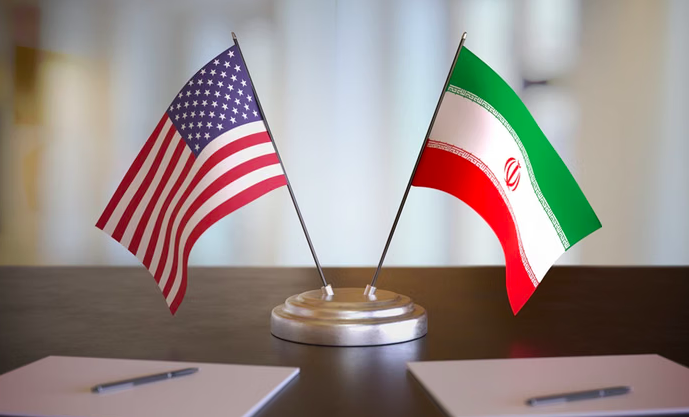
The third round of indirect talks between the United States and Iran was held in Geneva amid a significant increase in US military presence in the Middle East. President Donald Trump remains open to diplomacy, but also considers the option of an attack if a nuclear deal cannot be reached.
The discussions took place as Washington carried out the largest military build-up in the Middle East since the 2003 invasion of Iraq. Iran warned that it would retaliate with force if attacked.
As in the previous two rounds, the talks were mediated by Omani Foreign Minister Badr Albusaidi, who said that the negotiators had shown unprecedented openness to new and creative ideas and solutions.
However, the prospect of a deal remains uncertain. Trump said he prefers the diplomatic route, but also admitted that he is considering a limited strike to pressure Tehran. He did not specify the main demands of Washington or the reasons for the urgency of military action, eight months after the US bombed Iranian nuclear facilities in the Iran-Israel conflict.
Tehran rejects demands for a complete halt to uranium enrichment, but has signaled its willingness to offer some concessions. The Iranian delegation was again led by Foreign Minister Abbas Araghchi, while the US side was represented by special envoys Steve Witkoff and Jared Kushner.
In recent weeks, the US has deployed thousands of additional personnel and a military fleet to the region, including two aircraft carriers, warships, fighter jets and refueling aircraft.
Trump’s threat to Iran first emerged during a crackdown on anti-government protests, but now his focus is on Tehran’s nuclear program.
For decades, the US and Israel have accused Iran of secretly developing nuclear weapons. Iran insists its program is for peaceful purposes, although it is the only non-nuclear state that enriches uranium to near-weapons grade.
In a state of the union address to Congress, Trump said Iran is developing missiles that will soon be able to reach the US and accused Tehran of trying to restart its nuclear weapons program.
He insisted that he would not allow the world’s number one sponsor of terrorism to have nuclear weapons. Previously, Trump said that Iranian nuclear facilities had been destroyed by US attacks.
Iran claims that enrichment activities were temporarily halted after the attack, but has not yet allowed inspectors from the International Atomic Energy Agency to access the affected sites.
“They want to make a deal, but we haven’t heard those magic words, we will never have nuclear weapons,” Trump said.
A few hours before the speech, Araghchi said on social media that Iran would never develop nuclear weapons under any circumstances and that there was a historic opportunity to reach an unprecedented agreement that addresses common concerns and achieves common interests.
Meanwhile, a spokesman for the Iranian Foreign Ministry accused Washington of repeating a big lie about the country’s nuclear and missile programs.
In the Geneva talks, several options were reportedly discussed, including the establishment of a regional consortium for uranium enrichment and the management of Iran’s approximately 400 kilograms of highly enriched uranium. In return, Tehran wants the lifting of economic sanctions.
However, it is unclear what conditions Trump will accept. Iran refuses to discuss limiting its ballistic missile program or its support for allied groups in the region, which it calls the Axis of Resistance, including Hamas, Hezbollah, Iraqi militias and the Houthis.
US media reports say Trump is considering an initial strike against the Iranian Revolutionary Guard or nuclear facilities in the coming days. If diplomacy fails, the option of a wider campaign, even targeting Iran’s Supreme Leader, Ali Khamenei, is also being considered.
On the other hand, some US military officials have warned of the risk of prolonged conflict. Washington’s allies in the region are also concerned that an attack could trigger a wider war.
Israeli Prime Minister Benjamin Netanyahu has said that any agreement must include restrictions on Iran’s ballistic missile program and its support for proxy groups.
Ahead of the state of the union address, Foreign Minister Marco Rubio gave a closed-door briefing to congressional leaders. Afterwards, Senate Minority Leader Chuck Schumer said that this was serious and that the government must explain its reasons to the American people. (BBC/Fer/P-3)
US and Iranian officials held a third round of indirect talks in Geneva to ease nuclear tensions.
IRAN strongly denies accusations by US President Donald Trump that Tehran is developing missiles that can reach the United States, including its nuclear ambitions.
The UNITED NATIONS has expressed hope for de-escalation ahead of the next round of nuclear talks between the United States and Iran in Geneva, Switzerland.
The IRANIAN delegation, led by its senior diplomat, arrived in Geneva on Wednesday (February 25) to hold talks with the United States on nuclear negotiations to prevent a new conflict.
US Foreign Minister Marco Rubio warned Iran to discuss its ballistic missile program amid the issue of potential US military strikes.
US and Iranian officials held a third round of indirect talks in Geneva to ease nuclear tensions.
The US has long been Indonesia’s main partner in meeting its soybean needs.
The SUPREME leader of North Korea, Kim Jong Un, has opened the door to improving relations with the United States.
IRAN strongly denies accusations by US President Donald Trump that Tehran is developing missiles that can reach the United States, including its nuclear ambitions.