
Third Batch of Specialist Doctor Programme to Accelerate Regional Medical Professional Distribution
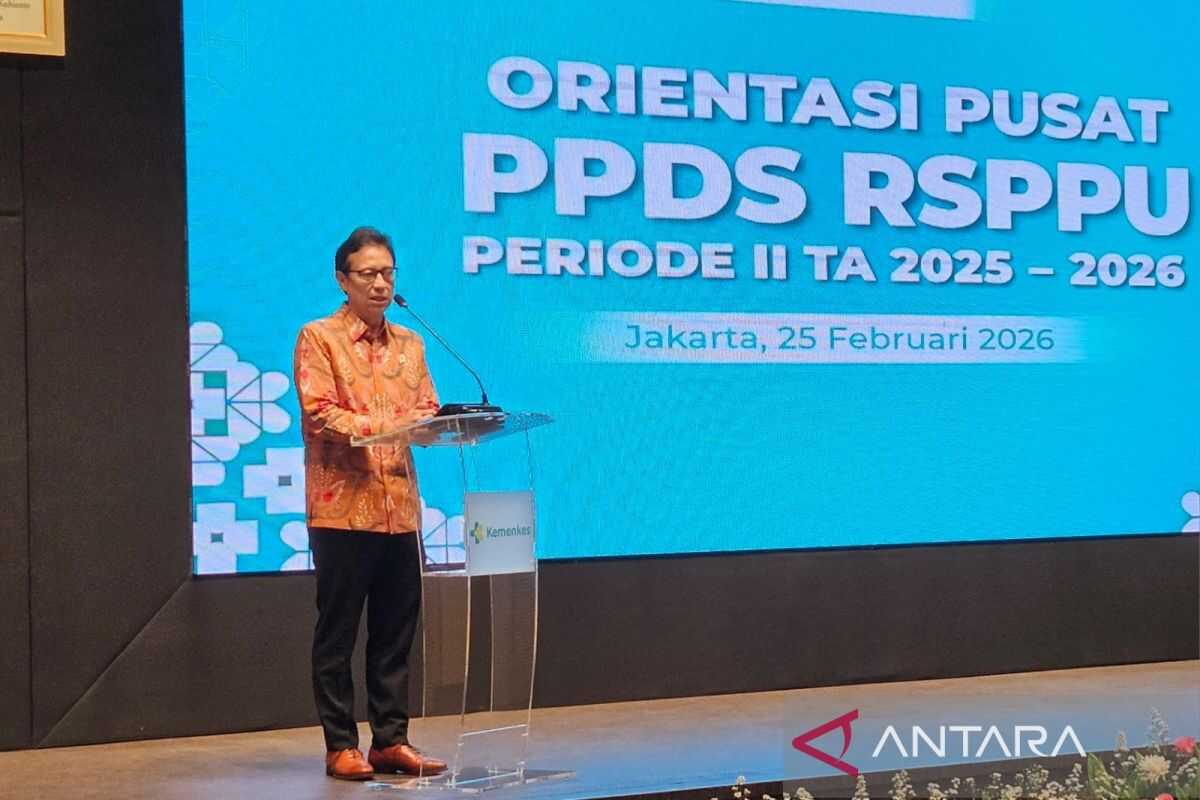
Jakarta (ANTARA) – Minister of Health, Budi Gunadi Sadikin, stated that the third batch of the Specialist Doctor Education Programme (PPDS) at Teaching Hospitals as Main Organisers (RSPPU), in which 58 doctors from various regions participate, can accelerate the fulfilment of national specialist needs.
Budi said in Jakarta on Wednesday that, starting this year, Indonesia is aggressively installing modern medical facilities in 514 districts and cities, and it is expected that all installations will be completed by 2027. He added that this is to enable doctors to provide better services to the public.
“The only shortcoming is the number of doctors and, in particular, their distribution. That is why these hospital-based programmes were established; I hope you can help explain this. This is the most effective way to distribute doctors,” he said.
He explained that through hospital-based education, those selected to study are not necessarily from famous families, specific religions, or social groups, but rather doctors from hospitals whose patients require specific services. Recruitment is carried out based on the needs of each region.
Budi said that specialist medical education is very expensive, so only those who can afford it or have privileges can access it. Therefore, the programme was created to ensure that children from various regions have equal opportunities to study.
In addition, he said that participants are also paid during their education, so that they can feel secure and focus on their work.
“Perhaps it is not as much as you would like, but this is an initial transformation that changes the paradigm that specialist doctors are not students, but professionals who are trained to be more skilled in their field,” he said.
On the same occasion, Director General of Advanced Health at the Ministry of Health, Azhar Jaya, said that Indonesia still needs approximately 92,000 more general practitioners, 129,000 dentists, and 51,000 specialists.
“The number of participants in the current hospital-based programme is 58, consisting of 10 from the paediatrics programme, 10 from the ophthalmology programme, 12 from the neurology programme, 10 from the cardiology and vascular programme, 10 from the orthopaedics and traumatology programme, and 6 from the radiation oncology programme,” said Azhar.
These doctors will later be assigned to various regions outside Java.
“They will be assigned to Sumatra (18 people), Bangka Belitung (3 people), Kalimantan (12 people), Sulawesi (6 people), Maluku (6 people), Papua (6 people), and NTT (7 people),” he said.