
These Are the 6 Key Recommendations from the National Police Reform Acceleration Commission to Prabowo
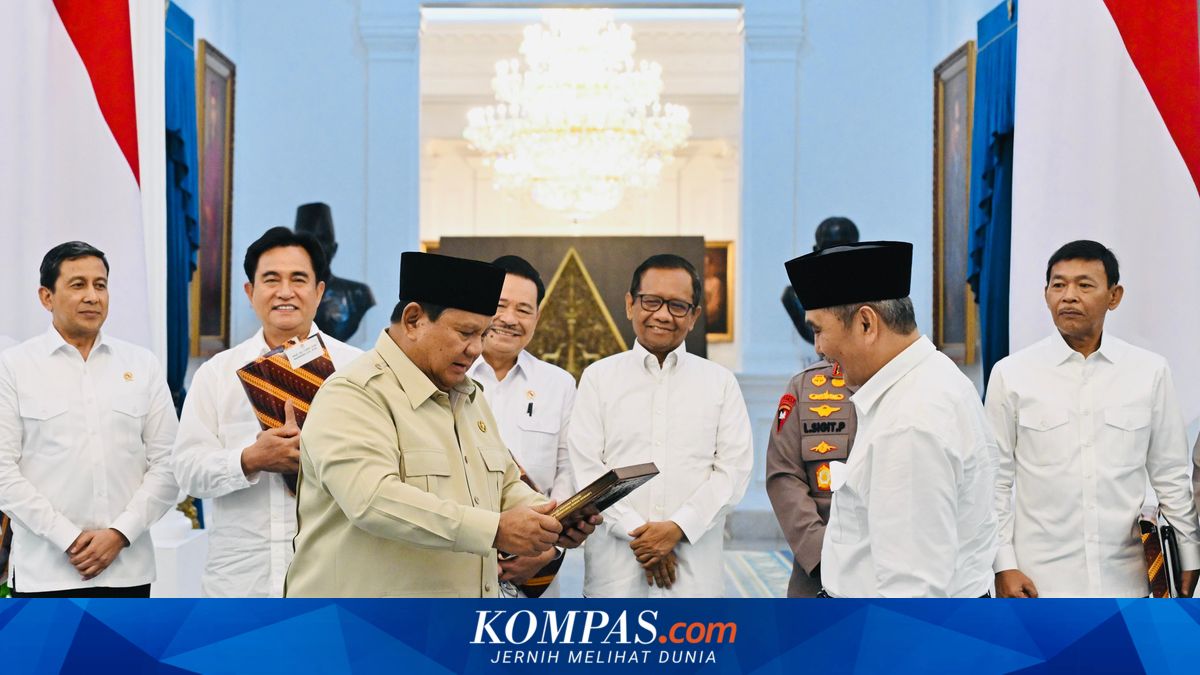
JAKARTA, KOMPAS.com - The National Police Reform Acceleration Commission (KPRP) has conveyed recommendations that can be summarised into six points. Here are those six points.
The electronic document containing the six recommendation points from the National Police Reform Acceleration Commission was submitted by Yusril Ihza Mahendra to Kompas.com on Wednesday (6/4/2026).
Although the discussion is not primary and the percentage is relatively small, this issue has captured public attention, necessitating clarification to avoid counterproductive debates in the Polri reform agenda.
Considering the benefits and harms through various experiences and practices to date, as well as the Indonesian context (geographical conditions and regional and societal characteristics), all KPRP members agreed not to propose a new ministry, and Polri’s position remains as it currently stands, with the proviso that the external oversight body, the National Police Commission (Kompolnas), must be strengthened with expanded mandates and authorities.
The strengthening of Kompolnas is intended so that in carrying out its duties, it is not limited to providing strategic advice on Polri administration and input on the dismissal and appointment of the Police Chief, but also conducts oversight on governance in the areas of Polri development and operations, as well as investigations into the enforcement of the Polri professional code of ethics.
Therefore, Kompolnas must undergo fundamental reforms encompassing its position, membership composition, appointment mechanisms, duties and authorities, and budget management. This positions Kompolnas as a fully independent institution that carries out “checks and balances” functions against Polri, with binding decisions.
On the other hand, the DPR’s oversight function and the division of responsibility between the President and the DPR in the appointment of the Police Chief provide relevant reasons why the mechanism for appointing the Police Chief must go through DPR approval.
All commission members provided balanced opinions because both sides have strong arguments, considering the advantages and disadvantages.
Therefore, the review between the two is worthy of consideration by the President to make the appropriate choice with the arguments in mind.
This impacts the legal and administrative position as well as the validity of decisions by officials falling under the category of those MK rulings.
The impact of this issue is not only on the Polri institution but also on other Ministries/Institutions where active Polri members are assigned. Therefore, there needs to be clarification and regulation that limitatively specifies in the Law or its derivative regulations in Government Regulations which Ministries/Institutions can be occupied by Polri members in positions outside the police force.