
These Are Iran's 10-Point Ceasefire Proposal: Will the US Agree?
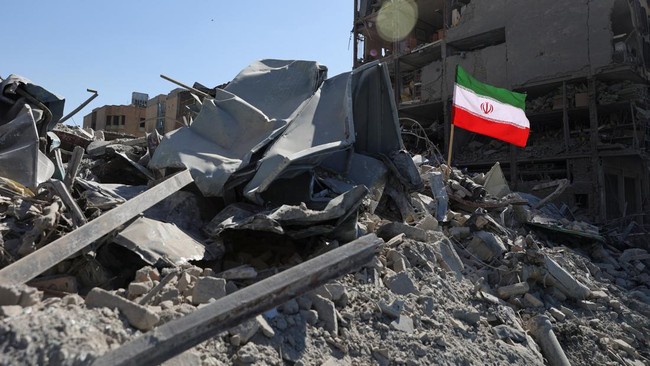
The United States and Iran have agreed to a temporary ceasefire for two weeks, mere moments before the deadline of the ultimatum from US President Donald Trump. This agreement opens new diplomatic space after Tehran submitted a 10-point peace proposal.
The White House stated that Israel has also approved the conflict pause. Trump described Iran’s proposal as “a workable basis for negotiation”, though he has not yet given a final decision.
Key Contents and Points of the Proposal
Quoting Iranian state media, the plan includes several major demands, ranging from the lifting of all economic sanctions, the withdrawal of US military forces from the Middle East, to the release of Iran’s frozen assets.
The most sensitive point is Iran’s demand to retain control over the Strait of Hormuz, a vital global energy trade route. Iranian Foreign Minister Abbas Araghchi stated that the shipping lane will remain open under Iranian military supervision.
In the proposal, Iran and Oman are also said to impose fees of up to US$2 million per ship, or approximately Rp33.9 billion, which will be used for reconstruction. However, Iran has opened the possibility of closing the strait again if negotiations fail.
Additionally, in the Persian version, Iran has inserted a clause on “acceptance of uranium enrichment” for its nuclear programme, though it is not included in the English version.
Chances of US Approval
Several parties in the US doubt that the proposal can be fully accepted. Democratic Senator Chris Murphy assessed that Iranian control over the Strait of Hormuz poses a major risk to global stability.
“Who knows if all that is true, but if this agreement gives Iran the right to control that strait, it will be a disaster for the world,” he said, as quoted by The Guardian on Wednesday (8/4/2026).
Trump has not detailed his stance, but stated that the US will “help address the traffic buildup in the Strait of Hormuz”. Several analysts assess that Iran’s maximalist demands are likely to serve only as a negotiation basis, not fully approved.
Meanwhile, the Israeli government under Prime Minister Benjamin Netanyahu supports the pause in attacks against Iran, but emphasises that the conflict in Lebanon is not included in the agreement.
The next step points towards further negotiations mediated by Pakistan’s Prime Minister Shehbaz Sharif in Islamabad. Tehran has stated its readiness to attend, while the White House is still considering participation.