
These 8 New Updates on the US-Iran War Ceasefire
The escalation of conflict in the Middle East has unexpectedly subsided after the United States (US) and Iran agreed to a two-week ceasefire. This crucial decision was taken just before the deadline for a massive military attack expired, now followed by commitments to reopen vital trade routes in the Strait of Hormuz.
Here are several of the latest developments, as reported by AFP on Tuesday (8/4/2026):
- Trump Aids Recovery of the Strait of Hormuz
Citing an AFP report, US President Donald Trump stated that his country would help address the buildup of ship traffic in the Strait of Hormuz. This step was taken just hours after Washington and Tehran agreed to halt armed contacts for the next fourteen days.
“The United States will help address the buildup of traffic in the Strait of Hormuz. There will be many positive actions! Big money will be made. Iran can start the reconstruction process,” Trump wrote on his social media platform, Truth Social, on Wednesday (08/04/2026).
- Israel Supports Ceasefire Except in Lebanon
The Israeli government has officially expressed its support for the two-week ceasefire agreement between the United States and Iran on Wednesday. However, Tel Aviv emphasised that the agreement does not cover Lebanese territory, where the Israeli military continues to battle the Iran-backed Hezbollah group.
“Israel supports President Trump’s decision to delay the attack on Iran for two weeks, provided that Iran immediately opens the strait and halts all attacks against the US, Israel, and countries in the region,” read an official statement from Prime Minister Benjamin Netanyahu’s office.
Netanyahu’s statement also clarified a previous announcement from Pakistani Prime Minister Shehbaz Sharif, who claimed that the agreement covered the entire region, including Lebanon. On the other hand, Lebanon’s Health Ministry reported that Israeli military strikes continued, killing eight people in the city of Sidon on Wednesday.
- China’s Role and Iran’s Uranium Fate
In a telephone interview, Trump expressed his belief that China played a significant role in bringing Iran to the negotiating table. He confirmed Beijing’s involvement as Tehran’s main ally in mediating the ceasefire process.
“I heard yes,” Trump said briefly when asked if Beijing was involved in persuading Tehran to negotiate the ceasefire.
In addition to diplomatic matters, Trump also assured that Iran’s uranium enrichment issue has been included in the agreement’s points. He emphasised that this nuclear security aspect would be handled well during the ceasefire period.
“It will be handled perfectly or I wouldn’t have made the deal,” Trump asserted when asked about the fate of uranium enriched by Iran.
- US Claims Absolute Victory
The White House has labelled this agreement as a diplomatic success driven by military strength. Trump even claimed that the ceasefire represents the total superiority of the United States in the recent confrontation.
“Total and complete victory. 100 percent. No question about it,” Trump told AFP.
In line with the president, White House Press Secretary Karoline Leavitt praised the negotiating team’s success in turning military pressure into a diplomatic solution. In a post on social media platform X, she stated that military success has created maximum leverage.
“Our military success has created maximum leverage, allowing President Trump and the team to engage in tough negotiations that have now created an opening for a diplomatic solution and long-term peace,” Leavitt stated.
- NATO Diplomacy and Talks Planned in Islamabad
Following the agreement, NATO Secretary General Mark Rutte is scheduled to hold talks with Trump in Washington on Wednesday. This meeting is taking place just one day after the ceasefire was announced to discuss the latest global security dynamics.
“Rutte plans to discuss current security dynamics, including in the context of Iran and the ongoing Russian war in Ukraine,” said a NATO official.
Meanwhile, Iran views the ceasefire as a victory and has agreed to further talks with Washington, set to begin on Friday in Pakistan. Prime Minister Sharif, acting as mediator, stated that the capital Islamabad is ready to host delegations from both countries for negotiations towards a conclusive agreement.
- Tehran’s 10-Point Conditions
Although the ceasefire has begun, Iran has proposed a 10-point plan to end the war with the United States permanently. Tehran demands that Washington accept its uranium enrichment programme and lift all applicable economic sanctions.
“The plan also demands Iranian control over the Strait of Hormuz, US military withdrawal from the Middle East, cessation of attacks on Iran and its allies, release of Iran’s frozen assets, and a UN Security Council resolution to make the agreement binding,” the report stated, citing an official Tehran statement on Wednesday.
- Series of Explosions Before the Ceasefire
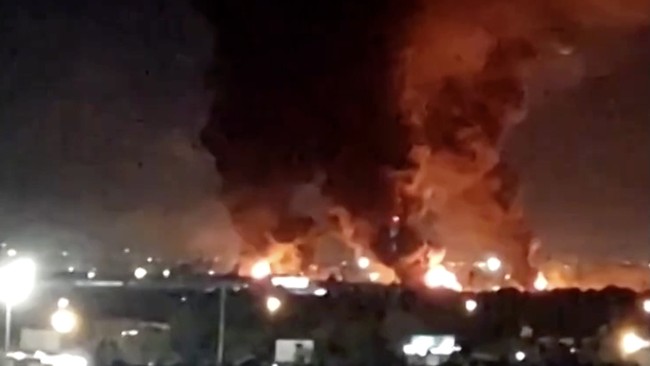
The situation was tense on Tuesday night before the ceasefire announcement. Five explosions were heard in central Baghdad, where the US Embassy is located, as well as reports of explosions in Doha, Qatar, and missile strikes targeting the United Arab Emirates.
Israel’s emergency services also reported five people injured in northern Israel due to missile attacks from Iran and rockets from Lebanon on Tuesday. Tensions peaked at that time as the midnight deadline set by Trump approached, before the agreement was reached one hour before the time limit expired.