
These 6 Things Only Elon Musk Can Afford to Buy
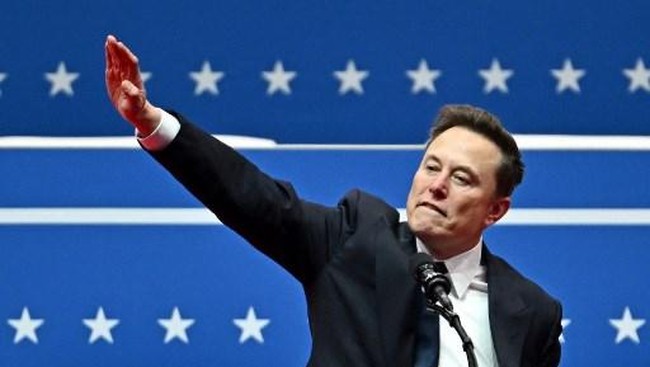
Elon Musk is synonymous with extraordinary wealth that surpasses that of many people. With assets worth hundreds of billions of dollars, the founder of Tesla and SpaceX can own various things.
Elon tops the Forbes list as the richest person in the world, with a net worth more than double that of Alphabet founder Larry Page, who is in second place. Forbes records his total assets at US722billion, ortheequivalentofRp12, 203.28trillion(exchangerateRp16, 902/US).
“With a figure this large, buying a few yachts, private islands, or even professional sports teams no longer provides meaningful context. It’s time to think much bigger,” states the Forbes report, quoted on Saturday (2/5/2026).
However, Forbes warns that Musk’s wealth is not liquid cash; much of it is tied to shareholdings in Tesla and SpaceX. Therefore, its valuation is fluctuating, dependent on the stock market, and could plummet dramatically in the event of a financial market crash.
Nevertheless, with his current recorded net worth, he could at least buy six unexpected things, as follows:
- Buying the Entire United States
In the property sector, based on current estimates, Musk’s net worth could buy every residential property in US states. This includes San Diego County, considered one of the most sought-after housing markets in the US.
If that idea is expanded further, theoretically Musk could also buy every home in the state of Hawaii—all 572,781 households—based on Zillow’s average valuations.
Or even more astonishing: US$716 billion would be enough to buy every residential property in the entire state of Maryland—suburbs, cities, coastlines, and everything.
- Paying for All US Citizens’ Vehicles
In 2025, Americans will buy tens of millions of new vehicles. Collectively, their selling prices are still less than Musk’s net worth.
Although this option would be a poor investment for Musk. Cars depreciate in value as soon as they leave the dealership—but in reality, theoretically this person could buy every new car sold in the US.
- Could Buy Ivy League Universities
Musk’s total current wealth is also recorded as sufficient to buy all the prestigious universities in the United States, often known as the Ivy League.
The collective wealth of all those universities, from Harvard, Yale, Princeton, Columbia, Brown, Dartmouth, Cornell, and Penn, amounts to around $200 billion.
- Almost Could Buy Switzerland
Although technically one cannot buy a sovereign country, the comparison remains intriguing.
Switzerland’s annual GDP reaches nearly US$900 billion. Musk’s wealth surprisingly almost equals the annual output of one of the world’s richest and most stable economies.
- Exxon, Chevron, and ConocoPhillips Still Affordable
ExxonMobil, Chevron, and ConocoPhillips, three of America’s largest oil companies, are theoretically still within Musk’s purchasing power.
- Could Buy the NBA, MLB, and NFL All at Once
The total value of the major professional leagues in the US is US$433.57 billion, comprising MLB: $73.66 billion, NBA: $135.50 billion, NFL: $181.95 billion, and NHL: $42.46 billion, calculated by considering the valuations of teams in each different sports league branch.
Thus, Musk could buy every team in the four major American sports leagues and still have around US$280 billion left over (enough to buy the Ivy League while at it!).
Forbes considers that Elon Musk has surpassed every modern wealth milestone: US$300 billion, US$400 billion, US$500 billion, US$600 billion, and now he has exceeded US$700 billion.
No individual in modern history has accumulated comparable nominal wealth so quickly, so openly, or so visibly.
The question is not whether Musk will—or even could—buy these things. Most likely he will not.
But when someone’s net worth can be meaningfully compared to countries, industries, institutions, and nations, we are no longer just talking about personal success. We are talking about a new era of economic scale, and if it continues, this kind of wealth will ultimately play a greater role in shaping government policy, the workforce, and power.