
These 22 Countries Want to Escort Oil Tankers in the Strait of Hormuz
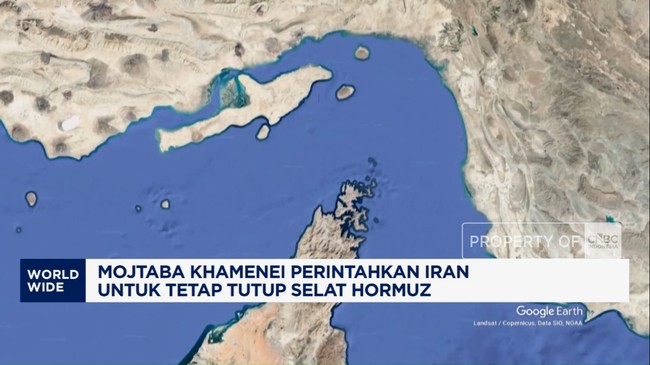
Jakarta, CNBC Indonesia - As many as 22 countries have expressed readiness to safeguard the security of the Strait of Hormuz amid the escalation of the US-Israel conflict with Iran, following heightened threats to global shipping lanes. The countries state that attacks on commercial vessels cannot be justified because they are unarmed. “We strongly condemn the recent attacks carried out by Iran on unarmed commercial vessels in the Gulf, attacks on civilian infrastructure including oil and gas installations, and the de facto closure of the Strait of Hormuz by Iranian forces,” reads the joint statement from the 22 countries, conveyed by the Ministry of Foreign Affairs (Kemlu) of the United Arab Emirates (UAE). The 22 countries include the United Arab Emirates, the United Kingdom, France, Germany, Italy, the Netherlands, Japan, Canada, South Korea, New Zealand, Denmark, Latvia, Slovenia, Estonia, Norway, Sweden, Finland, the Czech Republic, Romania, Bahrain, Lithuania, and Australia. They have expressed deep concern over the recent escalation of conflict in the Middle East. The UAE and others unanimously call on Iran to immediately stop threats, mine-laying, drone and missile attacks, and other efforts to block the Strait of Hormuz for commercial shipping. “And to comply with United Nations Security Council Resolution 2817,” states the declaration released by the UAE’s Ministry of Foreign Affairs. They also affirm that freedom of navigation is a fundamental principle of international law, including the United Nations Convention on the Law of the Sea. The 22 countries warn that the impact of Iran’s actions will be felt by everyone around the world, especially the most vulnerable. “In accordance with UN Security Council Resolution 2817, we emphasise that disruptions to international shipping and interruptions to the global energy supply chain pose a threat to international peace and security. In this regard, we call for an immediate comprehensive moratorium on attacks on civilian infrastructure, including oil and gas installations,” reads the statement. “We express our readiness to contribute to appropriate efforts to ensure safe passage in the strait. We welcome the commitment of countries involved in planning these preparations,” the statement continues. Since being attacked by the US-Israel on 28 February, Iran has closed traffic in the Strait of Hormuz. The narrow but vital waterway is tightly guarded by Iran’s Islamic Revolutionary Guard Corps (IRGC) to ensure no US-Israel-related vessels can pass. Reports indicate that several vessels have recently been attacked for not complying with IRGC orders. These attacks, along with the stagnation of commercial vessels in the Strait of Hormuz, have caused global oil prices to rocket sharply. The 22 countries welcome the decision of the International Energy Agency to allow the release of strategic oil reserves to address this energy crisis. “We will take further steps to stabilise energy markets, including working with certain producing countries to increase production. We will also seek to provide support to the most affected countries, including through the United Nations and international financial institutions,” reads the joint statement from the 22 countries. “Maritime security and freedom of navigation benefit all countries. We call on all countries to respect international law and uphold the fundamental principles of international prosperity and security.”