
There Are Already Many Human Replacements Emerging; The Future Looks Bleaker
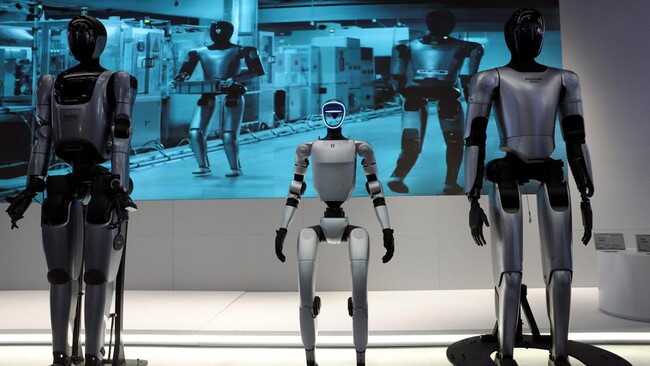
Jakarta, CNBC Indonesia - Humanoid robot technology capable of replacing human work is showing rapid progress. The robotics startup Apptronik, for example, has secured a jumbo funding round of US$520 million with a valuation exceeding US$5 billion, backed by tech giant Alphabet through its AI unit, Google DeepMind. This development raises concerns about the future of human labour, particularly in manufacturing and logistics sectors that have relied on physical work. Humanoid robots are designed as versatile machines able to operate in real-world industrial environments. These robots can perform a range of heavy, repetitive, and dangerous physical tasks—jobs that are increasingly difficult for human labour to fill. The phenomenon emerges amid global demographic changes. Developed countries are currently facing aging populations, leading to labour shortages, while labour costs continue to rise. With their capabilities, humanoid robots are seen not merely as complementary technologies but as potentially changing the global industrial cost structure that has long depended on human labour. Advances in artificial intelligence are also a key factor accelerating humanoid robotics. AI integration enables robots to not only move mechanically but also understand their environment and carry out tasks autonomously. The partnership between Apptronik and Google DeepMind is described as an important step to strengthen the robots’ intelligence. After all, a robot without intelligence is merely an expensive machine. Meanwhile, robots with intelligence are a workforce, CNBC International quotes on Friday, March 6, 2026. Currently, Apptronik is reportedly in talks with several global companies with potential contract values exceeding US$1.2 billion. World technology figure Elon Musk even projects that the number of humanoid robots could one day surpass the number of humans on Earth. These robots are said to be able to be the key to major future innovations, including interplanetary exploration. However, the development of humanoid robots still faces various challenges, particularly in production costs and manufacturing scale. The industry is expected to require a long time before it can replace human labour widely. Yet if this technology is developed massively, humanoid robots could change the way humans work.