
The Yapen Community in Papua Places Its Hope in Cocoa
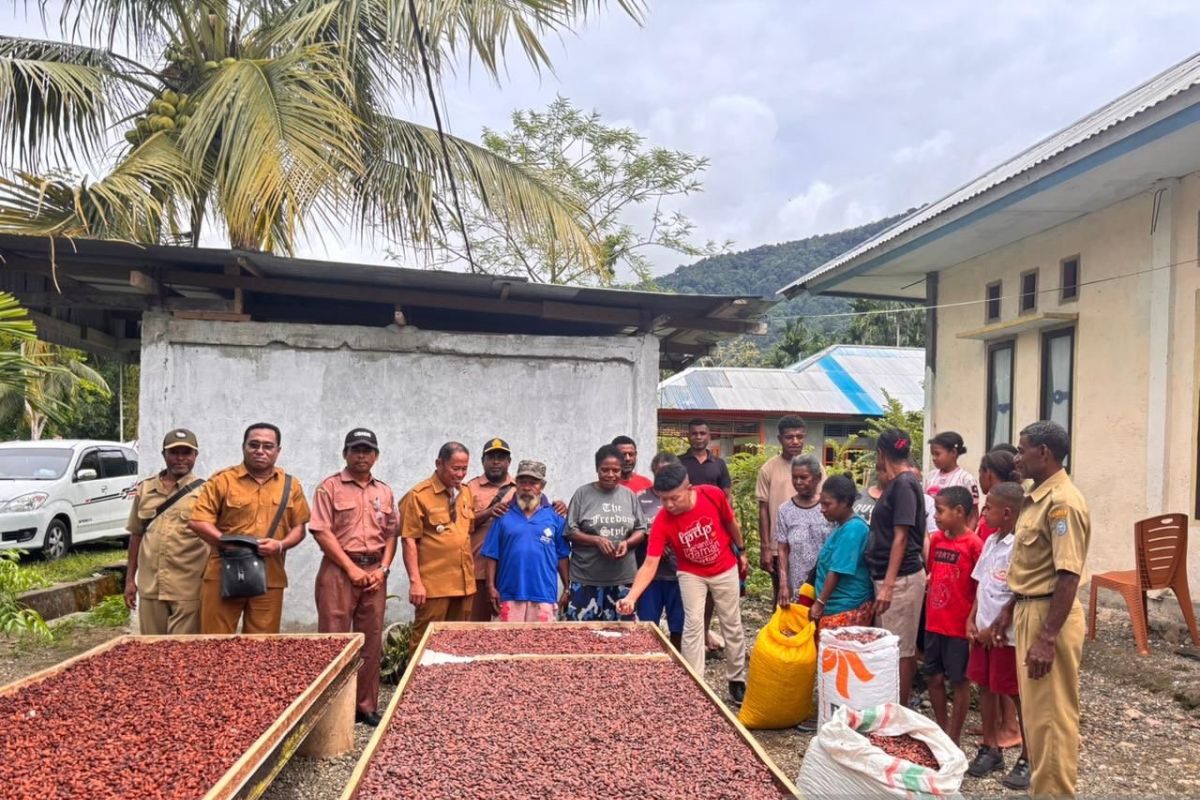
Jakarta (ANTARA) - The story of Yapen cocoa is not merely an economic news item but a tale of a revival of self-confidence in a Papuan region that may be little known to many. Thanks to cocoa on smallholder plots, local communities are beginning to realise that their villages possess a value that the world seeks. Indeed, while many areas still rely on budget transfers and consumption-driven economic activity, Yapen demonstrates a different path, showing that development can grow from natural resources managed seriously, sustainably, and community-based. In many Papuan villages, the future often grows from simple things: fertile soil, the diligent hands of farmers, and crops that have thrived for years, often without much attention. Amid the tropical forest and the tranquil landscape of the Yapen Islands, cocoa is gradually regaining its meaning not merely as an agricultural commodity but as a hope for how a region can stand on its own strength.
An Executive Committee member of the Special Autonomy Acceleration for Papua Development and policy researcher at Batam State Polytechnic, Billy Mambrasar, together with the Deputy Regent of the Yapen Islands Roy Palunga, witnessed firsthand how Kampung Konti Unai in the Yapen Islands Regency, Papua, is rising through cocoa. They visited to observe how communities are building their region through developing cocoa as the region’s flagship commodity. From that village, three kilograms of cocoa samples were collected for dispatch to three prospective European buyers. The samples were brought to Jakarta for further study, before being finalised in the form of a cocoa purchase collaboration with the Yapen Islands Regency Government.
That small step carries a big message. Historically, Papua has often been discussed in the context of large-scale natural resources, such as mining, logging, or energy. Yet at the village level, there is a people-centred economic potential that is much closer to daily life and has broad social impacts. Cocoa is one example.
Flagship product. Billy Mambrasar explains that the development of a region’s flagship commodities, such as cocoa, aligns with the Export Base Theory introduced by economist Douglas North. In that theory, a region able to produce and sell its flagship products beyond its borders or in international markets will create new economic growth, open up jobs, raise local incomes, and bolster the region’s own-source revenue. Papua needs such things. Given that for years, development challenges in Papua have not only concerned infrastructure shortfalls but also how to create a truly vibrant local economy that can give space for communities to grow autonomously. In this sense, cocoa is not merely an agricultural product but a tool for social development.