
The World's 10 Largest Gas Companies, Celebrating Amid the Iran War
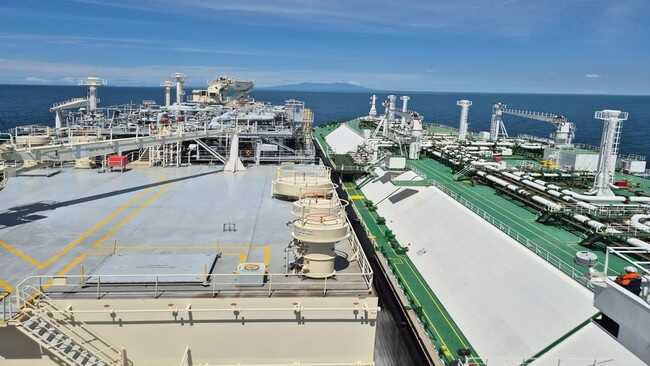
Natural gas remains one of the most fundamental energy commodities underpinning the global economy. Its uses span utilities, space heating, and essential fuel for energy-intensive industries. In measuring the scale of energy companies worldwide, markets often focus on valuation or market capitalization. However, when indicators shift toward operational capacity and real production volumes on the ground, the landscape of the global natural gas industry reveals different dynamics.
Aggregate data shows the United States is the largest natural gas producer country. Yet, at the corporate level, Asian entities demonstrate dominant production volumes.
China Leads Global Real Supply
Based on the latest operational data, PetroChina, a subsidiary of state-owned China National Petroleum (CNPC), tops the list with an estimated natural gas production volume of 14,065.75 million cubic feet per day (mcfd).
This high extraction figure is rational given China’s status as the world’s third-largest consumer of natural gas, with annual consumption of 477 billion cubic metres. The massive drive to meet domestic energy needs has compelled Chinese companies to boost their output.
In addition to PetroChina, other major producers include Sinopec (3,836.68 mcfd), which focuses on refining and chemicals, and CNOOC (2,386.40 mcfd), specializing in offshore exploration.
Middle East and United States Valuation Dominance
Second in terms of production volume is the Middle East giant Saudi Aramco, with a production rate of 10,800 mcfd.
Although second by gas volume, Aramco remains the undisputed most valuable energy company in the world. Its market capitalization has reached US$1.61 trillion, with revenues of US$461.56 billion (TTM).
Meanwhile, US oil and gas giants Chevron (8,178 mcfd) and ExxonMobil (8,078 mcfd) follow closely in fourth and fifth place.
The primary edge for these US companies lies in their integrated, globally scale operations spanning upstream to downstream, including petrochemicals and lubricants.
This makes their market valuations massive; ExxonMobil is valued at US$559.76 billion and Chevron at US$339.88 billion. ConocoPhillips (3,433 mcfd) also completes Western dominance of the list.
Midstream Infrastructure and European Players
Interestingly, third place by volume is not held by upstream producers but by midstream infrastructure players (distributors). Enbridge, the Canadian company, records a distribution capacity of 9,300 mcfd.
As North America’s largest natural gas utility, Enbridge is responsible for the smooth distribution of almost 20% of total natural gas consumed across the United States. This underscores that strategic value lies not only in extraction but also in pipeline and delivery networks.
The top 10 is then rounded out by European majors Shell of the UK (2,964 mcfd) and TotalEnergies of France (2,331 mcfd). Both continue to maintain their operational market shares while managing capital transitions toward low-carbon energy assets worldwide.
Here are the 10 largest natural gas companies globally, ranked by daily production volume:
Fundamentally, the natural gas industry demands substantial capital expenditure allocations with hundreds of billions of dollars in turnover per year.
From the data constellation above, it is clear that market valuation dominance remains with US and Middle East entities, but real field energy supply is increasingly dependent on the operational capacity of Asian corporations.
CNBC Indonesia Research