
The Word "Mudik" is Actually an Abbreviation: Here's Its Full Form and Meaning
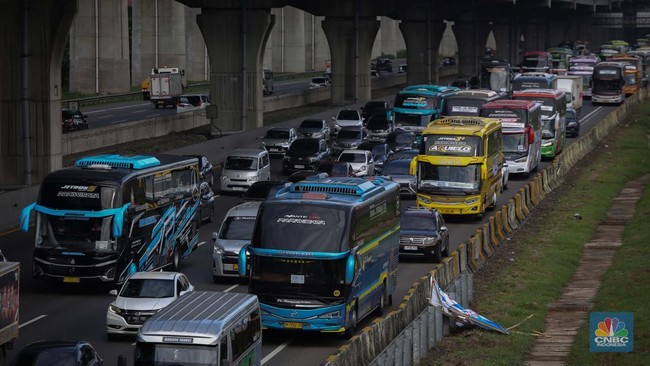
Mudik is strongly associated with Lebaran holidays. Every year, millions of Indonesians return to their home villages to celebrate the religious occasion with their families.
The peak of the 2026 Lebaran mudik exodus is predicted to occur on Wednesday, 18 March 2026 (three days before Lebaran), with an estimated 3.5 million vehicles leaving the Greater Jakarta area.
Although millions observe the tradition, many are unaware that the word “mudik” is actually an abbreviation. Behind this simple term lies a lengthy history connected to river culture, urbanisation, and changes in Indonesian society’s lifestyle patterns.
According to Indonesia Baik, a website run by the Ministry of Communication and Information Technology (Kominfo), mudik is derived from the Javanese term “mulih dilik”, which means to return home briefly.
According to the Indonesian Dictionary (KBBI), mudik has two primary meanings: (1) to sail or travel to the udik (river source/interior) and (2) to return to one’s home village.
Further explanation comes from Gadjah Mada University (UGM). Etymologically, mudik originates from the Malay word “udik” meaning river source or the end of a river.
“It comes from the Malay language, udik. The context is going to the estuary and then returning home. When people began to migrate because of urban growth, the word mudik became known and has been maintained until now when they return to their villages,” said UGM Anthropologist Professor Heddy Shri Ahimsa-Putra.
The tradition of mudik in Indonesia began to strengthen during the 1970s, according to the Ministry of Transportation, when mass urbanisation to Jakarta and other major cities intensified.
Professor Purnawan Basundoro, Dean of the Faculty of Cultural Sciences at Airlangga University, views this phenomenon as closely linked to population migration following Indonesia’s independence.
“This possibly occurred after independence, when many people sought employment in cities. Perhaps in the 1960s to 1970s, when Jakarta began to be visited by people from various villages,” he said.
Over time, the activity of returning to one’s home village became widely recognised as mudik. Today, mudik is no longer limited to a single celebration or specific group, but has become a social tradition embedded in Indonesian society.