
The Windows We Allow to Remain Cracked
There is one mistake that is slowly becoming a habit for us as a nation: we arrive too late too often. We are busy putting out fires but forget to ask who stacked the dry branches from the beginning. We debate at length about crime, violence, intolerance, corruption—but rarely look back to the place where it all originates: the home.
Within the framework of the Broken Windows Theory introduced by James Q. Wilson and George L. Kelling, civilisation does not collapse due to one big explosion. It cracks from small things that are left unattended. From broken windows that are never repaired.
And in Indonesia today, those windows are not just glass in city walls. They are homes—in every sense of the word.
Homes Losing Direction
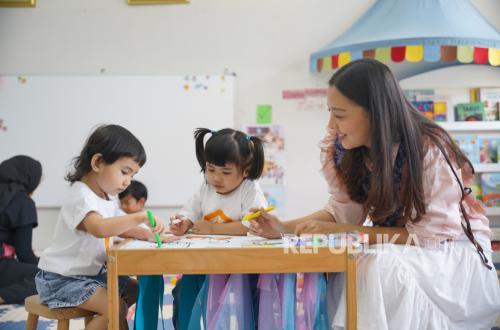
The household, which was once the first school of values and boundaries, now often loses its voice. Parents are busy working, children are raised by screens. It is no longer conversations that shape morals, but algorithms. It is no longer examples that guide, but trends that shape.
At this point, the first ‘broken window’ appears: when small things like honesty, discipline, and empathy are no longer taught consistently.
Traditional homes—in the sense of values, traditions, and collective dignity—slowly turn into symbols without soul. We celebrate identity but no longer live its meaning. Ceremonies remain, but the ethics they contain evaporate.
Schools also face a dilemma. They still stand as institutions but often lose their soul as places for character formation. Academic values become the goal, while human values become supplementary. We produce graduates but do not always form humans.
Houses of worship—which should be moral anchors—sometimes stop at rituals. Worship is crowded, but social justice is empty. Symbols of obedience grow, but their fruits are not always evident in honesty, care, and integrity.
And the house of the state—which should be the guarantor of direction and balance—often arrives when everything is already too late. Policies are born as reactions, not prevention. The state appears downstream, when problems have already become crises.
Busy Downstream, Silent Upstream
We see it every day. Authorities work harder, more, more complex. Enforcement increases. Regulations are tightened. Operations are conducted everywhere. But problems do not fundamentally decrease—they just change form.
This is like multiplying firefighters without ever building a fire prevention system. We forget that in the logic of broken windows, order does not start from law enforcement but from nurturing values.
When small violations are allowed in homes, in schools, in social spaces—then the state will be forced to handle big violations on the streets.
Repairing Windows from the Start
Some countries have been at the same point—and chose to return to the upstream. In New York City in the 1990s, the government did not just crack down on major crimes. They repaired ‘small windows’: cleaning graffiti, organising transportation, keeping public spaces tidy. The message was simple: this city is cared for. The result was not just a decline in crime but a change in collective psychology.
In Japan, character education starts from the smallest things: students clean their own classrooms. It is not just about cleanliness but about responsibility. They are not taught merely to be smart but to be disciplined.
In Finland, the education system does not rush to chase numbers. They build trust, work-life balance, and quality relationships between teachers and students. The result is not just academic achievement but whole humans.
In Singapore, order is not just the result of strict laws but consistency from the start: from education, urban planning, to public culture. Small violations are not allowed to become habits.
They all understand one thing: civilisation is maintained from upstream, not repaired downstream.
A Note We Have Postponed Too Long
Indonesia today does not lack authorities. It does not lack rules. It does not lack programmes. What we lack is the patience to build from the beginning.
Building present households, not just existing ones.
Reviving traditional homes as ethics, not ceremonies.
Restoring schools as places to form humans, not just measure grades.
Making religion a path to humanise humans, not just identity.
And presenting the state as a guide, not just an enforcer.
Because if not, we will keep repeating the same cycle: allowing small cracks, then panicking in the face of major collapse.
Caring for the Small, Safeguarding the Large
Perhaps we need to be honest about one simple thing:
this nation is not short of solutions—it is tired from fixing effects too often, not causes.
One broken window may seem trivial.
But from there, people learn that no one is watching.
And when everyone believes that no one is watching,
what collapses is no longer just windows—
but our trust in each other.
It is there, quietly, that a nation can lose itself.