
The 'War Takjil' Phenomenon: When Hunting for Iftar Menus Becomes a Social Event
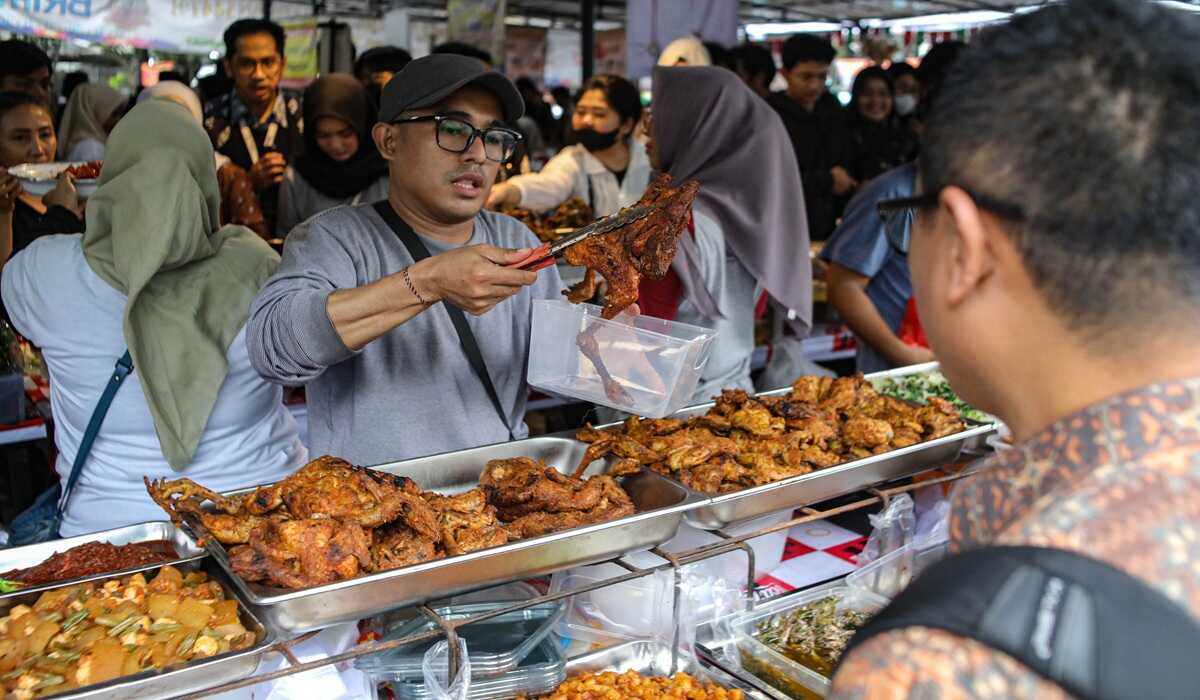
Every Ramadan, Indonesian society is presented with a unique phenomenon known as ‘war takjil’. In the late afternoon, as the time for breaking the fast approaches, various seasonal food vendors appear along roads, in markets, and in residential areas.
This activity involves a wide range of people, even those who are not fasting, making it a distinctive social experience during Ramadan in Indonesia.
A lecturer at IPB University who actively mentors MSME actors, Dr. Tjahja Muhandri, sees this phenomenon as an interesting social dynamic.
According to him, the public’s enthusiasm for ‘war takjil’ is driven by the availability of various foods and drinks that are rarely found outside of Ramadan.
“Take a look, there will be many foods or drinks that are not available on ordinary days, but appear during Ramadan. They are attractively presented and priced affordably. So, the competition for these ‘takjil’ foods or drinks can be seen as a competition for ‘memories’,” he said jokingly.
He explained that this trend shows a very strong market pull. When a need arises, the market responds quickly.
For MSMEs, this momentum is a golden opportunity to increase income, as the products they sell tend to sell well. However, Tjahja emphasized that business actors must remain creative in following trends and avoid monotonous products.
“As long as MSMEs are willing to follow product trends and not be monotonous with products that are less popular with consumers,” he added.
Although it has a positive economic impact, Tjahja made an important note regarding the aspects of cleanliness and food safety. Given that anyone can now set up a stall, supervision of product quality is crucial to prevent health risks such as food poisoning.
“MSMEs need to maintain the cleanliness of products, containers, presentation, and even the vendors themselves. Use standard equipment, at least a mask and clean gloves when serving customers,” he said.
He also advised business actors to be transparent by clearly displaying prices. This is done to make consumers feel comfortable and not worry about price gouging.
By maintaining quality, creativity, and hygiene standards, the ‘war takjil’ phenomenon will not only be a place to seek economic benefits for MSMEs, but also continue to provide a sense of security and comfort for the community in meeting their iftar needs.
“Everyone can sell and set up stalls. Therefore, the aspect of cleanliness is very important to prevent the risk of poisoning or disease,” he concluded. (Z-1)