
The War in Iran Opens Our Eyes: Is Indonesia's Digital Disaster System Ready?
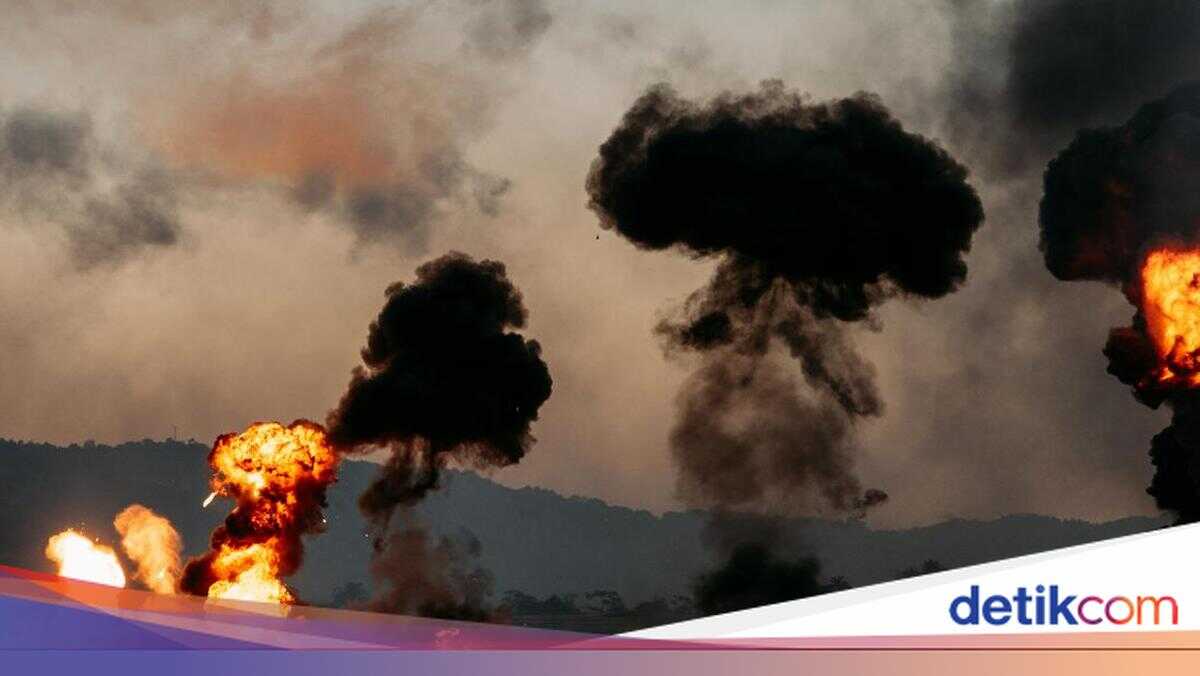
The war in Iran once again serves as a stark reminder that crises strike without warning. Infrastructure can collapse in hours. Information can become blurred in minutes. Panic can spread in seconds.
Indonesia may not be a country at war. Yet it is among the world’s most disaster-prone nations. We live on a ring of fire, lie on active fault lines, are surrounded by volcanoes, and face flood and extreme weather threats that are worsened by climate change.
Global data show the scale of the problem is not small. In the past five decades, natural disasters have caused about 4.7 million deaths and economic losses of around USD 5 trillion. Their frequency has also risen markedly: 436 disasters were recorded in 2021, far higher than in the previous three decades.
Asia is described as the most disaster-prone region globally, and Indonesia is among countries with a high risk score in the World Risk Report. In other words, we are not talking about a possibility; we are talking about definite risk.
Technology exists, but is it truly used?
Amid rising risks, mobile technology is viewed as a strategic solution. A recent systematic study on mobile technology in disaster management identified 77 apps across 14 countries designed to support prevention, preparedness, response, and recovery from disasters.
Theoretically, the findings are promising: 64.94% of apps provide disaster education features, and 38.96% have early warning systems (EWS).
“Early warning system”, is a mechanism that signals before a disaster occurs to enable people to take saving actions. Globally, effective systems are said to reduce impacts by around 30% if information arrives in time.
In design terms, this is good news. Yet there is a big irony: 33.96% of apps have fewer than 1,000 downloads, and only 11.32% have surpassed 1 million downloads. More worrying still, 55.8% of those apps are no longer active. The finding is not a technical detail, but a policy alarm.
That means we face a serious gap between technology intent and actual use. In the literature of digital disaster management, this is known as the adoption & engagement gap—the gap between people downloading apps and actually using them actively when needed.
Install does not mean readiness. Download does not mean trust. Having an app does not mean you have a system.
Disasters are not just about prediction, but coordination
Another study published in Urban Science (2025) reviewed 77 flood preparedness and response apps. Their findings emphasise that effective apps typically have core features:
Real-time alerts
Emergency contact directory
Preparedness checklists
Interactive maps
Mechanisms for citizen reporting
But the study also points to something more strategic: the success of apps lies not solely in features, but in how the app is mobilised into social behaviour.
In other words, technology does not automatically save lives. What saves lives is when technology becomes a habit, trusted, and used in crisis situations.
The study also highlights three strategies for apps to truly come alive:
Community engagement through user-friendly and interactive interfaces. Community engagement means actively involving the community. Apps must be designed so that people feel part of the system, not merely passive recipients of notifications.
Integration of smartphone capabilities, such as motion sensors, GPS, and even barometers. In other words, phones not only receive information but can also become tools for collecting field situation data.
Real-time, rapid communication, including push-to-talk features. Push-to-talk is an instant voice communication system, akin to a digital walkie-talkie, enabling rapid coordination when text messages are too slow.
The key is clear: disasters are not just about prediction but coordination, which requires direct, clear, and trustworthy communication as conditions change minute by minute.
Deeper issue: trust and sustainability. The figure 55.8% of apps no longer active shows that many disaster solutions are short-term projects. Without sustained funding, without institutional integration, and without system upgrades, apps can quickly wither before they mature.
Moreover, there is a public trust issue. In crises, people seek sources deemed most credible. If official systems are slow or inconsistent, the public will turn to social media, which is prone to misinformation.
In the context of war, misinformation can be used as propaganda. In disasters, misinformation can trigger evacuation chaos.
Therefore, digital disaster warning management is not just an IT project but an infrastructure of trust.
Indonesia: From Apps to Ecosystem. If Indonesia wants to learn from global experiences, we must go beyond single-app approaches. What we need is a digital disaster warning ecosystem:
Multi-channel (apps, SMS, cell broadcast, official social media)
Real-time location-based
Cross-agency integrated
Inclusive for the elderly and disabled
Sustainably funded and regulated
Because in disasters, what is tested is not the slickness of an app launch, but whether in the first moments of a crisis information arrives clearly.
We already have field heroes. Now we need digital orchestration. In every major disaster in Indonesia, from tsunamis, earthquakes to flash floods, we always witness the same: volunteers move quickly. The state apparatus, TNI and Polri, step in without delay.