
The Viral Era and the Death of Dialogue
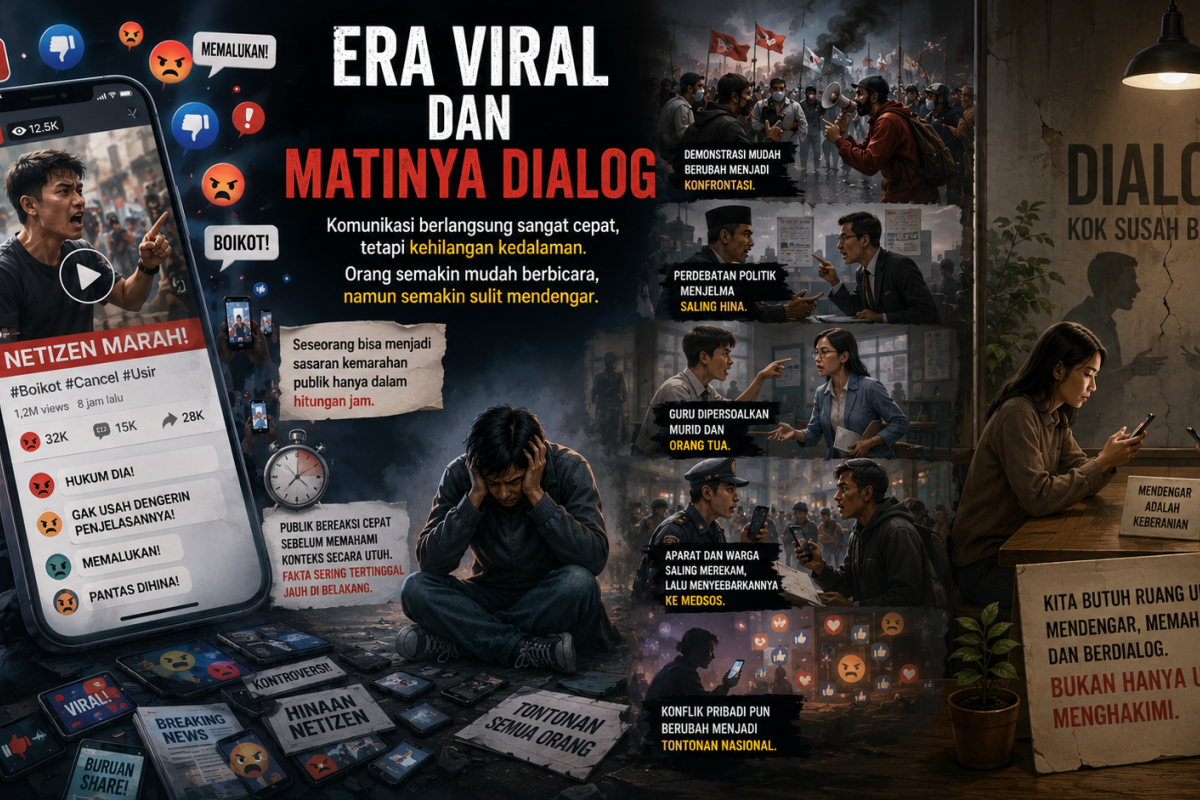
Humiliating others is regarded as a form of moral courage. Yet, when communication loses empathy, society is moving towards a humanitarian crisis.
Surabaya (ANTARA) - Today, a person can become the target of public anger in mere hours. A short video, snippet of conversation, or social media post can quickly turn into a national wave of vitriol.
The public reacts swiftly before fully understanding the context. People rush to judge en masse, while facts often lag far behind.
This phenomenon has become increasingly familiar in everyday life. Demonstrations easily turn into confrontations. Political debates devolve into mutual insults. Teachers are challenged by students and parents. Officials and citizens record each other and share it on social media. Even personal conflicts can suddenly become national spectacles.
We live in an era where communication happens very quickly, but lacks depth. People find it easier to speak, but harder to listen.
Information Overload
This major change cannot be separated from the development of digital technology. In the past, the flow of information was relatively centralised through mass media, educational institutions, or certain social authorities. Now, everyone can be an information disseminator and opinion shaper.
The democratisation of communication does bring great benefits. The public has a broader space to voice criticism and monitor power. However, the explosion of communication channels also gives rise to new problems: information chaos.
We are flooded with non-stop messages. Information comes from various channels simultaneously: social media, chat groups, short video platforms, podcasts, to anonymous comments. In such a situation, society struggles to distinguish between facts, opinions, propaganda, or mere emotional venting.
Now, public space has become noisy. Communication theorist Marshall McLuhan once warned that media is not just a tool for conveying messages, but also shapes how humans think and relate. What we are experiencing today proves this. Digital media forms a communication culture that is fast, spontaneous, and reactive.
On social media, what attracts the most attention is not in-depth explanation, but sensation. Digital algorithms tend to promote content that triggers emotional engagement: anger, fear, controversy, or hatred. Therefore, harsh and provocative information spreads virally more easily than calm conversations. In such situations, emotions often override reason.