
The Ups and Downs of Transatlantic Relations
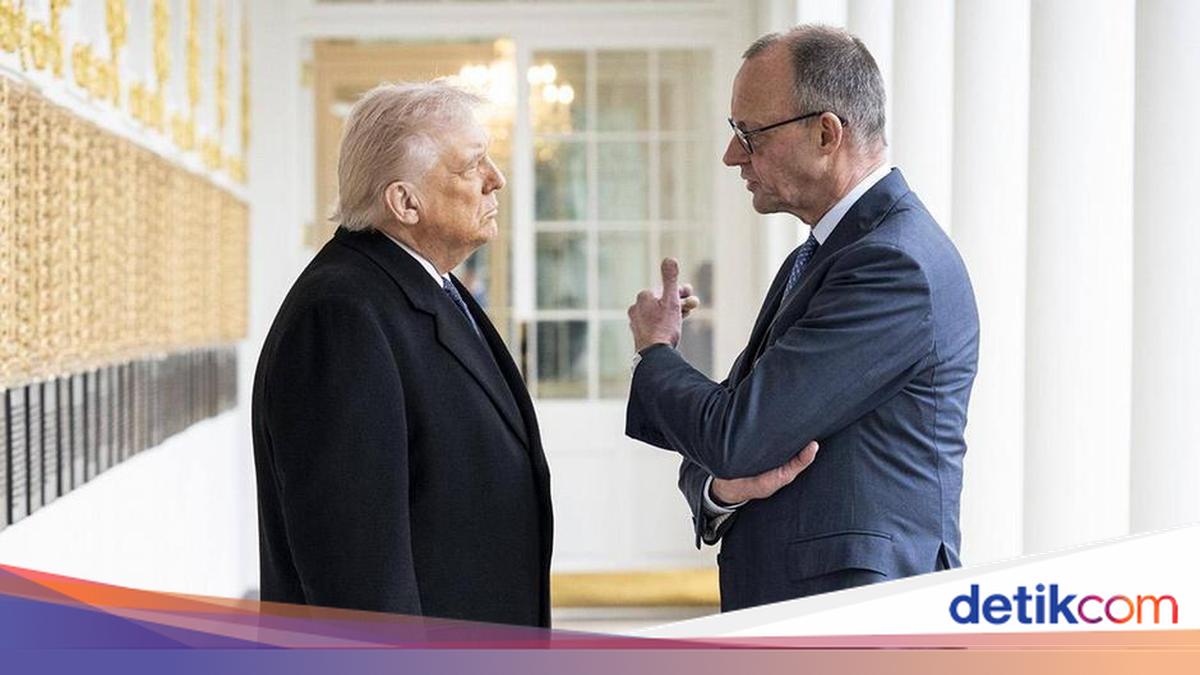
However, the situation changed rapidly since the Iran War. Several sharp comments from Merz—who described the United States as lacking a clear strategy and even being humiliated by Iran—provoked Trump’s fury. Through his social media platform, Truth Social, Trump hit back sharply: Merz was called “not knowing what he’s talking about.” He also added, “no wonder Germany’s condition is so bad.”
Military and Economic Consequences
Not long after, Trump announced plans to withdraw 5,000 US troops from Germany within a year. Later, he even stated that the number of US forces in Germany could be reduced “much more significantly.”
In addition, the deployment of Tomahawk cruise missiles, previously promised by the administration of President Joe Biden to strengthen Germany’s defence against potential Russian attacks, was postponed. Several experts assess this move as far more serious than the troop withdrawal.
“This delay creates a major security gap in efforts to deter Russia, which can only be closed in the future with European armament,” Carlo Masala, an expert from the Bundeswehr University of Munich, told the newspaper Welt am Sonntag.
At the same time, Trump also announced plans to raise import tariffs on cars from the European Union from 15 to 25 percent. Economist Clemens Fuest even warned of the possibility of a new recession. “This tariff increase hits the German automotive industry, which is already in a difficult situation,” he told the newspaper Bild.
Merz himself tried to allay concerns. In a television appearance, he stated that the troop reduction plan was not new and denied any connection to his dispute with Trump. “There’s no relation,” Merz asserted.
Henning Hoff, a German foreign relations expert, reminded that Trump had previously threatened even larger troop reductions during his first term. In the summer of 2020, Trump even mentioned the possibility of withdrawing 12,000 troops from Germany—which was also seen as a form of “punishment.” That plan was ultimately cancelled after Joe Biden won the presidential election.
According to Hoff, it’s not certain that Trump will actually carry out his threat this time. “Because of that, this dispute isn’t as dramatic as it seems,” he said.
An Up-and-Down Relationship
Since the beginning of Trump’s second term, transatlantic relations have often been strained. When Trump humiliated Ukrainian President Volodymyr Zelensky in front of the international public in February 2025, Merz—who was not yet chancellor at the time—reacted strongly. He stated that some circles in America apparently no longer cared about Europe’s fate. His main priority, Merz said, was to help Europe achieve “gradual independence from the United States.”
The relationship continued to deteriorate throughout the year, especially after the US imposed new import tariffs on European goods—hitting Germany’s export-dependent economy.
Nevertheless, Merz made his first official visit to Washington in June 2025. The meeting went better than expected, partly because Merz complied with Trump’s wish to significantly increase defence spending.
New Conflicts Emerge
Entering the turn of 2025–2026, tensions escalated further. In a new national security strategy at the end of 2025, the US government warned Europe about the threat of “civilisational collapse” due to migration. The document also referred to the Western hemisphere as a sphere of influence for the United States.
Not long after, US special forces attacked Venezuela and abducted President Nicolás Maduro. Merz responded cautiously, calling its legal status “complicated,” even though the operation clearly violated international law.
Another controversy arose when Trump threatened to seize Greenland—the territory belonging to Denmark—even with military force if necessary. However, the firm stance of European countries stating that the move was unacceptable apparently made Trump back down from the issue.
Merz’s next visit to Washington in March 2026, shortly after the outbreak of the Iran War, was again positive. Before departing, Merz even said he had no intention of “lecturing” Trump on international law. That statement was welcomed by Trump, who then called Merz a “friend” and “outstanding leader.”
However, in Europe, criticism emerged that Merz was trying too hard to please Trump. On one occasion, Merz openly supported Trump’s criticism that Spain was spending too little on defence.
Efforts to Ease Tensions
Throughout this time, Merz’s strategy towards Trump is believed to be two-pronged: maintaining good relations while occasionally offering careful criticism. Europe’s military dependence on the United States—especially in the Ukraine War—is still too great to ignore.
After the latest dispute, Merz emphasised that he would not give up on maintaining transatlantic relations. “I will also not stop cooperating with Donald Trump,” he said in the Caren Miosga programme.
He said there would still be several opportunities to meet Trump in person this year, including at the G7 summit in France in June and the NATO summit in Turkey in July. The question is: Does Trump still want to continue cooperating with Merz?
Henning Hoff remains optimistic. According to him, Merz has indeed undermined his own efforts to build good relations with Trump through his critical statements. However, the German chancellor still has a chance to fix the situation through direct dialogue with the US president.
He could also offer concrete German contributions, such as helping to stabilise the Gulf region after the Iran War and ensuring freedom of international navigation.
The deployment of the German minesweeper ship Fulda towards the Mediterranean Sea is seen as one such signal. In addition, according to Hoff, many members of the Party