
The Unfading Wave: Why Amateur Radio Remains Relevant in the Digital Age?
Amid the buzz of 5G technology, artificial intelligence (AI), and our near-absolute dependence on internet connections, a question often arises: “Is amateur radio still relevant?” To the layperson, this hobby might sound like nostalgia from the past—merely crackling voices behind large valve radios. However, through my lens, the reality is the complete opposite. We are on the cusp of a ‘Renaissance’ in radio technology that is far more intelligent, resilient, and strategic for national resilience.
The Legacy of Paris and the Global Spectrum Fortress
The existence of amateur radio is not merely a directionless hobby. Its historical foundation is very solid. On 18 April 1925 in Paris, the International Amateur Radio Union (IARU) was formed by pioneers, including ARRL founder Hiram Percy Maxim, to secure the right to use frequency spectrum for non-commercial individuals.
To this day, IARU remains at the forefront as a Sector Member of the International Telecommunication Union (ITU), a UN body. Why is this important to us?
Because without advocacy from expert volunteers in IARU, the frequency bands we use for experimentation today would likely be fully dominated by military and voracious commercial industry interests. IARU’s success at international forums like WRC-23 in protecting microwave frequency bands is concrete proof that this community is professionally recognised at the global level.
Innovation: A New Spirit in the Second Century
Entering 2026, the World Amateur Radio Day celebration carries the grand theme: ‘Advancing the Spirit of Amateur Radio Through Innovation’. This is not just a slogan.
Modern amateur radio has now fully transformed. We are no longer limited to manual telegraphy or conventional voice.
Currently, we are actively experimenting with software-based radio (SDR), digital signal processing (DSP), and even AI integration. Technologies like the FT8 digital mode enable global communication with very low power, even below noise levels inaudible to the human ear.
Moreover, thousands of universities and schools now use amateur frequencies to operate microsatellites (CubeSats). This is a practical pathway for Indonesia’s younger generation to master STEM (Science, Technology, Engineering, and Mathematics).
The Backbone of National Resilience
In Indonesia, the relevance of amateur radio is particularly crucial due to our geographical position in the ‘Ring of Fire’. When major disasters cripple conventional digital infrastructure—cellular base stations collapse or undersea cables are severed—amateur radio often becomes the only safety net communication network that stands firm.
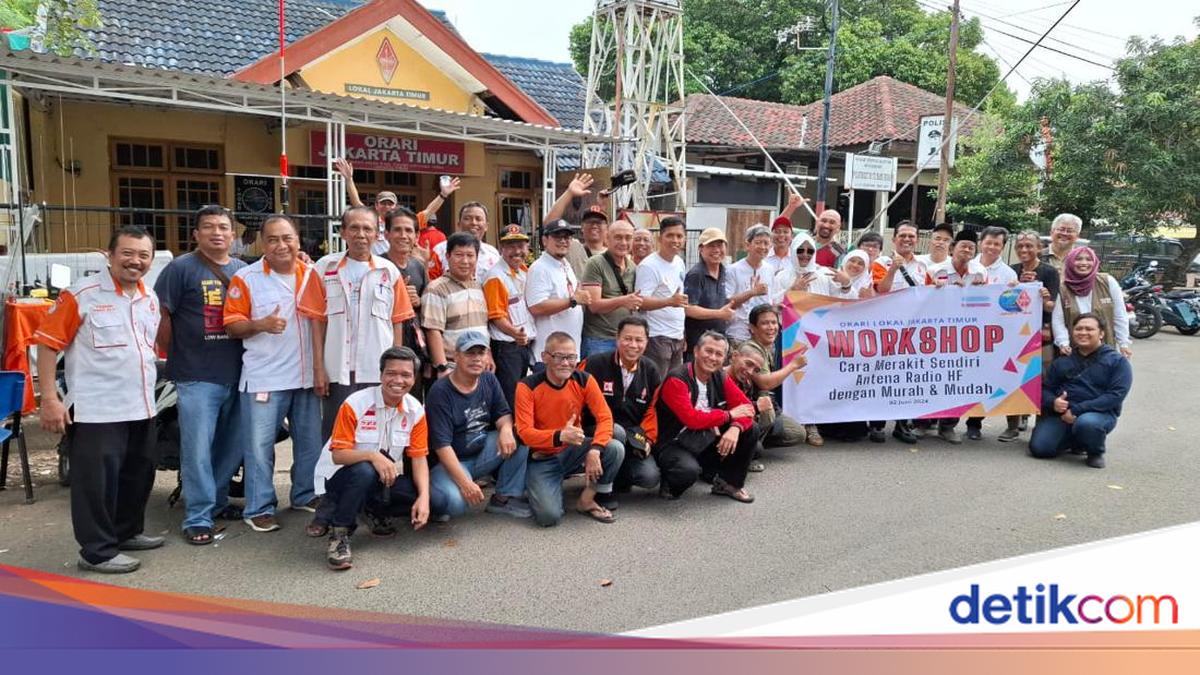
The Indonesian Amateur Radio Organization (ORARI), as the sole government-recognised organisation, has proven its strategic role. Through its Communication and Rescue (CORE) personnel, amateur radio is present in disaster mitigation and support for national humanitarian operations, such as ‘Operasi Ketupat’ for smooth Lebaran homecoming travel.
The dedication of these volunteers is an invaluable asset that operates independently without relying on any commercial service providers.
Challenges and the Future
Of course, the challenges are not light. We face pressure from commercial satellite industries and rising electromagnetic pollution (noise floor) in big cities. However, amateur radio always finds ways to adapt.
Initiatives like the global ‘Ham Radio Open House’ are our efforts to reclaim a positive image in the public eye and demonstrate that we are at the forefront of future communication engineering.
In conclusion, amateur radio in this second century is no longer merely a pioneering experimentation tool. It is the most democratic, resilient, and continuously innovative communication platform. To me, the relevance of this hobby lies in its ability to unite millions of people across national borders in global friendship, while remaining a vital national telecommunications reserve when ‘all other systems fail’.
Amateur radio does not just survive; it continues to evolve as the thread that weaves world brotherhood within the framework of technology. Let us open the doors of our stations, because this is where the future of communication is being tested.
HAPPY WORLD AMATEUR RADIO DAY, 18 APRIL 2026!
73 de YC0SJA.
YC0SJA. YC0SJA is the author’s callsign in ORARI.