
The Twilight of Salt Farmers in Kusamba
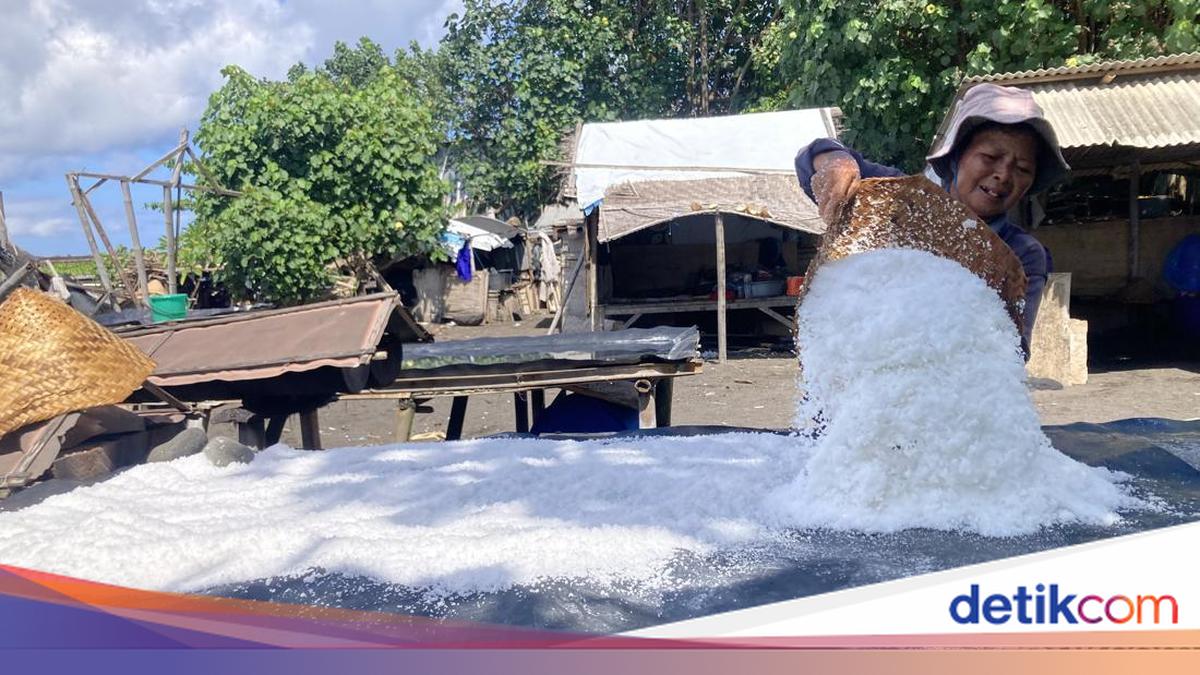
The coastline of Kusamba in Kusamba Village, Dawan Subdistrict, Klungkung Regency, Bali, consists of salt crystal fields that once supported hundreds of households. However, those days are gone. Kusamba salt was once renowned in its time. Produced using ancient techniques with wooden troughs made from coconut trees, these salt crystals were recognised worldwide for their soft texture and savoury taste. However, that recognition was not strong enough to withstand the tide of changing times. Now, Kusamba salt is entering its twilight. The number of salt farmers along the Kusamba coast continues to dwindle, leaving only 16 households. One of the Kusamba salt farmers who is still holding on is the elderly couple Ni Nyoman Sekar (55) and her husband Nyoman Koplog (60). Sekar admits that the uncertain income from salt farming makes her children reluctant to continue the profession. “I have two children, neither of whom wants to continue. They know how to make this salt, but they don’t want to carry it on,” said Sekar while levelling a mound of salt being dried on Kusamba Beach on Sunday (3/5/2026). That morning was bright. Sekar and Koplog were still enthusiastic about carrying baskets filled with wet salt crystals despite the scorching sun. Their sturdy bodies combed the increasingly narrow expanse of black sand encroached upon by abrasion. In addition to the threat of abrasion, the salt-making process is hindered when rain falls. The same occurs when high tides come and flood Sekar’s salt fields. The discontinuous production process, combined with a lack of buyers, makes Sekar and her husband’s income even more uncertain. “Buyers are also becoming rare. If this continues, we have to go into debt first. Then, when something sells, we pay it back,” she added. Sekar admits that Kusamba salt will soon become just a memory. She says that there are no young salt farmers left now. Only 16 Households Remain The Chairman of the Sarini Segara Kusamba Salt Farmers Group, I Nengah Diana (51), revealed that the number of salt farmers in Kusamba is now only 16 households. In the past, the entire coastline was filled with salt farmers. “In the past, our fields were very extensive. Along this beach coastline, there were salt farmers. We used to number in the hundreds of households, now only 16 remain,” said Diana. The production of Kusamba salt is done generationally and managed within families. Salt farmers, both men and women, work together in every stage of production. The salt production method is passed down through generations. Diana herself has been a salt farmer since she was young. The way to produce Kusamba salt was learned from her parents. With the changing times, that generational tradition is beginning to erode, and the children of Kusamba do not want to work in their parents’ salt fields. According to Diana, the reason is not only the flow of changing times that offer various job opportunities for the younger generation. But also changes in the natural landscape in the form of abrasion that devours their salt fields. “Abrasion has caused many farmers to lose their fields and eventually stop,” explained Diana. As a salt farmer, Diana can only express strategies to survive as best they can. She has not yet thought about ways to make Kusamba salt prosperous again as it once was.