
The Trail of Pasar Santa's Golden Era: From a Vibrant Creative Space to Silent Corridors
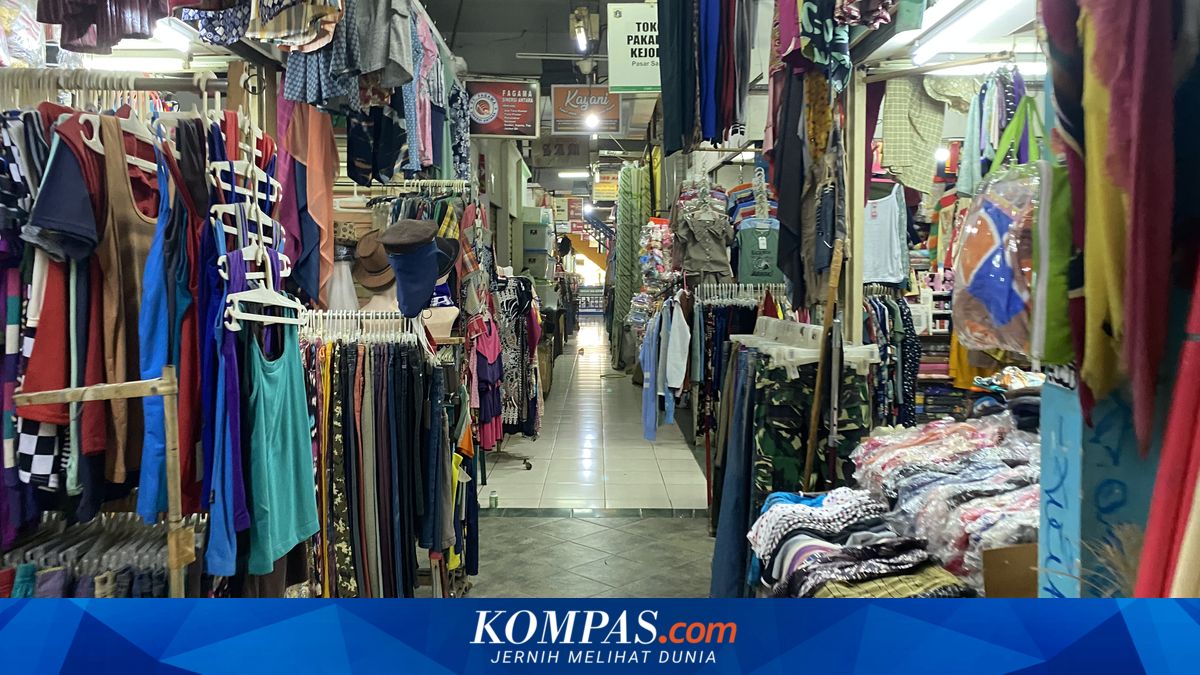
JAKARTA, KOMPAS.com — Silence is felt even before truly stepping into Pasar Santa. From behind Gate 1 on Jalan Cipaku I, Kebayoran Baru, South Jakarta, on Tuesday (21/4/2026) afternoon, what greets visitors is no longer the lively transactions that once defined the place.
Its corridors seem to hold their breath. Lights are on, but they are not enough to dispel the empty impression that spreads from one end to the other of the three-storey building.
Rows of kiosks with tightly closed rolling doors dominate the scene, the economic pulse within seemingly no longer as strong as it was a decade ago.
Amid their steps, the faint sound of rolling door iron vibrating creak… creak… blown by the wind from within the spacious yet quiet building can be heard.
This atmosphere contrasts sharply with the image of Pasar Santa, which was once one of the most vibrant spaces for young people in South Jakarta.
Pasar Santa is not a new name on Jakarta’s trading map. The market has stood since 1971 as a traditional market serving the needs of residents around Kebayoran Baru, South Jakarta. However, its long journey has taken this place through various transformations.
In 2007, Pasar Santa was revitalised into a modern market. Then around 2014, its name skyrocketed when the upper floor transformed into a creative space for young people—a hangout spot, vinyl hunting ground, thrift shops, to independent coffee shops that were still rare in Jakarta at the time.
At that time, Pasar Santa was more than just a market. It became a symbol of a new urban youth lifestyle—more experimental, freer, and more “alternative”. However, like many other urban spaces, that glory did not last forever.
Now, the condition of Pasar Santa shows a different face. On the ground floor, trading activities still continue, but at a slower pace. Kiosks for household supplies, gold shops, sewing services, to stationery stores still persist, but without significant crowds.
Many traders are seen sitting waiting for occasional customers. There are no more queues or lively conversations like in the past.
On the third floor, Dennis (34) still runs his home-cooked food business that he started in 2018. He sits behind a simple display case, occasionally serving customers who come without long queues like before.
In the pre-pandemic era, the upper floor of Pasar Santa was almost never quiet, especially on weekends, he said.
“If it was before 2020, it was still good. A day could reach Rp1.5 million to Rp2 million on weekends,” said Dennis when met by Kompas.com at his kiosk on Tuesday (21/4/2026).
Now, that figure has shrunk dramatically. He mentioned that his daily income is often uncertain, even dropping to a tenth of its peak. The change is not just about numbers, but also the atmosphere that has vanished from his business space.
“Now the best is Rp300,000 to Rp600,000. Sometimes when it’s really quiet, it can be just Rp150,000,” he said.
For Dennis, what is most felt is not just the drop in turnover, but the loss of the reason people come to the upper floor. He mentioned that in the past, there was a collective appeal that made visitors go up without needing to be called.
Fathan still remembers the times when one day could be very busy without long breaks. The flow of visitors came not just to drink coffee, but also to interact, work, or simply spend time.