
The Tiyu Tradition in Jantuk Village, Originating from the War between the Selaparang Kingdom and Karangasem
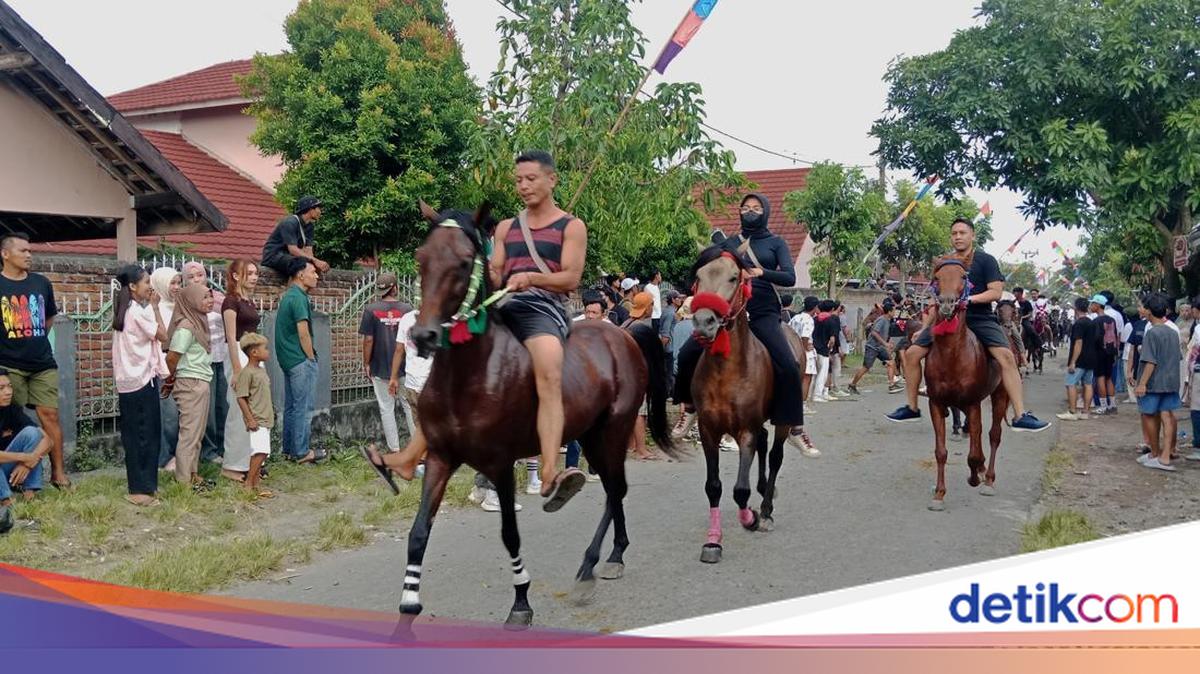
The Tiyu tradition is an annual event eagerly anticipated by the community in Jantuk Village, Sukamulia Subdistrict, East Lombok, West Nusa Tenggara (NTB). The activity is routinely held every year on 1 and 2 Syawal, or during Idulfitri and the day after.
The term ‘tiyu’ derives from the local language, meaning a procession on horseback. This tradition aims to strengthen ties among villagers and welcome the day of victory after performing the fasting worship.
The exact origin of the tradition up to the present day remains uncertain, as there are no historical records explaining the beginnings of the Tiyu tradition. However, based on accounts from local village figures, the Tiyu tradition is believed to have originated from the war between the Selaparang Kingdom in East Lombok and the Karangasem Kingdom in Bali.
At that time, the Karangasem Kingdom invaded the East Lombok region, which was then controlled by the Selaparang Kingdom. To defend its territory, the Selaparang Kingdom requested assistance from troops of the Gowa Kingdom in Sumbawa.
“Those troops came to Lombok riding horses as a means of transportation,” said the Head of Jantuk Village, Yudi Hermawan, when met by detikBali on Sunday afternoon (22/3/2026).
After successfully repelling the Karangasem Kingdom’s forces, some Gowa Kingdom warriors did not return to their homeland. Instead, they settled in the area now known as Jantuk Village.
As the conflict ended, the horses previously used in warfare were then utilised to celebrate the victory. From this, the Tiyu tradition is believed to have begun and has been preserved to this day, especially during the Idul Fitri moment.
“The story we received from our ancestors mentions that this tradition is related to the Gowa Kingdom warriors who came to help in the war of the Selaparang Kingdom in present-day East Lombok; they arrived riding horses at that time,” said Yudi.
He explained that the implementation of Tiyu during Idulfitri also carries symbolic meaning as a form of celebration of victory after a full month of restraining desires during Ramadan. The tradition also serves as a connector of kinship and nurtures a sense of brotherhood among villagers.
Observations by detikBali showed thousands of residents crowding the route of the Tiyu tradition. The horse procession route is about 500 metres long. Hundreds of horses lined up complete with their riders, from children to adults, both men and women.
The peak of the procession is scheduled at 03.00 WITA in the early morning. This time was chosen because it has become a hereditary stipulation in the implementation of the Tiyu tradition in Jantuk Village.
This Eid, there were 189 horses participating in the procession. These horses were brought in from various regions on Lombok Island, such as West Lombok, North Lombok, Central Lombok, and East Lombok.
“We can say that all the horses on Lombok Island we bring to our village. This year there are about 189 horses,” said Yudi.
Rental Price Rp 3 Million-Rp 5 Million
Every year, villagers are enthusiastic about participating in the Tiyu tradition. This is evidenced by the quite expensive horse rental prices, namely Rp 3 million to Rp 5 million, depending on the size, speed, and agility of the horse.
Long in advance, Jantuk Village residents will seek these horses from various corners of Lombok Island. This is because in Jantuk Village itself, very few people keep horses.
“Like it or not, we have to go out to find them, because there are no horses here and we want to get good ones,” said Agus Riadi, one of the local residents.
According to Agus, the Tiyu tradition also serves as a prestige arena among participants. The larger and more majestic the horse’s posture, the higher the confidence when performing.
Not only that, the Jantuk Village community prioritises costs for renting horses over buying Eid clothes. The high enthusiasm for this tradition is also evident from expatriate villagers who choose to return home to participate in the Tiyu procession.
“As long as they have Jantuk blood, they will definitely come home, and even if they have never kept horses, they will be brave and able to ride horses,” said Agus.