
The 'Time Bomb' Disaster in the US, Ready to Explode at Any Moment Due to Trump
President of the United States’ efforts to boost domestic uranium production are seen as posing a serious threat to communities in South Dakota. Local residents describe the project as a ‘time bomb’ that could explode at any moment.
Sarah Peterson is one of the residents opposing the uranium mine project. She lives in Hot Springs, a town located about 50 kilometres from the uranium mining site in South Dakota.
She is also the founder of the environmental group ‘It’s All About the Water’. According to her, the community currently lives in a very dry area.
“We cannot live here without water,” she said, quoted from Science, Friday (24/4/2026).
Starting next year, engineers plan to begin drilling for uranium in South Dakota. Thousands of wells will inject specially processed fluid into uranium-rich sandstone formations up to 230 metres underground.
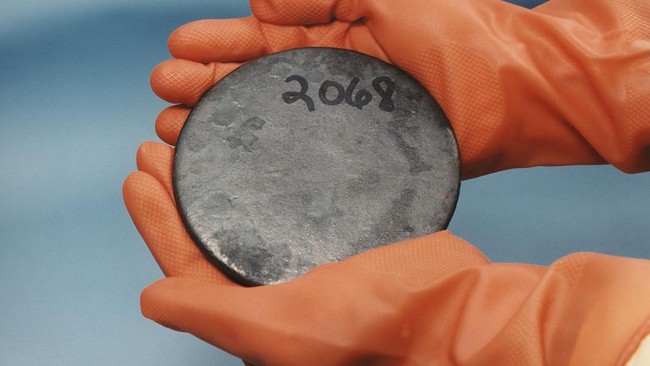
The fluid will dissolve the uranium into the surrounding groundwater. Additional wells will pump the water to the surface, after which workers will extract the uranium and convert it into a concentrated form known as yellowcake.
Yellowcake is then purified into fuel for nuclear power plants or components for nuclear weapons. The miners will then pump the wastewater deep underground.
This large-scale uranium mining is part of the ‘Dewey Burdock Project’. The project aims to help meet the surge in global uranium demand.
The Trump administration has expedited the regulatory approval process for this mine as part of efforts to revive the national nuclear power and mining industries.
Across the western US, companies are planning dozens of other uranium mines using the same extraction method, known as in situ recovery (ISR).
ISR mines have produced more than half of the world’s uranium and have long been touted as a cheaper and more environmentally friendly alternative to open-pit and underground mining.
These mines do not excavate large areas of land or produce large piles of toxic waste. The method also uses less water than traditional mining techniques.
Despite these advantages, the Dewey Burdock Project has faced strong opposition and legal challenges from local communities and Native American tribes.
One concern relates to the complex geology of the area, which could allow contaminated water to leak into the main aquifer supplying water to communities and agriculture throughout the rugged Black Hills region of South Dakota.
Another concern is suspicion that the project cannot comply with federal regulations requiring ISR mines to return groundwater to pre-mining conditions.
“This is a time bomb,” Peterson said.
Although enCore Energy, the company backing the mine, did not respond to requests for comment, industry representatives and federal regulators are accused of downplaying contamination concerns and their impacts on communities.
The central government asserts that the mine’s design is appropriate. However, this conflict has highlighted recent research on how uranium behaves in aquifers, raising difficult questions about whether aquifer restoration is truly successful and effective.
Researchers have studied, for example, how microbes living deep within aquifers play a key role in locking uranium in place, which may explain why post-mining efforts to keep residual uranium in place often fail.
Nevertheless, the same discoveries are inspiring innovative new restoration methods that could ultimately be used at the Dewey Burdock Project and elsewhere around the world.
“It’s very complicated,” said Tanya Gallegos, a research engineer from the US Geological Survey (USGS).
“The more we understand this complexity, we can figure out how to optimise uranium recovery and groundwater restoration,” she said.