
The Throne Shall Not Endure: Correcting the Position of Party General Chairman
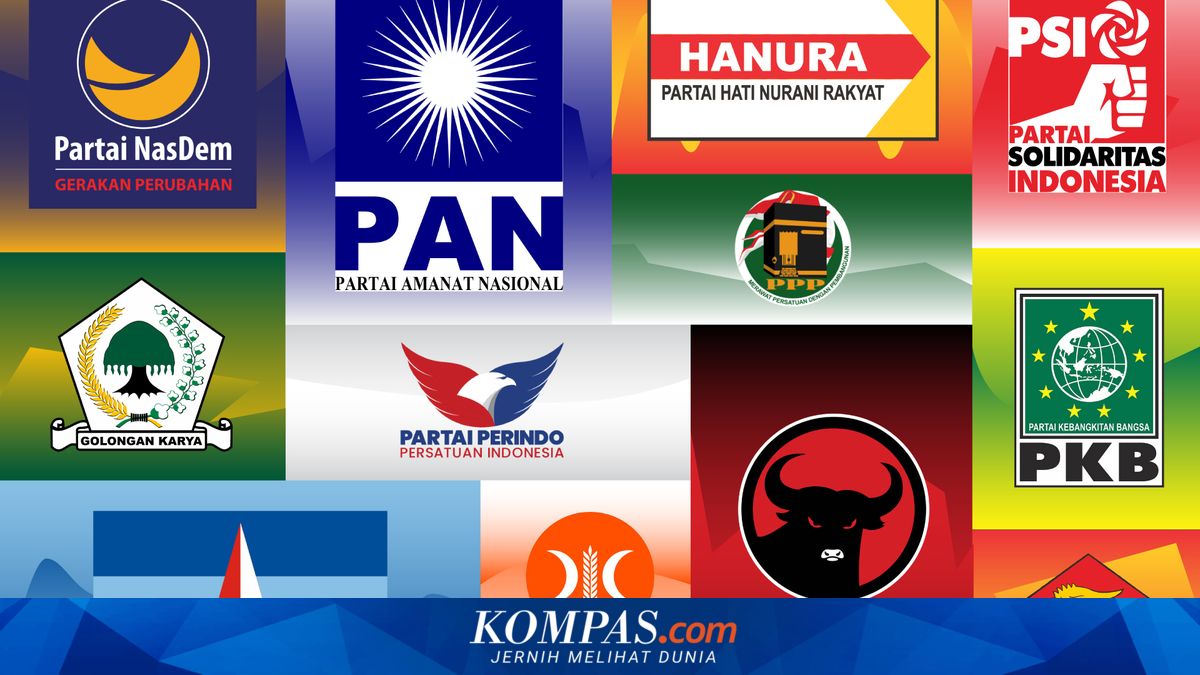
The idea of limiting power has once again emerged in public discourse. This time, it comes from the Corruption Eradication Commission (KPK), which emphasises the importance of limiting the tenure of Political Party (Parpol) General Chairmen (Ketum) to a maximum of two terms. This statement is not without reason, but stems from an analysis of structural problems in party governance, often characterised by the concentration of power among a handful of elites. From the perspective of corruption eradication, term limits serve as an early prevention against the abuse of authority. Without leadership circulation, parties become trapped in a vortex of conflicts of interest and obligations of gratitude. Through regular leadership rotation, power monopolies can be dismantled, breaking the chain of rent-seeking politics and conflicts of interest. In this republic, the president is limited to two terms, regional heads are similarly restricted, and even other strategic positions have clear time boundaries. Instead of becoming a crucible for new leaders, party congresses more often turn into theatres of acclamation that silence the essence of democratic competition. It is at this point that the paradox of democracy finds its most vulgar form: political parties, which should be the womb of democratic leadership, are instead operated with feudal and authoritarian breaths. Power that should circulate now freezes in the grasp of a handful of elites. As a result, regeneration—the heartbeat of the organisation—becomes merely a formality on paper. Robert Michels called this phenomenon the iron law of oligarchy. This is not just a technical deviation, but a structural symptom that modern organisations tend to be dominated by a handful of elites. In the context of political parties, this iron law seems to find its justification: the longer power accumulates, the harder it is to release it. Similarly, in Vilfredo Pareto’s theory of elite circulation, power without time limits acts as a “blockage” that kills political cadre mobility. When access to leadership positions is blocked by eternal incumbents, meritocracy collapses, and regeneration becomes a myth. It is here that term limits become crucial to ensure healthy internal competition and keep the organisation’s dynamics adaptive to change. Moreover, term limits also function as a mechanism to prevent organisational decay. Leadership that lingers too long tends to create stagnation and dull sensitivity to the currents of the times. If power circulation stagnates, parties face a time bomb: cadre apathy will lose the passion for politics, and internal fragmentation, where wild factions emerge as a form of resistance to the death of healthy competition. Furthermore, power without limiting mechanisms tends to be corrupt, as in the classic adage from John Dalberg-Acton (Lord Acton): “Power tends to corrupt, and absolute power corrupts absolutely.” In the context of political organisations, this tendency does not always manifest as material corruption alone, but also as abuse of authority, manipulation of internal rules, and monopoly over decision-making. Yet, the basic principle of democracy demands the opposite. Montesquieu asserted that power must be limited to prevent deviation. Limitation is not a restriction on freedom, but protection against abuse. Without it, power easily turns into domination that closes spaces for participation. This phenomenon is evident in many parties in Indonesia: strategic decisions are centralised, cadre development is blocked, and spaces for deliberation are narrowing. In the long term, this condition not only damages the internal quality of the party but also impacts the overall quality of democracy. Oligarchic parties will tend to produce unresponsive policies because they are more focused on maintaining internal stability than absorbing public aspirations. In many ways, the term limit argument is dismissed as merely “internal party affairs,” a justification often chanted as a shield. However, behind it, they turn a blind eye to the reality that political parties are not private property. Parties are public institutions that manage state power, determine leadership candidates, and are funded by public money. When the impact is public, party accountability cannot be confined to narrow spaces. Meanwhile, in the framework of modern democracy, political parties should be arenas of open and fair competition.