
The Struggle of BJTB Mosque to Confront Premanism Under the Buah Batu Toll
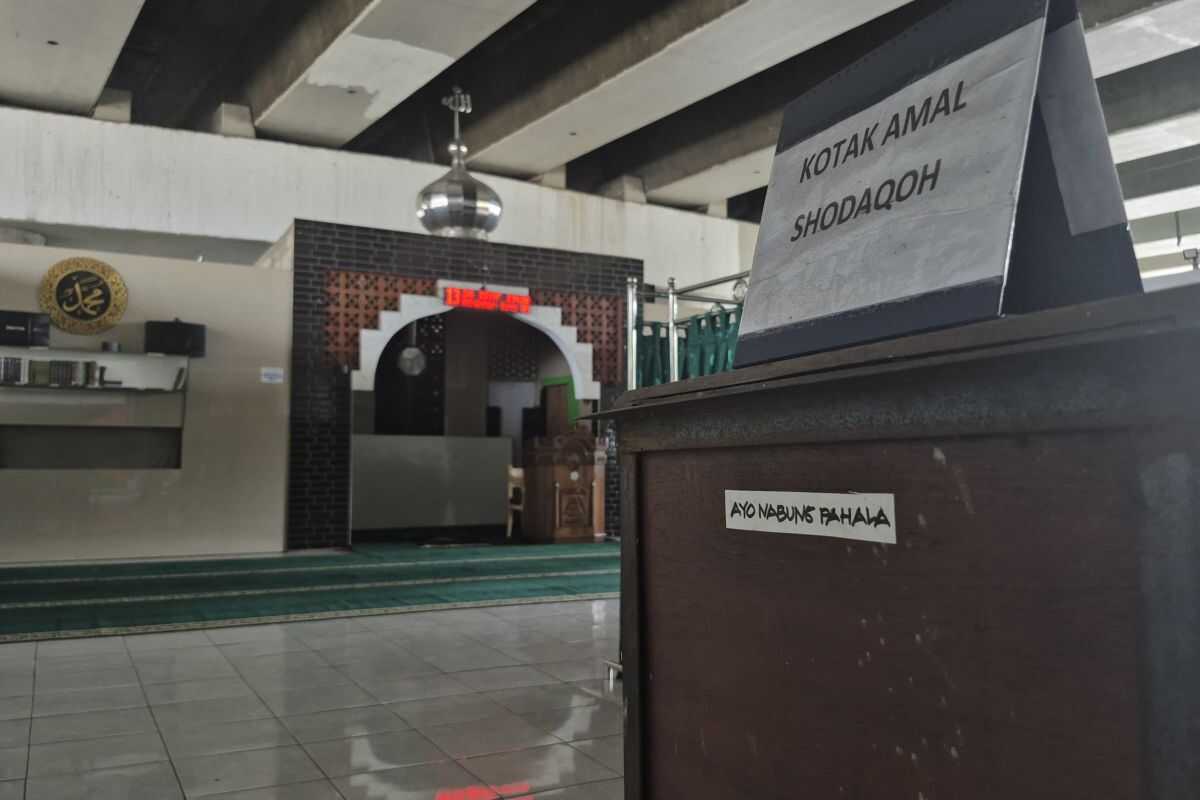
The presence of Masjid Hijrah BJTB has drastically changed the face of the under-toll area, which began as a dirty and intimidating space, and has now become a safe site for worship, learning, and sharing.
Under the concrete shadows of Buah Batu Toll, Bandung, there is a plot of land that long lived in a bad reputation, a space more avoided than passed through.
The smell of used oil mixed with accumulated rubbish, and standing water transform the roads into slippery mud each time it rains, while wary gazes become the daily language for anyone who passes.
In that place, thugs roam, illegal transactions take place almost unhidden, and tension hangs in the air, as if the place has its own law.
Every corner of the under-toll tunnel feels like a forbidden territory, where the influence of thugs weighs on even residents who are merely passing by or who just want to check the surroundings.
For local residents, the under-tunnel had once been a space rife with social friction, threats of physical harm, and fear that made goodwill reluctant to visit.
“Previously, this area was also a stopover for motorcycle gangs and other negative activities. It was very scary, with many thugs wandering about,” recalled Saepul Rohmat (47), remembering the days when merely crossing the area required courage.
With a heavy tone, he recalls how almost every night there was a quarrel, and people avoided the night earlier to dodge threats. There had even been raids because of illegal oil sales.
In the midst of the chaos, Saepul emerged with a determination to hijrah.
He was no longer part of the motorcycle gangs who used to fill his days, but a man who wanted to bring change.
Each step now aimed to draw nearer to religion, leave his old lifestyle behind, and help others who might have gone astray like him.
Together with nine friends, he decided to establish Masjid Hijrah Bawah Jembatan Tol Buah Batu (BJTB) under the toll bridge as the starting point of hijrah.
Its location near the Buah Batu Toll exit makes the site strategic, yet challenging due to its vulnerability to crime.
“We want to hijrah and establish a mosque to improve ourselves,” he said.
The struggle to establish the mosque began with mediation with the preman, compromises offered, and a motorbike parking area 6×8 metres started to be managed.
Every step was carefully calculated, because a wrong move could spark a conflict.
“At first, some preman refused, but we remained patient and prepared things gradually,” he said.
This steadfastness became the main asset in facing the initially heavy challenges that often involved physical conflict, even with nearly a hundred motorcycles gathering to guard the mosque against the threat of vandalism.
“We stood guard for two full days, but eventually the mosque was safe,” he added.
He recalls the adrenaline and fear mixing as they stood guard at night among people who remained sceptical of their intentions.
Besides that, the presence of Ustaz Hendra from Lengkong became the key to ensuring the mosque operates in accordance with sharia.
“We needed a guide so the mosque could be run properly,” he said.
Ustaz Hendra also helped provide correct religious instruction, so the youths involved could be directed well and the mosque would not merely be a building, but a centre of spiritual education.
Slowly, the perceptions of the preman changed, and the once harsh environment began to accept the mosque’s presence.
Some of the preman who initially opposed it now help with small-scale construction, arranging spaces, or simply guarding the mosque during activities.