
The Strait of Hormuz: From the Persian Empire to the World's Vital Artery
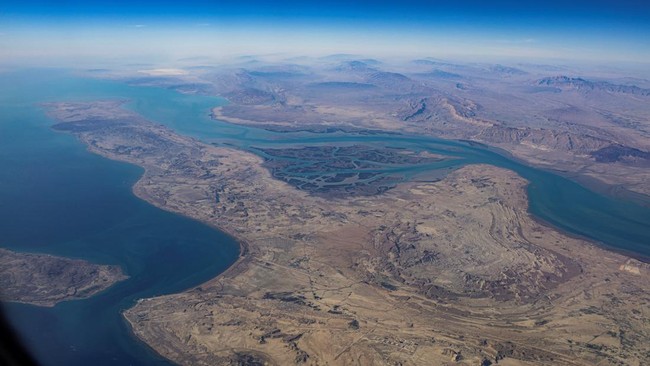
The Strait of Hormuz is one of the world’s most strategically important maritime routes. From ancient trade corridors to a modern geopolitical epicentre, the Strait of Hormuz plays a crucial role in shaping global economic and political dynamics.
Currently, approximately 20% of the world’s oil supply passes through this strait daily. This position makes it a critical point for global energy stability.
A Crossroads of Trade Since Ancient Times
The history of the Strait of Hormuz can be traced back to the era of ancient Persian empires. The Achaemenid Empire (550 BC) utilised this route to facilitate trade with India and African regions.
During the golden age of Islam, Arab merchants made the strait their primary route for spice trade. Ships from various regions carried merchandise whilst simultaneously serving as a medium for cultural exchange.
Several important ports around the strait developed into centres of trade and power, such as Hormuz Island and Muscat. Controlling this region meant controlling access to the Persian Gulf.
European Powers Competing for Control
Entering the 16th century, the Strait of Hormuz became a target for European maritime expansion. The Portuguese Empire successfully seized the territory and constructed a fortress on Hormuz Island to control the East-West trade route.
Portuguese dominance subsequently triggered competition from other European trading companies, such as the Dutch East India Company (VOC) and the British East India Company.
Eventually, the maritime power of the British Empire became dominant in the Gulf region. British influence in this area subsequently paved the way for their involvement in managing the oil-rich territories of the Middle East in the 20th century.
A Critical Point in the Global Oil Economy
The significance of the Strait of Hormuz increased sharply in the 20th century following the discovery of substantial oil reserves in Iran, Iraq, and Saudi Arabia.
Currently, approximately 17 million barrels of oil per day pass through this route. Despite being only about 21 nautical miles wide at its narrowest point, the strait has become one of the world’s most important energy “choke points”.
The global economy, from the United States, China, and India to European countries, is dependent on the energy distribution route that passes through the Strait of Hormuz.
In addition to its economic importance, the strait has frequently become a centre of geopolitical tension.
One of the largest conflicts occurred during the Iran-Iraq War, when oil tankers became targets of attack during the period known as the Tanker War in the 1980s.
Tensions also frequently occur between Iran and the United States, particularly regarding Iran’s nuclear programme and international sanctions. Iran has several times threatened to close the Strait of Hormuz if pressure on the country increases.
An Uncertain Future
Within the modern global economic system, the Strait of Hormuz simultaneously serves as a vital route and a point of geopolitical pressure.
Several Gulf nations have also attempted to reduce their dependence on this route by constructing alternative pipelines, such as:
The Habshan-Fujairah Pipeline in the United Arab Emirates
The East-West Pipeline in Saudi Arabia.
However, the capacity of these alternative pipelines remains far smaller compared to the volume of oil that typically passes through the Strait of Hormuz.
In the future, the transition to renewable energy sources has the potential to reduce the world’s dependence on oil. Nevertheless, for the coming decades the Strait of Hormuz will remain an extremely crucial route for the global economy.