
The Story of the World's Wealthiest Muslim Gold King: Building a Synagogue Beside a Mosque
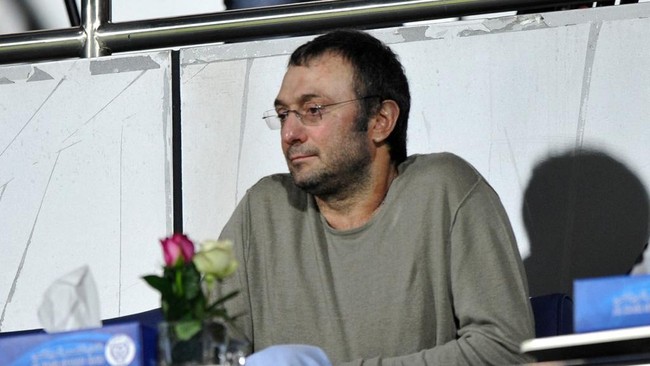
A billionaire Muslim from Dagestan, Suleiman Kerimov, has drawn considerable attention after constructing a synagogue alongside Islamic places of worship.
The conglomerate, whose wealth stems from gold, has built a synagogue complex in northern Derbent, a historic city in the Republic of Dagestan, Russia. He stated that the construction was undertaken in service of world peace.
This week, Kerimov was recognised by Forbes as Russia’s wealthiest person, surpassing metal tycoon Vladimir Potanin. A surge in gold prices has increased Kerimov’s wealth to US$24.7 billion, approximately Rp400.93 trillion, making him a dominant figure in Russia’s wealth landscape.
According to The Bell, Kerimov is widely known for his remarkable life story. He suffered severe burns in a car accident in 2006, nearly lost his entire fortune during the 2008 crisis, and was subjected to US sanctions in 2018.
Kerimov’s entry into big business began in 1999 with the purchase of Nafta Moskva for just US$50. He leveraged the company’s assets as collateral for loans, establishing his initial foundation for wealth accumulation.
That same year, he entered politics as a member of the Liberal Democratic Party, which is nominally opposition but loyal to the Kremlin. Since 2008, he has served as a senator in the Russian Federation Council representing the Republic of Dagestan.
In 2004, Nafta Moskva began accumulating shares in major companies including Gazprom and Sberbank. His success in securing cheap loans was supported by market knowledge, negotiation skills, and connections with influential officials such as Igor Shuvalov.
In 2006, he began expanding internationally with assistance from Allen Vine, a former head of Merrill Lynch’s Russian branch. However, a car accident in Nice halted all plans, and he underwent lengthy treatment for severe burns.
By early 2008, he had sold nearly all his Russian assets and held approximately US$20 billion in cash. This money was used to purchase shares in global companies such as BP, Boeing, Deutsche Bank, and Morgan Stanley.
When the global financial crisis struck, Kerimov nearly lost everything. Forbes noted that he was left with only his house, car, and private jet before eventually recovering with a focus on the Russian domestic market.
He purchased the debt-ridden construction company PIK and acquired nearly 40% of Polyus Gold shares in 2009. The loan for the Polyus Gold purchase came from the state-owned bank VTB and became his most profitable investment.
Since the pandemic, his wealth has increased by US$14.7 billion, primarily from his 77% ownership of Polyus Gold through his son, Said Kerimov. Kerimov now stands atop Russia’s wealth rankings, despite being subject to US sanctions and having faced investigation by France.
Sanctions and money-laundering allegations, which have since been dropped, have not prevented Kerimov from leaving his mark as a symbol of strength, resilience, and now, interfaith peace. The Derbent synagogue project stands as concrete evidence of this vision.