
The Story of the Elder of Masjid Salman ITB: Inspired by Bung Hatta
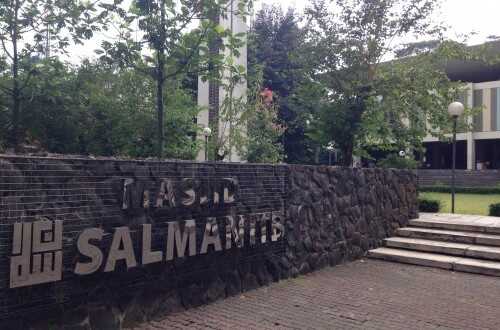
Muhammad ’Imaduddin ’Abdulrahim, affectionately known as Bang ’Imad, was born on 21 April 1931 in Tanjung Pura, Langkat Regency, North Sumatra. At the Institut Teknologi Bandung (ITB) in West Java, he earned the epithet “elder” of the Electrical Engineering Department, and his legacy endured not merely as an academic but also as a national Islamic preacher.
Bang ’Imad was a founding figure of Masjid Salman ITB. He descended from a distinguished line of Islamic scholars. His father, Haji ’Abdulrahim Abdullah, was an alumnus of Al-Azhar University in Egypt. His ethnicity was Minangkabau, and his father was active in politics as a member of the Constituent Assembly from the Masyumi Party. His mother, Syaifatul Akmal, was descended from the nobility of the Langkat Sultanate.
The story of his father’s studies in Egypt was inseparable from the role of the Langkat Sultanate. Bang ’Imad’s grandfather served as administrator of the sultanate’s royal mosque from the 1870s. His son, ’Abdulrahim, was subsequently entrusted to the sultanate’s mufti, Haji Majjadah, as a religious student. After marrying, ’Abdulrahim and Syaifatul Akmal departed for the Holy Land and subsequently proceeded to Cairo.
While in Egypt, the couple was blessed with their firstborn son, Abdulrahman, but the child passed away shortly thereafter. Subsequently, they were blessed with two daughters. Upon returning to Indonesia, their son Muhammad ’Imaduddin was born. Five years later, another son, Abdullah, was born.
During his childhood, ’Imaduddin’s parents instilled in him the fundamentals of Islam. Moreover, his father frequently recounted inspiring and heroic tales of the Prophet Muhammad and his companions. In his home, ’Imaduddin and his siblings were shaped through strict discipline, with no time wasted. For instance, the five daily obligatory prayers had to be performed at their prescribed times, and Qur’anic recitation was a daily routine.
Outside the home, ’Imaduddin attended primary education at a Dutch colonial school, Hollandsch Inlandsche School (HIS). His childhood was inseparable from the atmosphere of Indonesia’s struggle to expel its colonial rulers.