
The Story of Sambal Ning Niniek: From Travel Provisions to Export Market Success
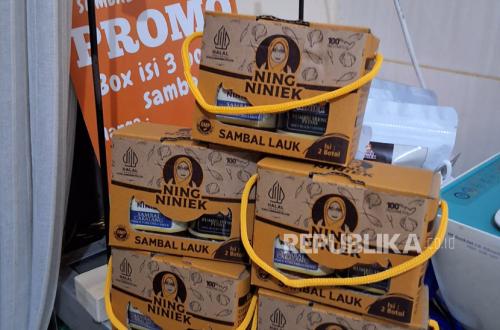
For many Indonesians, eating without chilli paste feels incomplete. From this simple habit, a home-based chilli paste business belonging to Sri Wahyuni has grown into an UMKM that now produces thousands of bottles monthly, even penetrating foreign markets.
Sri Wahyuni, a woman from Surabaya, East Java, never imagined the chilli paste business she started from her kitchen in late 2017 would develop to its current scale. Back then, she was still employed and only made sambal for personal consumption during travels.
“I used to bring my own cooked meals and chilli paste when travelling. It turned out that many friends really liked it,” Sri told Republika on Sunday (15/3/2026).
The idea to sell Sambal Ning Niniek originated from this simple experience. When travelling, she brought her custom-made sambal, which proved extremely popular with friends, especially those living abroad for extended periods. Sri’s sambal became the complement that made food taste more familiar to their palates. Many subsequently asked her to make more batches. Orders began arriving from her social circle. Seeing this response, Sri began considering more serious packaging of her sambal to reach a wider market.
“At first only friends were ordering. After a while, I thought, why not package it better so I could sell it more widely,” she said.
The first step began with small-scale production. Sri made only around 50 bottles of sambal per production batch. Since she was still employed, the cooking process usually happened on weekends.
“Initially I made only 50 bottles. And that wasn’t every day, usually Saturdays or Sundays when I had time off,” she explained.
Building the chilli paste business was not always smooth sailing. Sri admits she made various mistakes initially because she did not yet understand business management and food processing optimally. Some products even became spoiled.
“Because we hadn’t yet studied about food business, we sometimes had products that got mouldy or spoiled,” she recalled.
That experience became an important lesson. She began learning about production techniques, packaging, and better marketing strategies. Gradually, the home-based business expanded. Orders increased and Sri began recruiting neighbours to help with production.
Initially only one person assisted. However, as demand grew, the number of workers continued to increase. Now Sambal Ning Niniek involves approximately 11 to 12 workers, ranging from production, administration, delivery, to sales staff.
“In production there are five people, administration two people, sales representatives two people, and delivery also has staff,” Sri noted.
Production increased dramatically. Whereas previously only dozens of bottles were made, Sambal Ning Niniek now produces approximately 5,000 to 6,000 bottles monthly. The products have also become increasingly diverse. The business not only produces sambal but also fish-based abon.
The first product created was spicy klotok fish floss, a family recipe that became the foundation of this business. “Klotok fish is a fish native to East Java that is usually processed into sambal. We tried processing it into abon,” she explained.
After the initial product was accepted by the market, Sri began developing various new variants such as smoked tuna sambal, cakalang sambal, anchovy sambal, prawn sambal, and baby squid sambal. Some recipes come from family, but many were developed through kitchen experimentation.
To maintain quality, Sri paid great attention to raw materials. Fish used was not purchased randomly from markets. She chose to work directly with fishermen from various regions across Indonesia. Roa fish, for example, comes from Sulawesi. Baby squid comes from Medan, smoked tuna from South Malang, and klotok fish from Lampung.
“We even request them to be made specially without preservatives such as formalin,” she stated.
For klotok fish alone, minimum purchases reached 200 kilograms per order. The chilli paste production process also requires considerable time. Freshly cooked sambal must be cooled overnight before packaging.
“Sambal usually takes two days until it is ready to be packaged,” she noted.
Beyond strengthening production, Sri also began expanding marketing. In 2023, she participated in an UMKM development programme organised by PT Pertamina (Persero) through the UMK Academy programme. Through this programme, Sri attended a Go Online class that helped her understand digital marketing strategies, ranging from Google Business to social media and marketplaces such as Shopee. That training had tangible impact on her online sales.
“Previously, online marketplace sales were around Rp8 million monthly. After participating in training and learning about advertising, it once reached Rp50 million,” she said.
Currently, average online sales for Sambal Ning Niniek range between Rp27 million to Rp30 million monthly. The Sambal Ning Niniek marketing network has also expanded widely. Besides being sold in various regions across Indonesia, the product also reaches foreign markets through resellers. Some are located in India, China, and Taiwan.
In a single order, foreign resellers have sometimes ordered up to 3,600 bottles of sambal. However, behind this development, Sri also faces new challenges, particularly concerning raw material supply.
Extreme weather affecting fishermen’s catch and agricultural yields meant raw material prices often remain unstable. Additionally, global geopolitical conflicts have also impacted availability of fish and imported packaging materials.
“The bottles we use have imported raw materials, so in just one week alone we have experienced price increases twice,” she noted.
Nevertheless, Sri remains optimistic. She believes UMKMs play an important role in driving the community economy. Through this business, she hopes to open more employment opportunities in her surrounding area.
“By purchasing UMKM products, the public also helps support the economy of people around the production area,” she concluded.