
The Story of Punch the Monkey: A Reflection on Human Reality
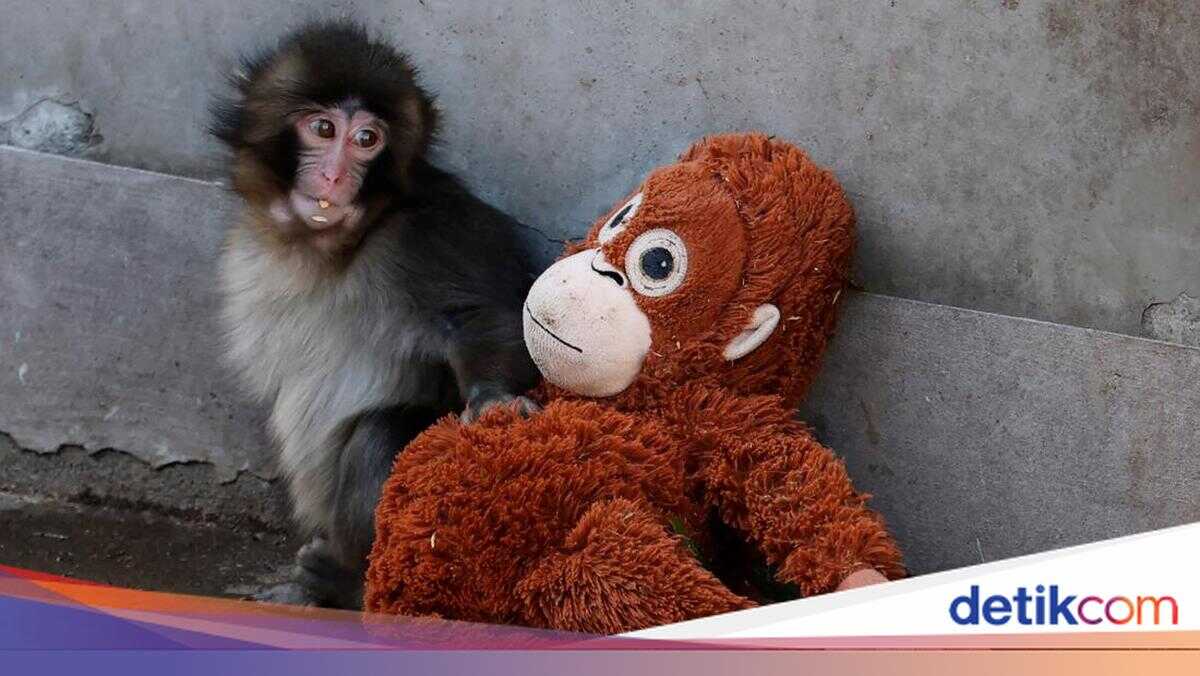
Amid the uncertain heated relations between the United States and Iran, the controversy surrounding the establishment of the Board of Peace, and American trade tariffs, the world has been moved by the story of Punch. Punch is a baby monkey of the macaca fuscata species housed in one of the enclosures at Ichikawa Zoo in Japan, whose plight has drawn empathy from people across nations. Across social media platforms in numerous languages, many internet users have been brought to tears by Punch’s life.
People have been moved to empathy and tears over Punch because his fate mirrors that experienced by humans. As a young monkey, he was rejected not only by his own mother but by the other monkeys as well. In one widely circulated video recording, Punch was subjected to violence by one of the larger monkeys and ostracised by the others.
In his solitude, living in an environment that persecuted him, Punch found companionship with a stuffed orangutan toy. It was to this toy that he seemed to seek refuge, pour out his troubles, and treat as a surrogate mother who would embrace him and provide warmth. It was only with this toy that Punch felt he still mattered and upon which he pinned his hopes. Punch carried the toy everywhere for as long as he remained unaccepted by the troop of monkeys at the zoo.
What Punch experienced mirrors many stories of human children, both in fairy tales and in reality, concerning life’s injustices. Among children born into this world, some frequently receive treatment they do not deserve. Beginning with a mother’s death, economic incapacity, or indifference towards a child, such circumstances lead to lives of neglect and hardship.
Not only do they lack a mother’s love, but they also face violence from others. Such conditions can render a child’s future bleak, deprived of education and a decent life. If left unaddressed, the sustainability of a society and nation becomes a matter of concern.
Punch’s story has stirred many people. They have come to realise that they may have been giving insufficient affection to their own children and to other children. Humans have often been unaware that they frequently fail to give proper attention to children and others, and even commit violence, injustice, and discrimination.
The other monkeys’ rejection of Punch may stem from his being seen as small and new. As a newcomer, he may not yet have been recognised as a member of the troop, which possesses its own social structure and hierarchy of power. To become part of the group, Punch had to endure a difficult existence, facing discrimination and violence that left him isolated and alone, ultimately leading him to seek companionship with something outside his community — a stuffed toy or a keeper. This chain of existence is perhaps what Punch must endure.
In life, the process Punch experienced is very real. To enter the real world, a person often must go through difficult and complex processes. Various rules, both natural and human-made, are rife with injustice, discrimination, and space afforded only to the strong. Anyone wishing to be accepted into a community or a life defined by a particular identity must experience rules similar to what Punch endured in that monkey enclosure.
Such behavioural norms make the chain of existence something terrifying, as experienced by Punch — rejected, slammed, pushed, bitten, scratched, and chased by larger monkeys, even by those who should have protected him. He suffered not only physically but was also socially excluded.
As humans, some among us receive similar treatment. How difficult it is to become part of life. There are conditions to be met, prices to be paid — measured not only in money but in dignity and honour. Such traditions ensure the chain of existence is never free from intrigue. To be accepted in life and gain power, one must endure a bitter and painful process. And once power is obtained, one creates the same process for others.
In monkey life, such behaviour is natural and driven by basic instinct. But when it occurs among humans, it must be questioned, for humans are beings capable of thought and civilisation. Yet humans seemingly prefer to follow basic instincts in pursuit of recognition and power. According to the seventeenth-century philosopher Thomas Hobbes, humans will naturally wage war against one another. Man becomes a wolf to his fellow man — homo homini lupus.
From Hobbes’s expression, humans tend towards conflict or mutual predation. Thus the process of human life mirrors the life of Punch the monkey — attacking one another in order to be accepted as part of the group.