
The Story of Pertamina-Supported Rengginang Business: From Kitchen to National Market
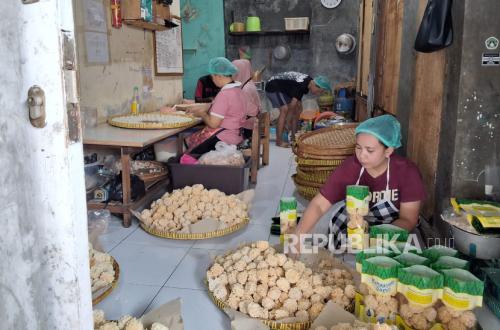
In a simple house in Solo, Central Java, the aroma of steamed glutinous rice once witnessed the beginning of an unplanned business journey. From that kitchen, the Rengginan Chandra Dewi brand grew. The business began from the efforts of a husband-and-wife couple who wanted to improve their circumstances while waiting for their first child to arrive.
“This business was actually accidental,” said Rengginan Chandra Dewi owner Yudha Anugrah to Republika on Saturday, 14 March 2026.
Yudha recalled that in the early 2000s, he and his wife both worked in the private sector. After marrying in 2000, the couple waited quite some time to have children. When they decided to pursue a fertility programme, they agreed that one of them should stop working to focus on family life.
In 2007, his wife chose to leave employment. Seeing his daughter remaining idle at home, Yudha’s mother-in-law offered a simple idea: making rengginang, a traditional food made from glutinous rice commonly served at celebrations or religious holidays.
Initially, the venture was merely about learning to make rengginang. His mother-in-law taught him the family recipe and production techniques she had been using on a small scale.
“Mum used to make only a little, at most eight kilogrammes a day. If it sold, we sold it; if not, that was that,” Yudha said.
The rengginang was made at home and then taken to Pasar Legi, the main market in Solo serving as a distribution centre for agricultural products. The pattern was simple: production at home, then sales at the market.
However, the business journey was not always smooth. In the first few months, rengginang stocks often accumulated because they did not sell quickly.
This situation actually became the first learning point for Yudha and his wife. He then proposed a simple change: reducing the package size to make it more affordable for buyers. This idea proved successful in opening new markets.
“The problem was really about learning. When stock accumulated, we found solutions. From that, the idea of making smaller packages emerged,” Yudha said.
The next change came around 2009. At that time, Yudha tried selling fried, cooked rengginang to a famous souvenir shop in Solo. Initially, he sent products in large quantities without small packaging.
The shop owner then suggested that rengginang be packaged in smaller sizes for easier sales to tourists. This suggestion prompted Yudha to begin learning about packaging. He purchased standing pouch plastic and attached simple stickers as product labels. Though still very simple, this packaging became an important step in his business journey.
The year 2011 marked the next turning point. Yudha decided to leave his job and focus entirely on developing the family’s rengginang business. He then travelled around offering products to various souvenir shops in Solo. His strategy was simple: visiting one shop, then the next, until his products became known.
Demand gradually increased, particularly approaching Ramadan. However, this growth also presented new challenges, especially regarding packaging supply, which was often scarce due to monopoly by plastic suppliers.
This problem eventually drove Yudha to seek a new, more stable packaging solution. In 2019, he received support from PT Pertamina (Persero) through its corporate social responsibility (CSR) programme. Through this programme, Pertamina helped finance the development of product packaging to make it more professional and stable in terms of supply.
With this support, Yudha was able to order special packaging that was more modern and transparent so that the product inside was clearly visible. The new packaging design proved to bring major changes to product marketing.
“After the packaging changed, resellers actually came to the house on their own,” Yudha said.
These resellers found Rengginan Chandra Dewi products at souvenir shops and then sought out the producer directly in Solo. From there, the distribution network began to expand to various regions in Indonesia. Today, rengginang products are marketed in various areas, ranging from Central Java, West Java, to Sulawesi and Kalimantan. Even through a contract manufacturing system, where Yudha produces but uses other brands, rengginang has been sent to international markets such as South Korea and the Netherlands.
In addition to souvenir markets, raw products are also marketed to traditional markets in various cities such as Sragen, Sukoharjo, and Yogyakarta.
To meet this demand, this home-based venture now employs approximately four to six workers from the surrounding community. Average production reaches 30 kilogrammes of raw rengginang per day and increases to approximately 50 kilogrammes approaching Ramadan. In a month, the requirement for glutinous rice raw materials can reach one tonne.
Yudha emphasised that raw material quality is the key to his product. He uses premium glutinous rice to maintain the natural savoury flavour.
“Rengginang is actually simple, just from glutinous rice. But if the materials are good, the taste is different,” he said.
As the business developed, product variations also increased. In addition to the original flavour, variants including sweet, shrimp paste, and spicy are now available, launched in 2026.
Despite this, UMKM dynamics remain a particular challenge. One of the biggest obstacles is human resources. As a small venture recruiting workers from the surrounding community without a formal recruitment system, labour availability is often uncertain when demand increases.
Because of this, the main strategy he implements is preparing larger stocks during high-demand seasons such as Ramadan. Amid various challenges, Yudha remains optimistic about the future of UMKM in Indonesia. According to him, market opportunities are actually still very wide as long as business operators are willing to continue trying to open new markets.
“If one souvenir shop is entered, try another. If one city is full, try another city. If the domestic market is full, try abroad,” he said.