
The Story of Admiral Cheng Ho and the Spread of Islam in the Nusantara
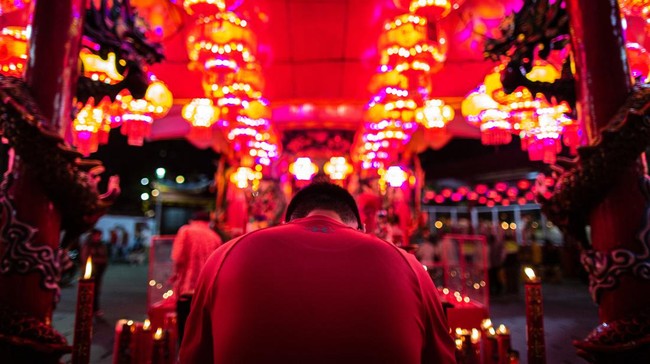
The maritime history records the ocean expeditions of the Ming Dynasty in the 15th century, led by Admiral Cheng Ho, as one of the greatest voyages of its time.
Based on historical data, this Chinese fleet sailed to various regions in Southeast Asia, South Asia, the Middle East, and the east coast of Africa. In the Nusantara region, the expedition focused on opening trade routes and state diplomacy.
The records of these voyages provide factual data on the development of Muslim communities and the process of cultural assimilation in Indonesia’s coastal areas, the impacts of which can still be traced today.
Background of Ma He and the Ming Dynasty
Admiral Cheng Ho was born in 1371 in Yunnan Province with the original name Ma He. He came from the Hui ethnic group, a minority in China that is demographically predominantly Muslim.
The use of the surname “Ma” itself is a transliteration of the name Muhammad in the tradition of Chinese Muslims. In his youth, Ma He became a war captive and was subsequently recruited into the imperial military bureaucracy.
He served Zhu Di, the Prince of Yan, who later ascended the throne as Emperor Yongle of the Ming Dynasty. The emperor’s trust in Cheng Ho was based on his military track record and diplomatic abilities.
His background as a Muslim also provided a strategic advantage for the Ming Dynasty. This identity directly facilitated communication and economic negotiation processes between the Chinese empire and various Islamic sultanates that dominated the main trade routes in Southeast Asia and the Indian Ocean in the 15th century.
Scale of the Expeditions and Maritime Infrastructure
Between 1405 and 1433, the Ming Dynasty government funded and carried out seven large-scale maritime expeditions under the main command of Admiral Cheng Ho. Official records from that era indicate that the fleet consisted of around 300 ships of various sizes, with a total crew of approximately 27,000 people for each voyage.
The crew composition was designed comprehensively, including military personnel, navigation experts, astronomers, foreign language interpreters, and medical staff. The main command ship, known as Baochuan or the Treasure Ship, was built with dimensions and logistical capacity specifically designed for long-distance ocean voyages.
The purpose of these voyages was purely state and economic, namely to expand the tributary system to gain recognition of Chinese sovereignty without military occupation, and to secure international maritime trade routes.
China exported manufactured commodities such as silk, tea, and porcelain, which were then exchanged for high-value local Nusantara products, particularly various types of spices and agarwood.
Strategic Routes and Security Stability in Nusantara
Geographically, the Nusantara region served as the main transit point and centre for commodity exchange for Cheng Ho’s fleet before continuing the voyage across the Indian Ocean to the west.
On Sumatra Island, the Ming Dynasty fleet regularly docked at the port of the Samudera Pasai Sultanate to conduct official diplomacy, exchange state gifts, and replenish ship logistics.
In addition to commercial aspects, the fleet was also actively involved in maintaining regional maritime security stability. In 1407, Cheng Ho led a military operation in the waters of Palembang to crush a pirate group led by Chen Zuyi, who had previously monopolised and disrupted trade flows in the Malacca Strait area.
After the operation, Ming authorities placed a Chinese Muslim figure named Shi Jinqing to manage the bureaucracy in Palembang, a step that effectively stabilised trade routes in the region.
On Java Island, the fleet is recorded to have anchored at major ports of the Majapahit Kingdom, including Tuban, Gresik, Surabaya, and Semarang, to conduct economic transactions with local bureaucrats and residents.
Formation of Muslim Communities and Legacy of Assimilation
The intensive economic interactions between the crew of Cheng Ho’s fleet and the residents in the Nusantara coastal areas contributed to the peaceful process of spreading Islam.
Based on the literature Yingya Shenglan written by Ma Huan, one of the official expedition interpreters, a number of Muslim crew members decided not to return to China and settled in transit ports.
They traded, intermarried with local communities, and formed structured Chinese Muslim communities along the north coast of Java and southern Sumatra.
This cultural assimilation process left historical assets that still operate in Indonesia. The Sam Poo Kong Temple in Semarang, which originally functioned as a landing point for the fleet, is now a cultural heritage site that visually shows the blend of Chinese architecture and Javanese traditions.
Similar historical influences are visualised in modern places of worship, such as the Muhammad Cheng Hoo Mosque in Surabaya and Palembang. These buildings architecturally combine traditional Chinese elements like octagonal roofs with standard mosque layouts, documenting the traces of intercultural interactions from the Ming expedition era.