
The Story Behind Jakarta's Istiqlal Mosque: A 17-Year Construction Journey
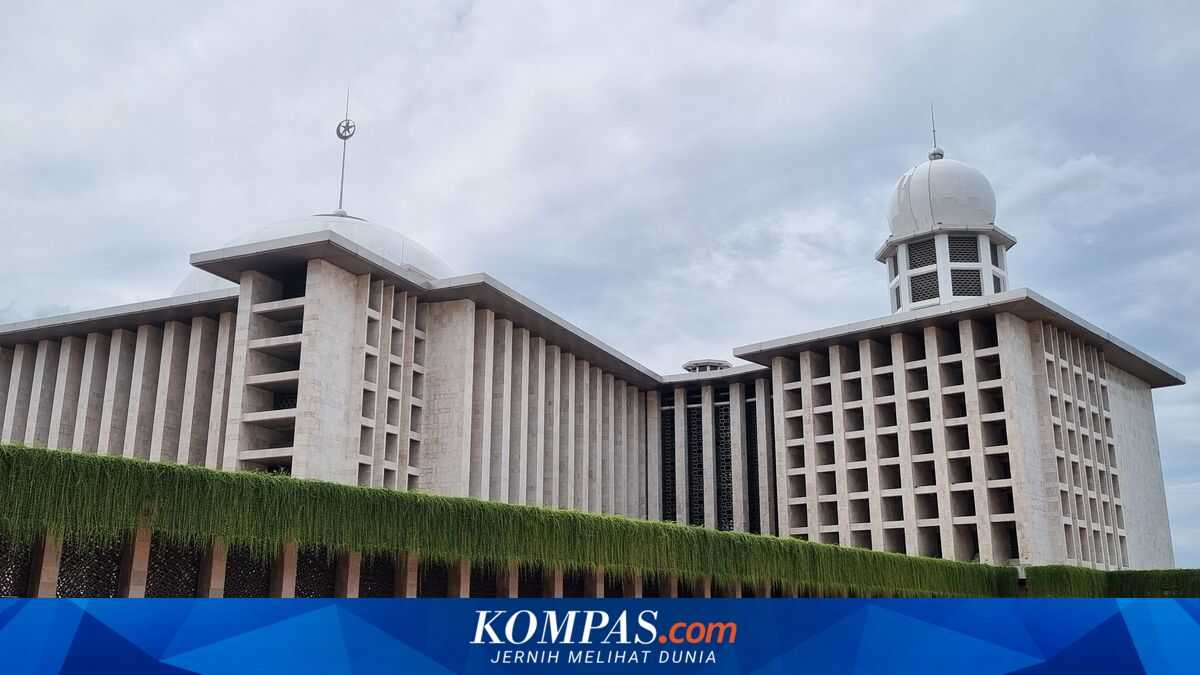
The construction of Istiqlal Mosque in Jakarta was not a project that came into being in a short timeframe. Its development was frequently hindered and halted on several occasions.
According to Kompaspedia from Harian Kompas, the idea to build Istiqlal Mosque originated in 1950. At that time, Religious Affairs Minister KH Wahid Hasyim convened a meeting with several Islamic leaders to discuss plans for establishing a national mosque as a symbol of Indonesian independence.
The committee subsequently launched a mosque design competition offering prize money of Rp 25,000 and pure gold weighing 75 grams. From 27 submissions received, the design titled “Godliness” by architect Friedrich Silaban was selected as the winner.
Notably, Silaban, who was Christian, demonstrated profound seriousness in designing the mosque. He studied references on domes and minarets, deepened his understanding of Islamic worship practices, and examined literature on the world’s great mosques for approximately three months before completing his design.
The selection of the mosque’s location prompted several alternative proposals. Vice President Mohammad Hatta previously suggested the Hotel Indonesia area as an alternative location. The decision proved difficult because the 9.5-hectare land had previously housed Wilhelmina Park, which functioned as a gunpowder depot and military vehicle storage facility. The demolition process proved quite complex owing to the technical aspects and historical significance of the area.
During a meeting with Islamic scholars at the State Palace, Soekarno expressed his vision for Istiqlal to become the largest and most beautiful mosque in the world. He desired a building that was not only magnificent but also sturdy and capable of enduring for more than 1,000 years as a symbol of Islam’s propagation.
After Silaban was appointed as the architect, construction commenced with the driving of the first pile by President Soekarno in 1961. However, the construction process did not proceed smoothly. The political turmoil and economic crisis that struck Indonesia during the 1960s, including budgetary constraints resulting from monetary crisis, caused the project to stall.