
The Story Behind Alfamart Cinemas: Starting from Limited Access for Remote Communities
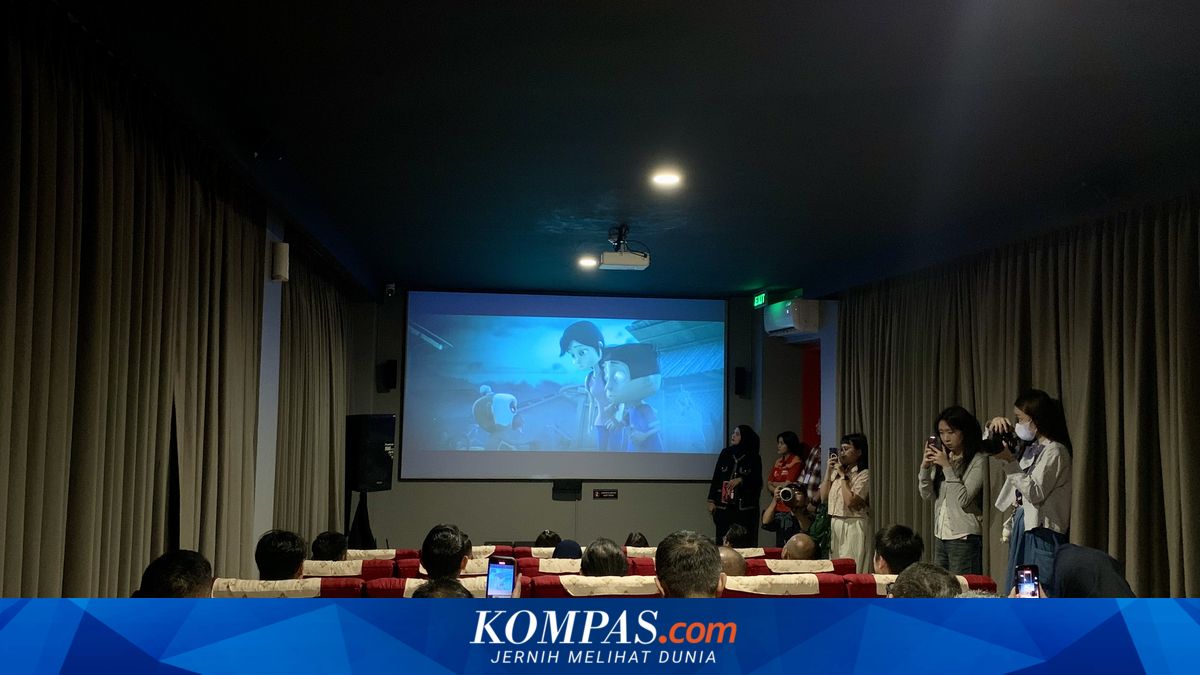
TANGERANG, KOMPAS.com - It is not difficult to find cinemas in major cities, especially in the Jabodetabek area. These film-watching venues are usually located on the top floors of malls, offering a variety of films with studio capacities of up to hundreds of viewers.
Entertainment that is considered ordinary for most Jabodetabek residents becomes a luxury for many people in remote areas, who have yet to be reached by big-screen access. Some have even never experienced watching a film in a cinema.
This disparity in entertainment access became the origin of mini cinemas in Alfamart minimarket outlets.
One day, Timothy stopped by an Alfamart in the Jalur Puncak 2 area and saw a group of children playing around it.
Out of curiosity, he asked where they usually spent their time.
The response he received was quite surprising; the children, according to Timothy, treated Alfamart as a “hangout” spot to enjoy the bright, air-conditioned, and comfortable atmosphere.
“So I was shocked, realising that their experience of coming to Alfamart might be equal to Indonesians, urban people, coming to a mall,” he said during the opening of the Alfamart mini cinema at Ruko Agricola, Gading Serpong, Tangerang, Banten, on Wednesday (1/4/2026).
“We want to bring equality in access to entertainment for all Indonesian people because, as we know, there are still many in the outskirts, in remote areas, people who don’t have it, who have never watched a film in a cinema in their lifetime because there is no access,” explained Timothy.
In their residential environments, the available facilities are generally just simple grocery stores.
When asked why they didn’t occasionally go to a mall, the answer again opened a new perspective. Besides the considerable distance of about 24 kilometres, comfort was also a barrier.
Many of them felt awkward entering a large building, not to mention the confusion in finding parking spots.
Of course, economic factors were the main obstacle. Some admitted they once wanted to watch a cinema but backed out because the prices of food and drinks were deemed too expensive.
“Because the snacks are really expensive, the price can be three to four times higher than those sold at Alfamart. That’s why we’re here,” said Timothy.
Beyond that, Timothy also emphasised that the presence of these mini cinemas aims to support players in Indonesia’s film industry.
“For Indonesian filmmakers, we also want to be present so there is growth. So Indonesian filmmakers, if they want to produce film works, they don’t have to worry because there are alternative screens,” said Timothy.