
The Stories of Seafarers Trapped in the Strait of Hormuz: No Place to Hide
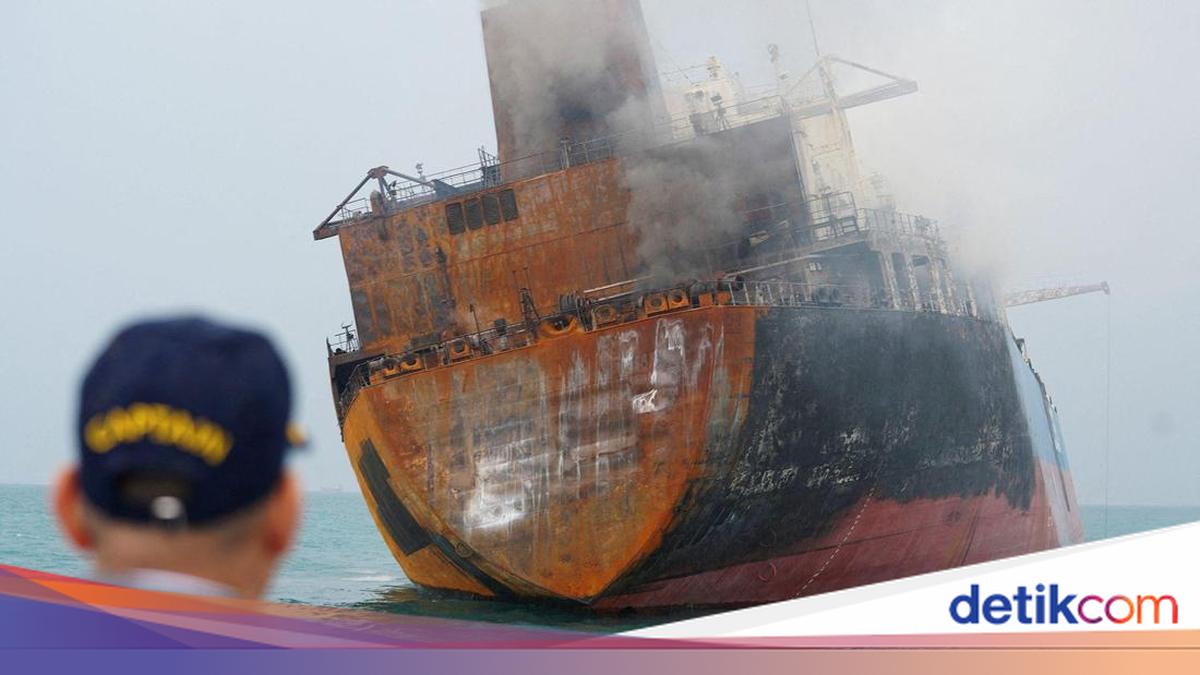
Drones, cruise missiles, and fighter jets have become a common sight for many seafarers trapped on oil tankers and cargo ships in the waters of Gulf nations.
This has become routine following Iran’s threat to fire on any vessel attempting to transit the Strait of Hormuz in response to US-Israeli attacks. To date, three Indonesian nationals remain unaccounted for.
“I saw Iranian drones and cruise missiles flying low,” said Amir, a Pakistani seafarer aboard an oil tanker in the United Arab Emirates who cannot leave the region.
“I also heard the sound of fighter jets, but we couldn’t identify which country they belonged to.”
The most frightening prospect is the possibility of intercepted drones or missiles falling directly onto the ship where he works.
Hein, a Myanmar seafarer, witnesses firefights almost daily.
“Just this morning, two fighter jets were shooting at each other while we were still working,” he said.
“There is no special shelter on the ship for situations like this, so we just run inside.”
The names of Amir, Hein, and other seafarers and their families have been changed for their safety.
Maritime Security
Although it is difficult to obtain precise figures on how many seafarers are stranded on vessels in the Middle East, Captain Anam Chowdhury, head of the Bangladesh Merchant Navy Officers’ Association, estimates the number to be around 20,000 people.
Some are on the high seas and others are trapped in ports, but he said it is difficult to assess which situation is more dangerous.
“In ports, people might think the situation is safe, but ships have already been bombarded while anchored,” he explained.
His organisation has tracked at least seven ships that, according to them, have been struck by projectiles and sustained damage since the conflict began.
He noted that on 1 March, a seafarer died aboard the oil tanker Skylark, registered in the Republic of Palau.
Captain Chowdhury described the surviving seafarers as “experiencing trauma” from the attack, which caused the engine room to catch fire and forced the crew to evacuate the vessel.
Other seafarers agree. Captain M Mansoor Saeed, who operates an oil tanker, told BBC News that in his view there is little difference between being in a port or at sea when trying to avoid attacks:
“If they want to target my ship, they will target it.”
However, he added, large vessels are generally safer when far from shore.
“In bad weather conditions, we always head to the high seas, where we have more open waters and depth that allow us to manoeuvre freely. In ports or narrow waters, weather can damage the ship through running aground or colliding with pier walls.”
Attacks on vessels in Gulf waters have so far resulted in three missing Indonesian nationals.
The incident began when a tugboat named Musaffah 2, flying the United Arab Emirates flag, was sailing in the Strait of Hormuz between UAE and Omani waters on Friday, 6 March, at 2:00 a.m. local time.
According to eyewitness accounts, Musaffah 2 experienced an explosion that caused the ship to catch fire and sink.
The vessel had a crew of seven. Four crew members were from Indonesia, with three others from India and the Philippines.
As a result of the explosion, three Indonesian crew members remain unaccounted for. One Indonesian crew member sustained injuries.
Difficulty Obtaining Information at Sea
Such dire circumstances have filled seafarers’ families with anxiety.
Because the Iranian government has blocked internet access and telephone networks for most residents, the families of seafarers struggle to obtain news about their whereabouts.
Even when access occasionally returns, it is unreliable and usually lasts only briefly.
The son of Ali Abbas is aboard a ship docked at a port in Iran near the Strait of Hormuz.
He last spoke with his son a few days ago, when his son told him about a missile attack.
His son managed to survive, but an Indian seafarer was wounded in the incident.
“I have hidden this from my wife and daughter-in-law,” he said, his voice wavering.
On Tuesday evening, another major attack occurred at that port and Ali has been unable to contact his son.
“For God’s sake, please help me,” he said, unable to contain his emotions.
Ali hopes his son is still alive and safe, and that the communication system failure is the reason for the lack of news.
Satellite Navigation Disruption
Seo-jun (name concealed) is the captain of a vessel carrying more than 20 crew members from South Korea and Myanmar.
He said satellite navigation systems have begun to malfunction frequently, adding to the risks of navigation.
“Since the war began, GPS disruptions have occurred periodically, but over the last three or four days the situation has been much worse,” he said.
When their ship entered Dubai, the seafarers were forced to navigate without GPS.
“There’s a Korean saying that describes the situation like ‘a blind person groping for a doorknob,’” he said.
Provisions Nearly Depleted
In addition to worrying about their safety, many seafarers also fear that supplies of water and food will soon run out.
On Seo-jun’s ship, they still have enough fresh food for 15 days, but the availability of drinking water is becoming a primary concern.