
The Spirit of Kartini and Efforts to Reassess Gender Equality in Accelerating National Development
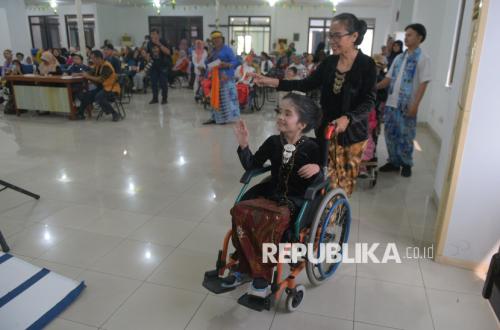
Every 21 April, the Indonesian nation does not merely celebrate the birth of a figure, but reflects on a grand idea of emancipation. RA Kartini is not just a symbol of traditional hair buns and kebaya attire; she is the foundational thinker of critical reasoning for Indonesian women against the shackles of feudalism and patriarchy. In the modern era, these challenges have transformed: from the struggle for access to education, to the strategic contribution in national development.
Philosophically, the struggle for gender equality in Indonesia is not an import from Western culture, but a constitutional mandate deeply rooted in the nation’s foundations. Article 27 paragraph (1) of the 1945 Constitution of the Republic of Indonesia explicitly states that “All citizens are equal in status before the law and government”. This clause is a constitutional guarantee that there are no barriers for women to occupy the highest decision-making positions in this republic.
This aligns with the second principle of Pancasila, “Humanity that is Just and Civilised”, which affirms that human dignity is not determined by gender. Justice can only be achieved if women are regarded as equal subjects under the law and in society.
This is what makes Kartini, in her letters, often emphasise that advancing women is the key to the nation’s progress. This is in line with the visionary quote from President Soekarno in his book, Sarinah: “Men and women are like the two wings of a bird. If the two wings are equally strong, the bird will fly to the highest peak; but if one of the two wings is broken, the bird cannot fly at all.”
To measure how far “Kartini’s Wing” has spread, we need to look at objective development indicators. By 2025, Indonesia’s Gender Development Index (GDI) shows a positive trend at 93.29. This figure reflects that the gap between men and women in aspects of health (life expectancy), education, and decent living standards is increasingly narrowing.