
The Spirit of Bandung and Indonesia's Position on the Board of Peace
This mandate does not stop at constitutional text; rather, it shapes the character of Indonesian diplomacy. In historical practice, Indonesia has played an important role on the global stage. The Asia-Africa Conference in Bandung in 1955 marked a watershed moment when Indonesia stood as a spokesperson for newly independent nations. From there emerged the spirit of Global South solidarity that later inspired the Non-Aligned Movement, which championed sovereignty and justice in the international system.
That moral reputation became one of Indonesia’s most valuable forms of soft power in international relations. Without great military might, Indonesia retained authority through its consistency in defending principles of international law. However, that reputation now faces a new test. Indonesia’s participation in the Board of Peace raises an important question: does Indonesia’s presence in this forum strengthen peace diplomacy, or does it potentially undermine the consistency of our own foreign policy principles?
The Spirit of Bandung
The greatest legacy of Indonesian diplomacy is the moral courage to stand alongside nations fighting for sovereignty. The Spirit of Bandung is not merely historical memory but an ethical foundation that has long provided legitimacy to Indonesia’s position on the global stage. As Soekarno reminded us in his opening address to the Asia-Africa Conference in Bandung (1955), “Colonialism is not yet dead; it has merely changed form.”
Within this spirit, Indonesia has always placed respect for international law as a central principle. In the view of Indonesian diplomacy, world stability cannot be built through the dominance of power but through a just international order.
For this reason, this moral reputation is an invaluable diplomatic asset. Indonesia’s standing in the world is determined not only by economic or military strength but by the consistency of its stance in defending the principles of global justice. Yet this moral capital can only be maintained if Indonesia remains faithful to the values upon which it is founded. When diplomatic positions appear ambiguous, that credibility gradually erodes.
The Diplomatic Dilemma
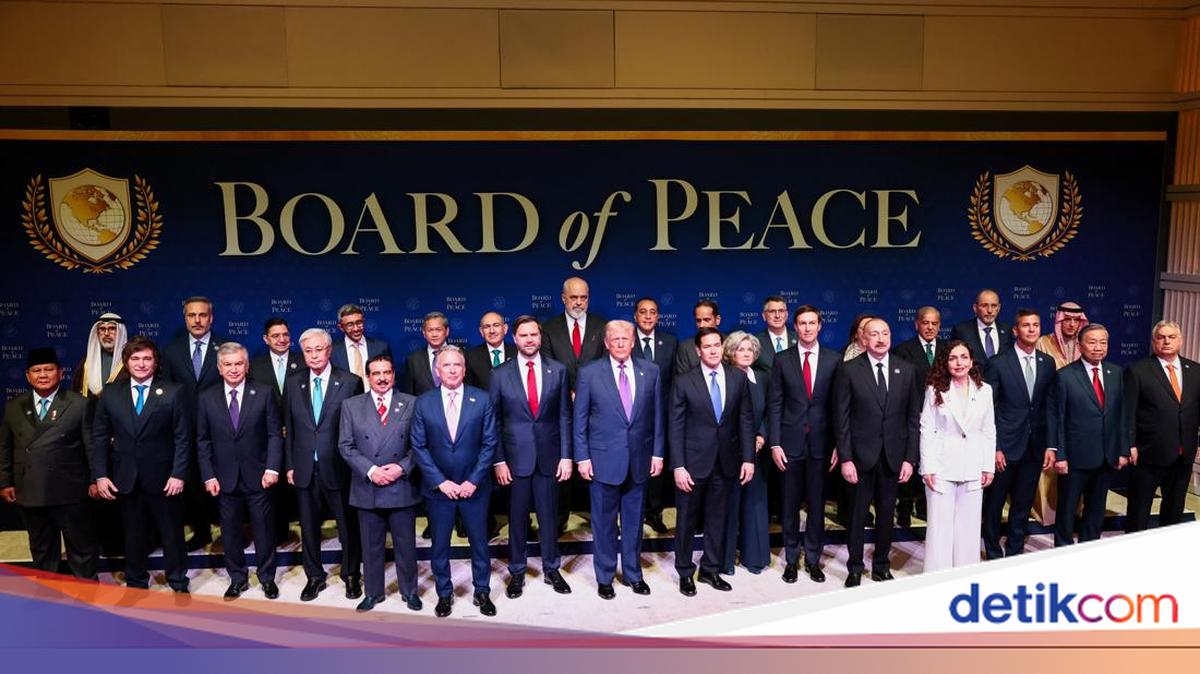
The existence of the Board of Peace warrants questioning. Normatively, this institution is promoted as a global forum safeguarding international stability and peace. However, geopolitical reality reveals several contradictions that are difficult to ignore. The organisation was formed and is led by Donald Trump, with permanent leadership positions. The structure of the Board of Peace is conceptually at odds with the principle of sovereign equality, which is the fundamental foundation of modern multilateralism.
The contradiction within the Board of Peace, between rhetoric and reality, becomes even more apparent when unilateral military aggression against Iran is carried out jointly with Israel without a United Nations mandate. Such action not only disregards collective security mechanisms but also creates a dangerous precedent in international relations. An existential paradox emerges when an institution bearing the name of peace finds itself in the shadow of actions that trigger escalation in international conflict.
For Indonesia, this situation presents a diplomatic dilemma. The principle of “Free and Active” foreign policy demands a role in maintaining world peace. However, as Mohammad Hatta stated (1948), “Free and active foreign policy is not a passive stance of neutrality, but rather the freedom to determine one’s position based on national interest and world peace.” In this context, “free” means maintaining moral independence, while “active” does not necessarily mean attending every international forum. In certain circumstances, non-participation may be a more principled political stance.
Exit Strategy
Therefore, the escalation of conflict involving Iran could become a reflective moment for Indonesia to reconsider its membership in the Board of Peace. Such evaluation is not a withdrawal from global diplomacy but a political statement to preserve Indonesia’s consistency in upholding principles of international law.
Withdrawing from a forum that has lost moral legitimacy could actually strengthen Indonesia’s position as a moral force in international relations. In its history, Indonesia has demonstrated such courage. The Spirit of Bandung in 1955 was born not from compromise with great powers but from the courage to assert principles of global justice.
Ultimately, a nation’s integrity on the world stage is not measured by the number of forums it participates in, but by the consistency of its stance in defending the values it believes in. Indonesia must not trade its moral legacy as a defender of oppressed nations for mere symbolic presence in an institution that has failed to maintain the meaning of its own name. In diplomacy, authority does not arise from the chair we occupy, but from the principles we have the courage to uphold.