
The Sorrow of Workers Who Never Get Eid Leave: Sorry, I Cannot Go Home Again
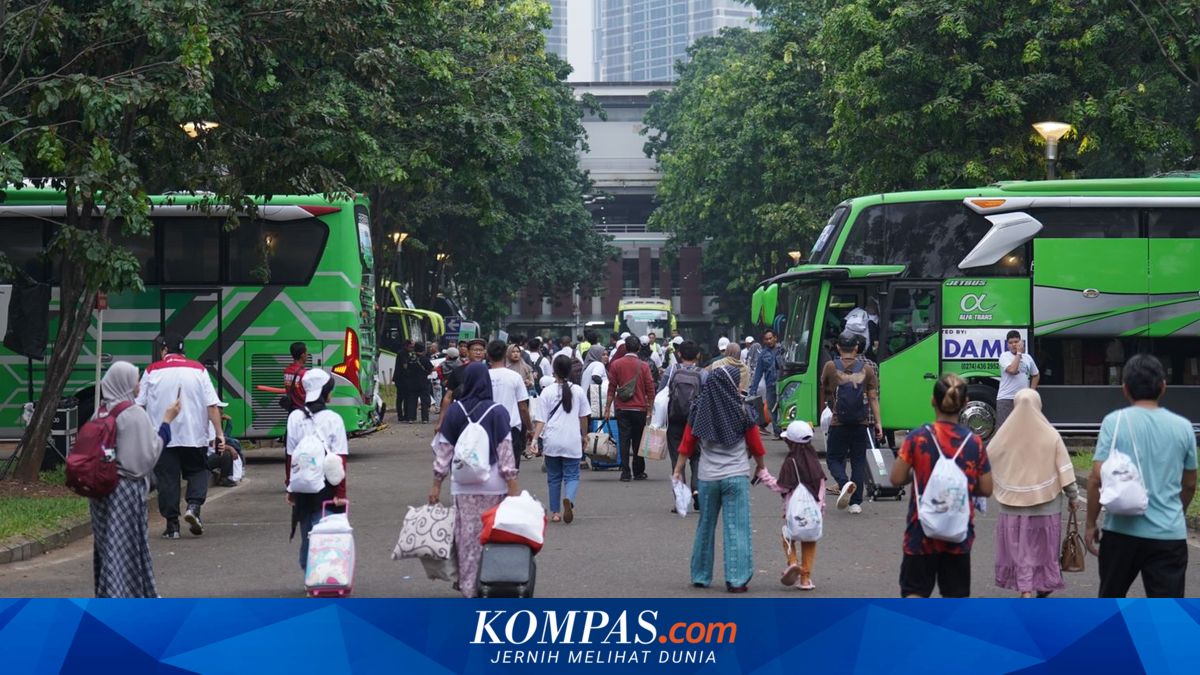
Jakarta — A mixture of guilt and sadness often weighs on the hearts of some workers who are perpetually unable to return to their hometowns because they never receive Eid leave.
Work demands frequently prevent them from having many opportunities to gather with their families, particularly during major occasions such as Eid al-Fitr.
They can only hang their longing for their hometowns in the corners of where they work.
This is the feeling constantly experienced by minimarket worker Erna, 28, who has not had Eid leave in seven years.
Long before Eid arrives, she always dreams of being able to return to her hometown in Cirebon, West Java, with her extended family. But in reality, she can only see off her family members to their vehicle for their journey home together.
Meanwhile, she must continue struggling alongside her husband, who is also a retail worker, to earn money in Jakarta.
Besides missing her family, Erna also often feels guilty towards her extended family who have been waiting for her arrival every year in Cirebon.
“I just want to say ‘sorry, I cannot go home again this year,’” she said when interviewed by Kompas.com at her residence in Manggarai, South Jakarta, on Wednesday (11 March 2026).
Erna explained that working at a minimarket makes it very difficult to obtain extended leave, particularly during Eid. This is because minimarket businesses operate and are needed by customers every day, making it difficult to close completely.
On the other hand, her company does give employees the opportunity to take leave on a rotating basis each year. However, the problem that often arises is that these leave allocations are frequently taken first by the minimarket store manager.
“In the beginning I could not take leave because the store manager was often the one who took it and that was definitely non-negotiable—they took it first,” Erna said.
She explained that if a single store has only five to six staff members, the chance that more than one employee could take Eid leave simultaneously is very slim because it would be difficult to arrange the holiday schedule. However, if a store has more than six staff, then it is more possible for multiple employees to take Eid leave, though there would still be competition for the slots.
Unfortunately, Erna is more often placed at minimarkets with limited staff, so her desire to return home for Eid is crushed every year.
As a result, her leave entitlement during Eid is always neglected because she must give way to her colleagues.