
The Silent Storm of Staple Goods Prices
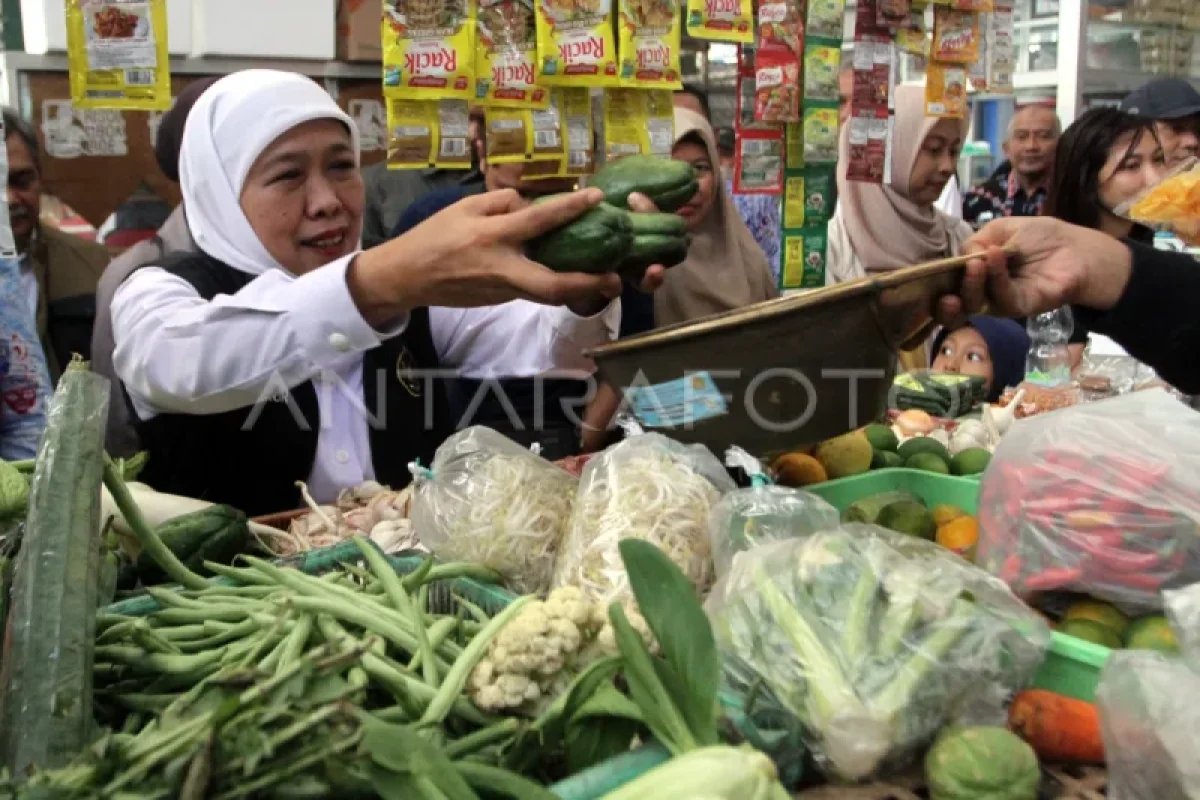
Behind the bustling rows of stalls in East Java’s traditional markets since early morning, an unending conversation unfolds: the fluctuating prices of staple goods, mirroring the pulse of household economies. At one stall, vendors recalibrate the suddenly soaring price of red onions. Nearby, shoppers furrow their brows, adjusting their shopping lists to tighter budgets. Markets are not merely transactional spaces but the most honest reflection of regional economic stability. This phenomenon resurfaced when East Java Governor Khofifah Indar Parawansa urged all regional leaders, including regents and mayors, to proactively visit markets and directly monitor staple goods prices. The directive is not merely administrative; it underscores that controlling inflation requires more than desk-bound meetings. Leaders must be present among piles of chillies, rice, and cooking oil—commodities whose prices and significance shift daily for communities. In East Java, these dynamics are acutely felt. Over recent weeks, commodities such as red onions and bird’s eye chillies have seen significant price hikes in several markets, including Malang City where red onions reached Rp55,000–60,000 per kilogram and bird’s eye chillies exceeded Rp100,000. Yet, prices vary considerably in other markets. These regional fluctuations highlight a critical issue: an unstable and uneven distribution chain. Nationally, East Java is a strategic food basket. Its contributions to rice, egg, and horticulture production make it a bulwark against national inflation. Yet a paradox arises: producing regions still face price volatility. This indicates the problem lies not just in production, but in distribution, trade systems, and inter-regional coordination needing continuous alignment. This is where regional leaders’ role becomes crucial. The instruction to actively visit markets carries a deeper message: local economic policy must be grounded in on-the-ground reality, not just statistical data. Inflation data may show stability, but vendor prices often tell a different story. The gap between the two is where public anxiety takes root.