
The Shadow Duel: CIA, Mossad, and VEVAK Behind the Iran-US-Israel Conflict
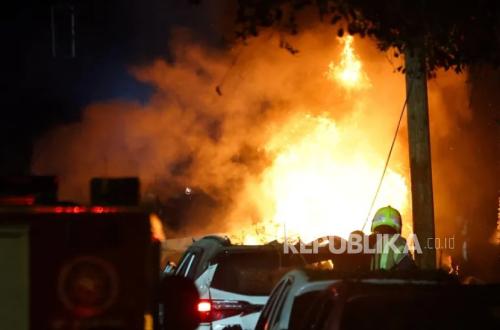
In the narrow lanes of Rey district, south of Tehran, the afternoon sun bore down with typical intensity. Yet for two men shuffling along in handcuffs, the world seemed to collapse in a single moment. Around them, Iranian police officers transported evidence that sent shivers down spines: over 200 kilograms of explosives, 23 drones, a launcher, and advanced control equipment.
On Sunday, 15 June of the previous year, Iran once again demonstrated what has long been an open secret: the war against its enemies never stops on open battlefields. It unfolds constantly, in quiet spaces beyond ordinary view.
The two Mossad agents arrested in Rey district were, according to police spokesman Saeed Montazer al-Mahdi, far more than ordinary couriers. They were the spearhead of an Israeli operation designed to destroy from within, not merely through bombs but through the panic they inflict.
This arrest, Iranian officials stated, was not the first. A year earlier, in Alborz province, north of Tehran, two other Mossad agents had already been confined to detention cells. They were involved in bomb-making and explosives manufacturing—a reminder that this shadow war has been ongoing for years, long before the world took notice.
Five Hundred Spies and a Besieged Nation
Exactly one year later, on Sunday (15 March 2026), Iran’s security chief Ahmad Reza Radan stood before cameras with a blank expression. He announced something that in another country would constitute a political earthquake: approximately 500 people had been detained as “spies” working for enemies and anti-Iran media.
Of this number, roughly 250 were said to have specifically provided intelligence data used in military operations against Iran. They, Radan stated, had not merely transmitted strategic information but also attempted to disrupt public order within the country.
Imagine: half a thousand individuals who may have been born and raised in Iran, who may pass through the same Tehran streets every day, suddenly revealed as enemy spies. This is not a Hollywood espionage thriller. This is the bitter reality of a nation that since its 1979 revolution has felt continuously besieged.
And for Iran, that siege has never felt more concrete than now.
When Tehran’s Sky Turned Red
It all began on 28 February, when the sky above Iran’s capital suddenly turned red from explosions. Israeli and American fighter aircraft dropped bombs on multiple targets across the heart of the Islamic Republic.
The strike was no limited operation. It struck several regions, including Tehran. And as the dust settled, the death toll made the world hold its breath: more than 1,300 people dead. Among them was Iran’s Supreme Leader, Ayatollah Ali Khamenei, a figure who for more than three decades had symbolised Tehran’s resistance to the West.
Iran retaliated. Ballistic missiles rained down on Israeli territory and American military bases across the Middle East. Yet that counter-strike, however devastating, could not obscure one fact: the opening blow had claimed thousands of civilian lives, including schoolchildren in the city of Minab who never knew what politics was.