
The Secret Prayer Behind the Soil of Ba'alawi Mosque
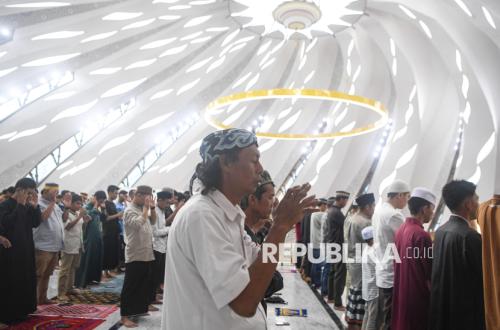
The morning sky over Jambi City was still shrouded in clouds when worshippers gradually filled the courtyard of Masjid Jami Ba’alawi in the Arab Melayu area of Jambi Seberang. The serene atmosphere slowly turned solemn as the final takbir faded, replaced by neatly arranged rows of worshippers performing the Eid al-Fitr prayer. After the salam, warm embraces and handshakes flowed among the congregation. However, for the local community, Eid does not end with greetings. In the mosque’s courtyard, an old tradition comes alive again, a ritual connecting the current generation to ancestral traces: “Injak Bumi”. This tradition is more than mere ceremony. It is a small event laden with meaning, when babies just learning to walk are “introduced” to the earth they will tread throughout their lives. In the community’s belief, every first step is not just physical but also a spiritual journey that requires prayer and blessings. “Injak Bumi” unfolds with simple reverence. The baby is carried to the religious figures waiting in the courtyard. Without lengthy announcements, experienced hands gently stroke the infant’s small body, reciting soft prayers that flow like whispers of hope. The baby’s head is stroked slowly, then the tiny body is lowered briefly to touch the ground, a symbol of the first introduction to the vast and sometimes challenging world. In the local cultural interpretation, the first touch of the earth is more than a physical motion. It is a symbol of acceptance, that humans, no matter how small, are part of the universe. The earth is viewed as a mother that will support, sustain, and test. Thus, every baby “placed” on the earth is seemingly invited to make peace with life from the start. This ritual also serves as a marker that a child’s journey is never truly alone. There are parents’ prayers, blessings from religious leaders, and the collective hopes of the community accompanying it. It is here that “Injak Bumi” finds its deepest meaning: a small human effort to entrust the future to divine will, while embracing the cultural heritage passed down through generations. That morning, dozens of parents queued with full hope. Abu Umar, one of them, carried his son, Muhammad Raska. He said this tradition has been alive long before Indonesia’s independence, since the Jambi Seberang area was inhabited by indigenous people and Arab descendants. “I went through this myself. Now it’s my child’s turn,” he said, in a tone implying intergenerational continuity. After the prayer procession, the atmosphere became more lively. Parents scattered flowers and coins into the air. Small children who had been waiting rushed about, picking up the coins with joyful laughter. That moment became a bridge between the sacred and the profane, between silent prayers and grounded joy. Megawati, mother of Arsyad, also felt the warmth of this tradition. For her, something would be missing if her child did not participate in the ritual. All four of her children have gone through the same procession. “I want my child to be prayed for, to be healthy and become a pious child,” she said.