
The Secret Behind Thousands of Aircraft Flying Safely Over Indonesian Airspace Without Congestion or Collisions
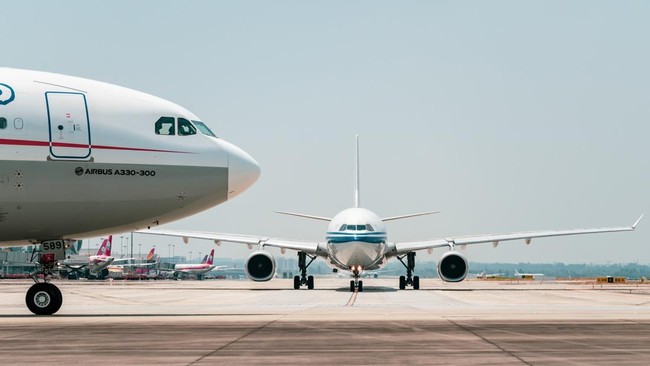
Jakarta — The surge in flight traffic during Indonesia’s annual holiday migration season risks creating airborne queues of aircraft. Nearly 5,000 aircraft movements occur daily throughout the nation’s airspace.
To prevent aircraft queuing or mid-air collisions, flight navigation service operators employ several strategies. AirNav Indonesia’s Director of Operations, Setio Anggoro, stated that one method used is the regulation of aircraft departures from origin airports.
“If operational disruption occurs at a destination airport, we have several methods to reduce potential risks and delay,” Setio said on Tuesday (17 March 2026).
One example is when major airports experience disruptions such as runway damage requiring repairs. Such disruptions can cause aircraft to queue in the air if not managed from the outset.
“For instance, in Jakarta or at an airport where the runway needs repair first,” Setio explained.
To prevent aircraft from waiting too long in the air, AirNav implements a departure management system called the Ground Delay Program. This programme holds aircraft at origin airports before departure to destination airports experiencing congestion.
“So aircraft heading to Jakarta are held first so that holding patterns don’t become too excessive,” he said.
This approach also helps airlines save aircraft fuel. Aircraft waiting for extended periods in the air must continuously consume fuel whilst holding.
“So before heading to Jakarta, we hold them at the origin point so they don’t waste time and fuel in the air,” he stated.
Once destination airport conditions normalise, held aircraft are released in stages. Using this method, airborne congestion is avoided and landing processes proceed safely.
“Once conditions are good, we release them one by one,” Setio said.
This system is one approach within modern air traffic management used to maintain flight efficiency.
“The objective is to keep flights safe, efficient, and to prevent aircraft accumulation in the air,” Setio said.