
The Secret Ageing Button
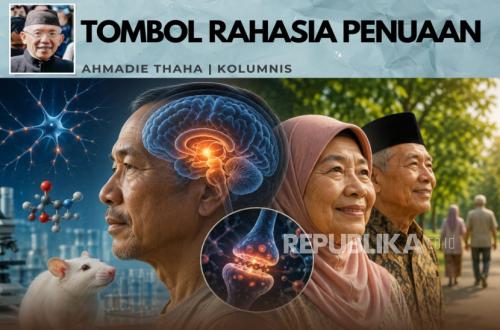
Happy National Elderly Day to the elderly, seniors, life veterans, and largest shareholders in the company named experience. May we all fill our days with good deeds for the hereafter.
As we grow older, we often busy ourselves measuring blood pressure, blood sugar, cholesterol, and the number of grandchildren.
But there is one question older than all of these: what actually causes us to age?
The question may sound simple, but since the time of Greek philosophers to 21st-century scientists, the answer has continually evolved.
Some say the body wears out like an old machine. Others believe our genes carry a biological clock that eventually ticks. Some argue aging is merely the accumulation of unavoidable damage.
Yet scientists seem unsatisfied. They continue to dissect the body’s secret vaults, as if searching for a hidden switch responsible for greying hair, brittle bones, sagging skin, and memory that falters like an official who has lost his driver.
A fascinating study was recently published on ScienceDaily, citing research led by Lige Leng and Jie Zhang from Xiamen University in China. Their technical title, ‘Hypothalamic Menin Regulates Systemic Aging and Cognitive Decline’, appeared in the journal PLOS Biology.
Beneath the complex title lies findings that raised eyebrows among scientists. They discovered that a protein called Menin, located in the small brain region known as the hypothalamus, appears to play a crucial role in controlling the aging process.
The hypothalamus is no bigger than a cashew nut. Yet its role is akin to a coordinating minister overseeing all affairs. It regulates body temperature, hormones, metabolism, sleep, hunger, stress, and numerous other vital functions. If the body were a country, the hypothalamus would be the 24/7 operational control room.
Researchers found Menin levels plummeted as the experimental mice aged. When the protein was deliberately reduced, young mice began exhibiting symptoms commonly associated with aging.
Thin skin, weakened bones, balance issues, declining memory, shorter lifespans, and increased inflammation. In short, the young creatures suddenly resembled retirees who had forgotten where they placed their glasses — even though the glasses were still on their heads.
Conversely, when Menin levels were restored in older mice, the results were surprising. Within about a month, learning ability improved, memory enhanced, balance improved, bone density increased, and skin condition improved.
Scientists appear to have discovered the hidden ‘ageing button’ buried within the body’s machinery.
Even more intriguingly, they found a link between Menin and D-serine, an amino acid that aids neural communication.