
The Rules on Allowances for DPR Members Under Law 12/1980 That the Constitutional Court Has Asked to Be Revised
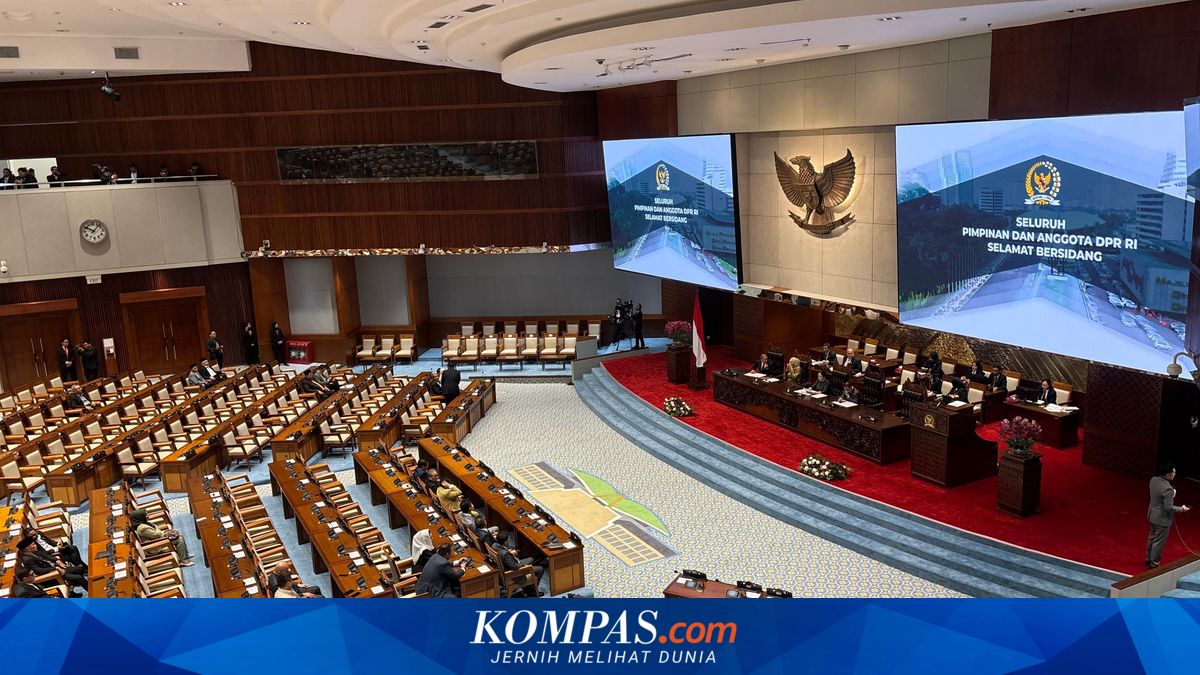
JAKARTA — The Constitutional Court has declared Law Number 12 of 1980 concerning the Financial/Administrative Rights of Leaders and Members of the Highest/High State Institutions, as well as Former Leaders of the Highest/High State Institutions and Former Members of High State Institutions to be conditionally unconstitutional with respect to the 1945 Constitution.
This decision was read by Constitutional Court Chief Suhartoyo during a hearing on petition number 191/PUU-XXIII/2025.
The Constitutional Court has requested that the legislature, namely the Government and the Indonesian Parliament, enact new legislation regarding the financial rights of high-ranking state leaders and former leaders of high state institutions within a period of two years.
The Court has also stated that the existing law concerning pension payments for leaders, DPR members, and other high state institution officials shall remain in force until new legislation has been enacted, for a maximum of two years from the issuance of this decision.
According to Article 1 of Law 12/1980, the highest state institution is defined as the People’s Consultative Assembly (MPR).
Meanwhile, high state institutions are the Supreme Advisory Council, the People’s Representative Council (DPR), the State Audit Board (BPK), and the Supreme Court (MA).
The leaders of the highest state institution are the Chairman and Vice Chairman of the MPR. The leaders of high state institutions comprise the Chairman and Vice Chairman of the Supreme Advisory Council; the Chairman and Vice Chairman of the DPR; the Chairman and Vice Chairman of the BPK; as well as the Chairman, Vice Chairman, and Deputy Chairmen of the MA.
All of them receive not only a basic salary but also monthly allowances.
These provisions are set out in Article 3 of Law 12/1980, which establishes three types of allowances received by leaders and members of the highest and high state institutions.