
The Role of Today's Kartini in the Railway Industry
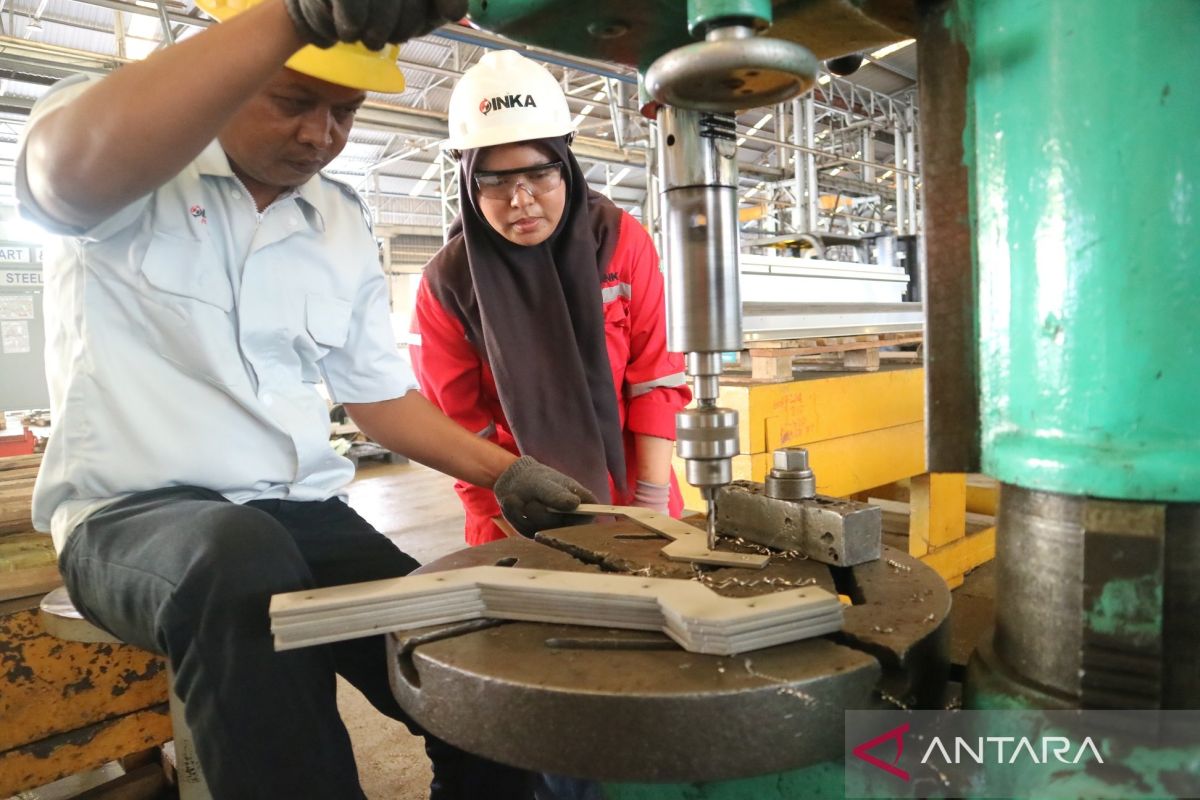
Madiun (ANTARA) - That afternoon, the atmosphere in the welding workshop at PT Industri Kereta Api (PT INKA) (Persero) in Madiun City, East Java, proceeded normally, as usual. The noisy sounds, a blend of machines with steel plates being cut, joined, and welded, emanated from the activities of the trained crew carrying out their tasks. The welding activities were aimed at forming important components for the railway carriage manufacturing project. Amid the crew and the sparks flying from the electric arc flame as it melted the metal, the figure of Nadhifatul Kamilah could be seen checking the welding results performed by her team. This modern-day Kartini appeared deft and capable. Meticulously, the woman conducted a visual inspection to assess the weld quality carried out by her crew, evaluating aspects such as neatness, dimensional measurements, penetration, strength, and joint durability. Occasionally, her hand holding a white marker and torch marked certain parts of the results that were not quite right for further action. The woman from Tuban Regency serves as the manufacturer data report (MDR) for the Welding Examination and Inspection Unit at PT INKA, with duties including quality control of welding to ensure compliance with the standards of the state-owned enterprise’s railway projects. Her job requires specialised expertise. A graduate of the D4 Welding Engineering programme at the Surabaya State Shipbuilding Polytechnic, she greatly enjoys her profession, which involves direct participation in railway carriage production across various INKA projects. The second of three siblings, she comes from a family of civil servants. Her father is a retired civil servant, while her mother is still active as a civil servant. In addition to her specialised skills, the profession she pursues is currently a strategic career choice, regardless of gender. Therefore, she has the same opportunities as male workers to contribute to producing trains that are a source of national pride, stated the woman, familiarly known as Ipeh, to ANTARA.