
The Role of Pura Besakih in Implementing Policies through Religious Ceremonies
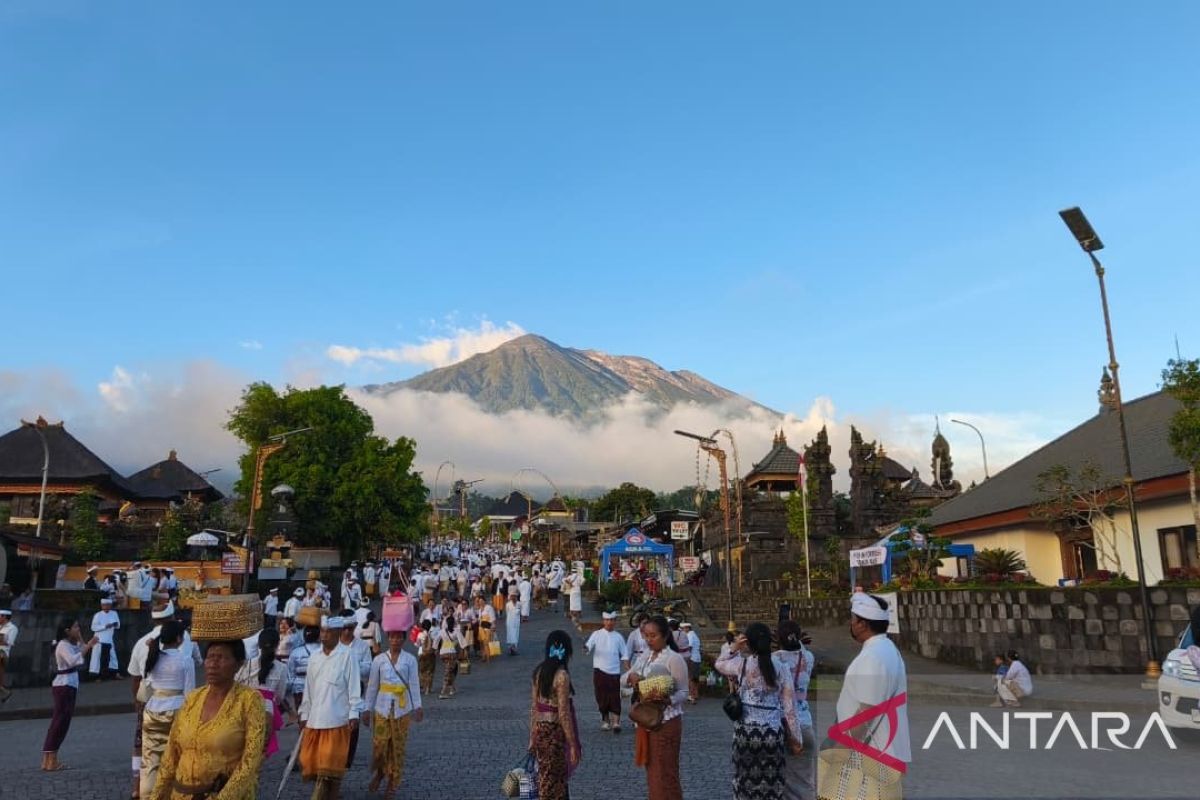
Denpasar (ANTARA) - For a long time, Pura Agung Besakih has been nicknamed the Mother Temple of Bali, the Parent Temple in Bali. The largest temple, located on the slopes of Mount Agung in Karangasem Regency, acts as the spiritual heart of the Hindu community, especially since it was organised by Rsi Markandeya and became even more sacred during the Majapahit conquest. As the most sacred temple on the Island of the Gods, a number of periodic ceremonies are centred there, from the annual Ida Bhatara Turun Kabeh, the decennial Panca Wali Krama ceremony, and the centennial Eka Dasa Rudra ceremony. The Ida Bhatara Turun Kabeh (IBTK), which falls on the full moon of sasih kadasa or the 10th full moon according to the Balinese calendar, took place from 12 March to 23 April in 2026. This ceremony, eagerly awaited by the Hindu community, according to the Head of the Besakih Grand Temple Area Facility Management Agency (FKSPA) I Gusti Lanang Muliarta, was visited by hundreds of thousands of pemedek or Hindu worshippers coming to pray. They come to worship Ida Sang Hyang Widi Wasa in the manifestation of Tri Murti, veneration of ancestors in the pedarman, and a wide-ranging and meaningful series of worships with dozens of large and small temples in the Pura Agung Besakih complex. More than that, Pura Agung Besakih is now no longer just a place of worship; it has transformed into a demonstration space for implementing positive regional policies. Reflection of environmental policy They are tasked with ensuring that all pemedek bring worship equipment without being wrapped in plastic or single-use kresek.