
The Role of Indigenous Institutions in Resolving Conflicts in Papua
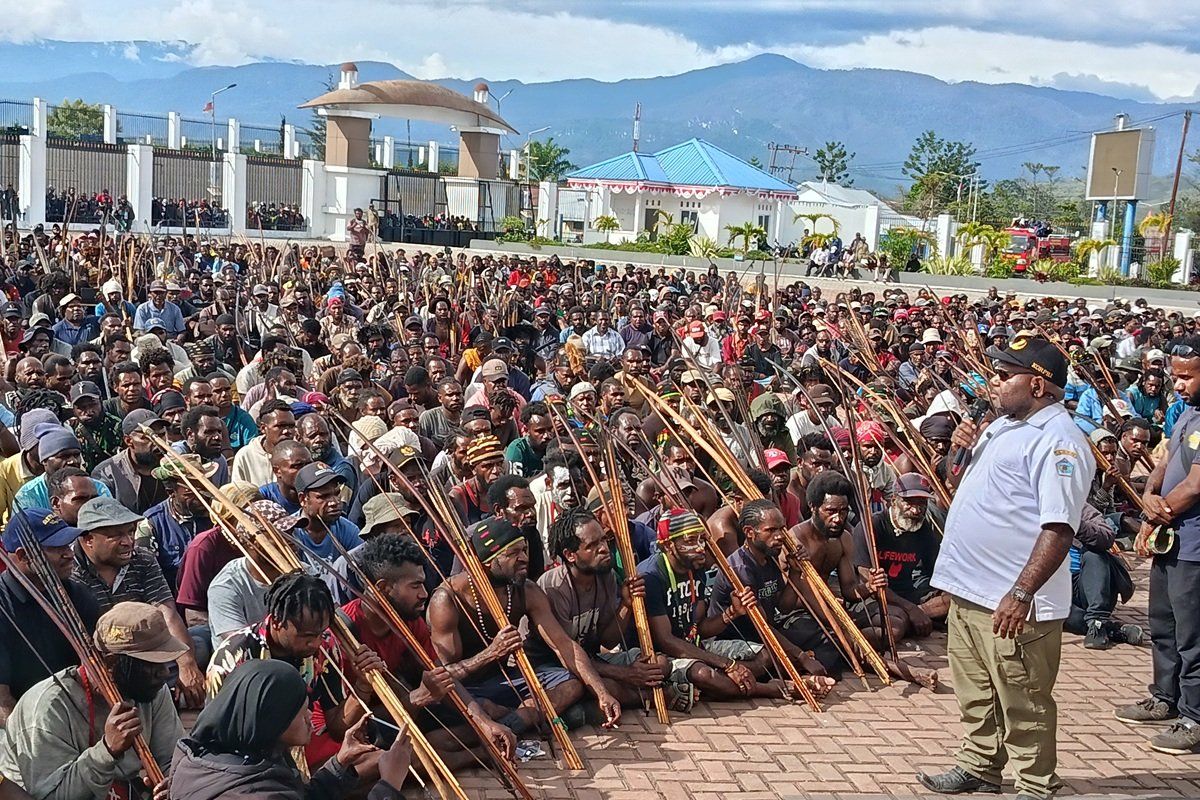
Wamena — Papua possesses an abundance of natural beauty, culture, and customary traditions that remain preserved into the modern era. The Papua region, twice the size of Java, stretches from Sorong to Merauke.
The wealth of this island is not merely physical; its intangible heritage is equally rich on the island renowned as a small paradise fallen to earth. The greatest diversity of regional languages in Indonesia is found across six provinces of Papua, with 428 languages spoken throughout the region.
Nearly every village or settlement in each regency and municipality across these six provinces possesses unique characteristics and notably distinct linguistic variations.
Given the island’s immense richness, prolonged conflicts between villages and regencies are unavoidable, often resulting in loss of life over seemingly trivial matters. Such problems include unequal distribution of village funds that can escalate into warfare, requiring considerable effort from local authorities and the Indonesian military (TNI) or national police (Polri) to resolve.
Additionally, matters of the heart considered insignificant elsewhere can spark conflict when both parties fail to reach agreement satisfactorily.
The Governor of Papua Pegunungan John Tabo stated that indigenous Papua communities, particularly in Papua Pegunungan, differ significantly from other regions and therefore require specialised handling.
Indigenous Institutions
The various tribal wars occurring in the Papua Pegunungan region must be resolved at para-para adat, a term commonly used among Papua’s coastal indigenous communities. However, the Central Highland or Papua Pegunungan regions more commonly employ the term of resolving matters at honai (traditional communal houses).
This is where the crucial role of indigenous community institutions (LMA) emerges, comprising indigenous and religious leaders from the Papua Pegunungan region. The LMA has been established across eight regencies in Papua Pegunungan to assist the government in addressing customary disputes.
Lenis Kogoya, Special Staff to the Defence Minister for the Sovereignty of the Unitary State of the Republic of Indonesia, emphasised the critical importance of the LMA in bridging government and community. “Conflicts that occur and cannot be resolved by the government, the LMA can definitely resolve,” he stated.