
The Rocky Road of Mojtaba Khamenei
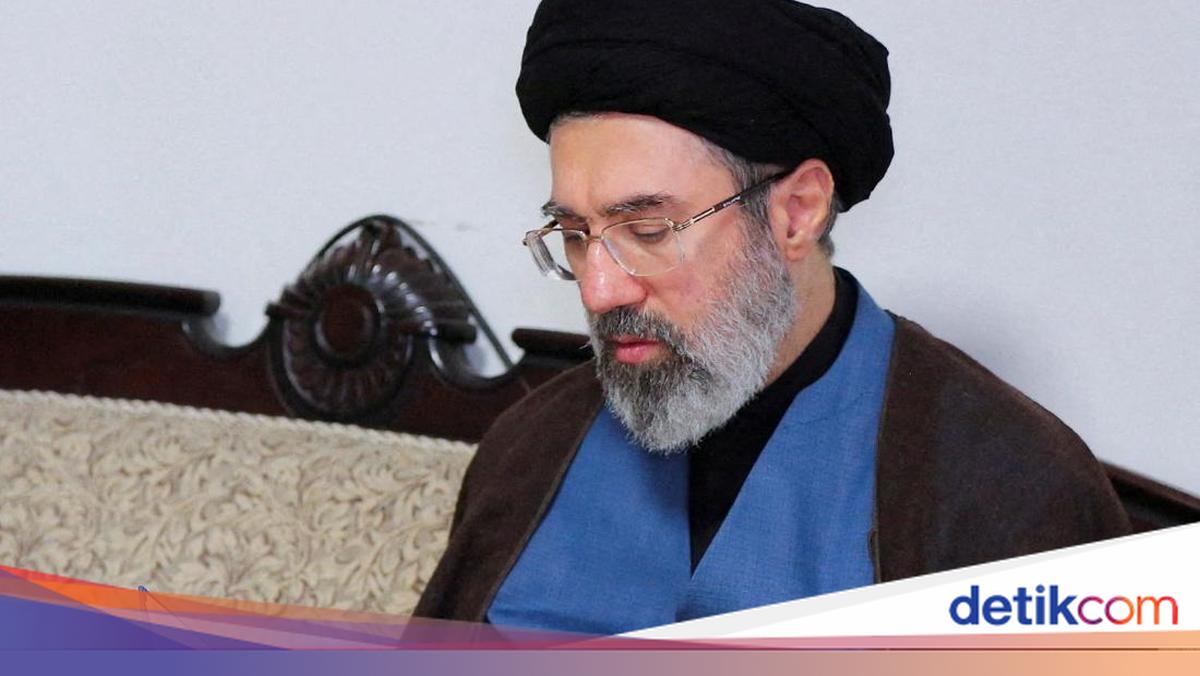
In the initial phase of the military escalation between Iran, Israel, and the United States, Mojtaba Khamenei was among the targets affected. Reuters reported on 4 March 2026 that he survived an attack that shook Iran. As the situation developed, additional information emerged. A senior official quoted by Reuters a few days later stated that Israel believes Mojtaba sustained minor injuries in the attack. This statement indicates that he did suffer injuries, but not in a critical condition. Nevertheless, he is reported to have lost his wife and one of his children in the attack.
Amid the unstable situation, the succession process unfolded rapidly. Reuters noted that Mojtaba had previously been touted as the successor to Iran’s supreme leadership. His name had long been on the radar of Iran’s power elite. However, the crisis accelerated everything.
Al Jazeera reported that he was subsequently appointed as Iran’s Supreme Leader amid the ongoing war. On 8 March, Mojtaba Khamenei was elected as Iran’s new Supreme Leader, according to state media reports. The Assembly of Experts – the 88-member clerical body that selects the country’s Supreme Leader – has called on the Iranian people to maintain unity and express support for the 56-year-old cleric.
In a statement circulated through state media on Sunday, the assembly said Khamenei was chosen based on a “decisive vote”. The assembly urged all Iranians, especially elites and intellectuals, to “pledge loyalty to the leadership and maintain unity.”
After officially becoming Supreme Leader, Mojtaba Khamenei did not appear directly before the public. His first statement was read out via Iran’s state television broadcast.
In the statement, it was mentioned that Iran will “avenge the blood” of Iranians killed in the war with the US and Israel, said Khamenei. He also warned neighbouring countries not to allow their territory to be used as US military bases.
Khamenei emphasised that Iran will continue to attack US bases in Gulf countries. Tehran, he said, remains committed to a policy of “friendship” with neighbouring countries, but he warned them to close American military bases in their territories.
“We share land or maritime borders with 15 neighbouring countries and always seek to foster warm and constructive relations with all of them,” he said.
“These countries must clarify their stance towards the aggressors attacking our homeland and the killers of our people.”
“I advise them to close those bases as soon as possible,” the statement continued.
In addition, the Iranian leader also announced the closure of the Strait of Hormuz. He described the area as a key point where the enemy’s position is “extremely vulnerable”.
Who is he?
Mojtaba Khamenei replaces his father, Ali Khamenei, as Iran’s Supreme Leader
Photo: REUTERS/Office of the Iranian Supreme Leader
Mojtaba Khamenei is the son of Ali Khamenei, Iran’s Supreme Leader from 1989 until his death in 2026. Mojtaba Khamenei was born in 1969 in the city of Mashhad, Iran. He is known as one of the most influential sons in the family.
Mojtaba’s childhood took place during the period when his father was one of the key figures in the opposition to the monarchy of Mohammad Reza Pahlavi. During that time, the Khamenei family faced pressure from royal security forces several times, including arrests and exiles of Ali Khamenei.
In his education, Mojtaba received general education in Tehran before pursuing religious studies. According to a report by United Against Nuclear Iran, he attended Alavi High School, a school known as an educational institution for Iran’s elite. Many important Iranian figures also studied at that school.
After completing that education, Mojtaba continued his studies at the seminary in Qom, the centre of Shia clerical education in Iran. There, he studied theology and religious sciences under several conservative clerics who wield significant influence in Iranian politics.
Following the success of the 1979 Iranian Revolution, the Khamenei family’s position changed dramatically. His father began holding several important positions in the Iranian government, including as president in the 1980s before becoming Iran’s Supreme Leader in 1989. This change allowed Mojtaba to grow up in the environment of the Islamic Republic of Iran’s political elite.
However, unlike his father, Mojtaba did not build legitimacy through formal positions or public exposure. In an Al Jazeera report, he is described as a figure who rarely appears prominently in public. Khamenei is reported never to have run for public office or participated in general elections. Yet, over several decades, he has grown into a highly influential figure in the inner circle of the previous Supreme Leader and has cultivated close ties with the Islamic Revolutionary Guard Corps (IRGC).
He is said to have begun developing close relationships within the IRGC from a young age, when he served in the Habib Battalion in several operations during the Iran-Iraq War in the 1980s. Several of his comrades, including other clerics, later obtained important positions in the newly established Islamic Republic’s security and intelligence apparatus.
In recent years, the younger Khamenei has increasingly been mentioned as the main replacement candidate for his father, who served as president for nearly eight years and then held absolute power for 36 years, before being killed in an attack on his residence complex in Tehran on Saturday, 28 February.
The rise of the young Khamenei is seen as a sign that hardline factions within the Iranian government remain