
The road home of the illegal logger
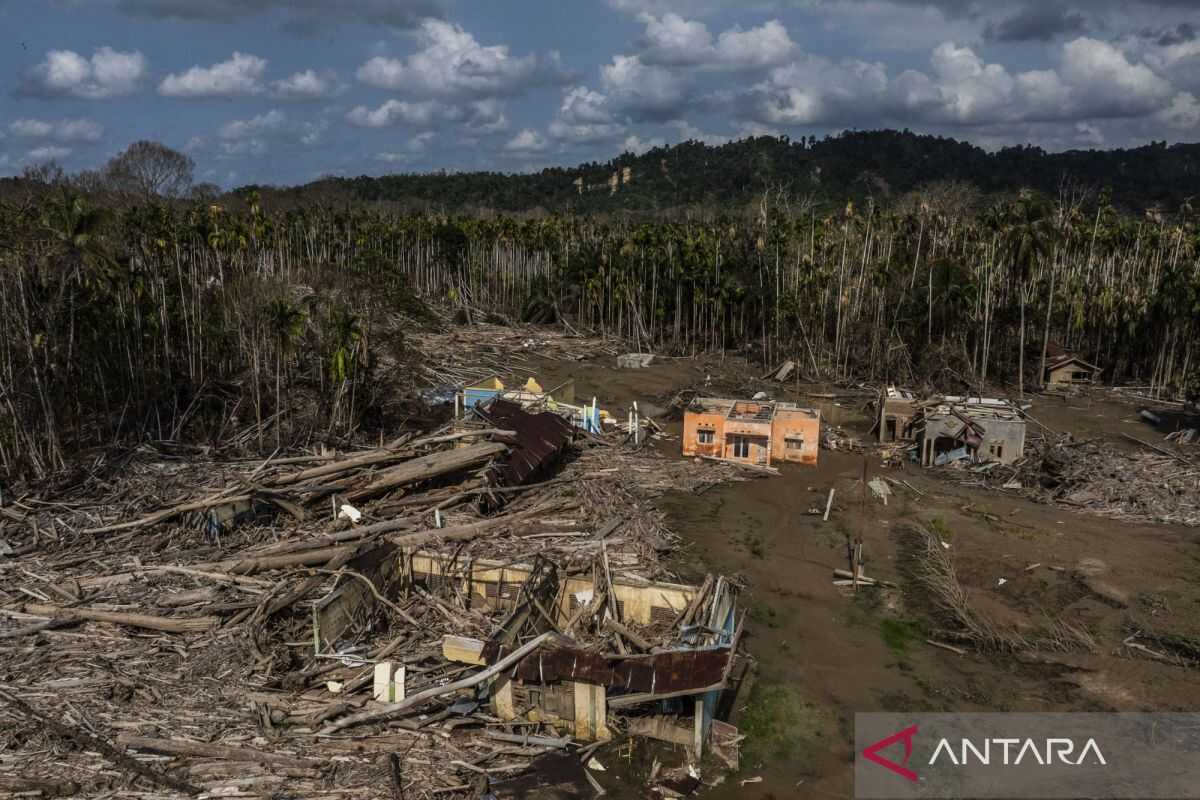
Agam (not his real name) is a survivor of flash floods and landslides that struck Aceh Province in late November 2025. His home, once located close to a river, has been reduced to ruins scattered across the ground where he once lived.
Although Agam was familiar with flooding, the November 2025 flash flood was different from previous ones. This deluge carried enormous logs that destroyed buildings in its path—homes, schools, and mosques in Sarah Gala hamlet, Sahraja village, East Aceh—including Agam’s own residence. The disaster that destroyed his home served as a painful reminder of the impact of illegal logging activities.
“If the flood had only been water, my house would not have been destroyed. I hate illegal logging very, very much,” Agam said, his fists clenched tightly. His eyes reflected a mixture of anger and regret as he occasionally glanced at the ruins of his home.
“I was formerly an illegal logger myself.”
Logging since childhood
At age 15, a family member recruited Agam into illegal logging. He was convinced that logging was the only livelihood option available. While his peers attended secondary school, Agam worked in the forest—felling trees, stacking timber, transporting logs, and selling the cut wood. His daily wage ranged around 100,000 Indonesian rupiah.
As money accumulated, the young Agam became seduced by the income. “I dropped out of school because I was addicted to the money. That’s also why I hate illegal logging so much,” he said.
Most of the cleared forestland was subsequently converted into palm oil plantations.
Agam continued this dark life until age 23, when he finally realised he had been exploited by the bosses and operators who employed him. His work as an illegal logger meant he dropped out of school, damaged the environment, and enriched others. He refused to disclose who employed him or who owned the palm oil plantations. The realisation prompted him to seek other work, such as farming.
A turning point in life
From that moment forward, Agam distanced himself from illegal logging and sought legitimate employment. He has since worked in agriculture and other sectors, attempting to rebuild his life away from the destructive timber trade. Today, having witnessed firsthand how illegal logging contributed to the environmental degradation that led to his family’s loss, Agam has become a vocal critic of the practice he once participated in.