
The Rebana Sounds On: A Tradition That Endures
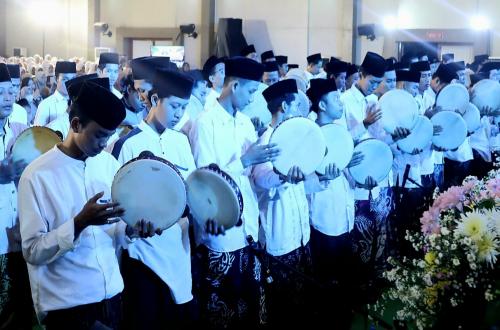
JAKARTA – The rhythmic beating of rebanas echoed against the sound of takbir recitations and shalawat chants, cutting through the Ramadhan dusk at the courtyard of Masjid Raya Alfatah in Ambon City. As the sky darkened towards the Maghrib prayer time, dozens of young men stood in neat rows, their feet moving in unison whilst their bodies swayed to the rebana rhythm, their samrah singing flowing with musical precision like a temporal marker approaching the breaking of the fast.
Around the courtyard, residents gathered in circles. Children, elders and teenagers watched with gleaming eyes. Occasional cheers erupted from the crowd as the dancers grew more animated. Some spectators stepped forward, pressing banknotes of fifty thousand to one hundred thousand rupiah into the hands of dancers who continued moving rhythmically. These donations were not mere gifts, but rather expressions of appreciation for the youth maintaining this living tradition.
Amidst the swift current of modernisation and shifting lifestyles of younger generations, several local traditions in Maluku continue to persist. Samrah, an Islamic-influenced dance accompanied by rebana and Middle Eastern melodies, is one such tradition. Far more than mere entertainment, this group-performed art form has long served as a space for youth expression and a symbol of communal unity amongst Maluku’s Muslim population. Every Ramadhan, approaching Eid al-Fitr and various other religious celebrations, samrah returns to mosque courtyards and public spaces, where youth dance, sing and sustain the pulse of tradition, allowing the rebana’s resonance to echo from one generation to the next.
The roots of samrah in Maluku are believed to stem from Middle Eastern traditions brought by Arab merchants and Islamic scholars in centuries past. Over time, this art form blended with local culture and developed into a distinctive performance art. In Maluku, samrah is typically performed collectively by dozens of young men wearing white koko shirts, sarongs and shoes, dancing to the rebana rhythm and religiously-themed songs with coordinated, spirited movements.
More than Just a Dance
For many Maluku youth, samrah is far more than merely a dance. This tradition has long been woven into community celebrations and forms part of Islamic cultural identity in the region. Cultural communities from the Kei Islands in Southeast Maluku, such as Wandan Kultur, regularly perform samrah to entertain residents during Ramadhan.
Muhammad Taher Salamun, an active samrah practitioner with Wandan Kultur, explains that samrah has become integral to the lives of young people, particularly from the Kei Islands. The dance serves as a means of honing youth creativity whilst supporting community social activities. On various occasions, his group has involved dozens to hundreds of youth across faiths to dance together, moving in synchrony and creating an enchanting harmony that captivates audiences.
During performances, spectators often come forward to offer donations in the form of banknotes to the dancers. These contributions are not mere tokens of appreciation; they frequently support community social activities such as mosque construction fundraising or youth programmes in villages. Every samrah performance draws crowds, and main streets in central Ambon regularly transform into open-air stages as youth dance amidst gathered communities.