
The Pulse of Eid in the Urban Space
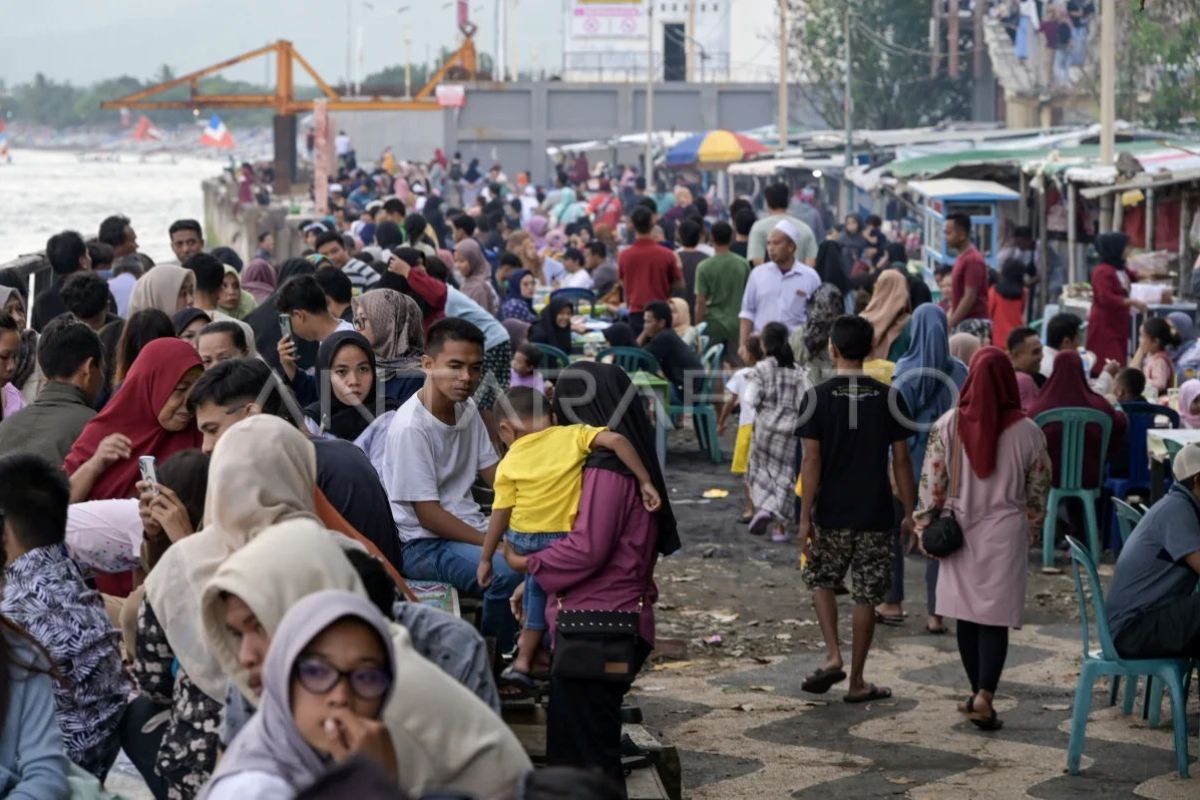
Activities following Eid prayers in Mataram are more than just an annual routine. They serve as a mirror to how society interprets victory, maintains social relationships, and drives the economy.
Mataram (ANTARA) - Eid al-Fitr mornings in the city of Mataram always begin with the fading echoes of takbir, replaced by an atmosphere of solemnity in mosque courtyards and fields. After the Eid prayer, residents exchange handshakes, some holding back tears, others smiling with relief.
For the people of this city, the celebration does not end there. It is precisely after the final rak’ah that a series of social, cultural, and economic traditions begin to unfold, shaping the distinctive, dynamic, and meaningful face of Eid.
The moment after the Eid prayer becomes a space where religious values meet social practices. From simple halal bihalal gatherings to waves of tourism to the beaches, from the Lebaran Topat tradition to the drastic changes in the city’s dynamics within hours, all form part of the Eid ecosystem in Mataram, West Nusa Tenggara (NTB).
This phenomenon is worth examining because it not only reflects habits but also indicates the direction of public policy, social resilience, and regional economic potential.
The face of togetherness
The halal bihalal tradition in Mataram has undergone an interesting shift in recent years. The city government, for instance, has chosen to abandon the old pattern of open houses for officials and replace it with a communal halal bihalal concept.
This policy is not merely about budget efficiency but also reflects efforts to build more egalitarian relations between the government and the community.
The new model creates a more inclusive space for interaction. Government office yards are transformed into casual seating areas, food is prepared through mutual cooperation, and the general public is given access to attend.
There is a strong message about simplicity and togetherness that is being emphasised. In the context of public services, this approach also serves as a strategy to accelerate the normalisation of services post-holidays, as civil servants gather directly and return to their work rhythm.
At the community level, halal bihalal takes place more fluidly. Homes are open, extended families gather, and cross-village social visits occur almost throughout the day.
This tradition strengthens social cohesion, particularly in a heterogeneous city like Mataram. As seen in the takbiran parades divided across six sub-districts to maintain harmony among religious communities, the spirit of tolerance continues in non-exclusive halal bihalal practices.