
The Price of Iran's Shahed-136 Drone That Is Costing the US Billions
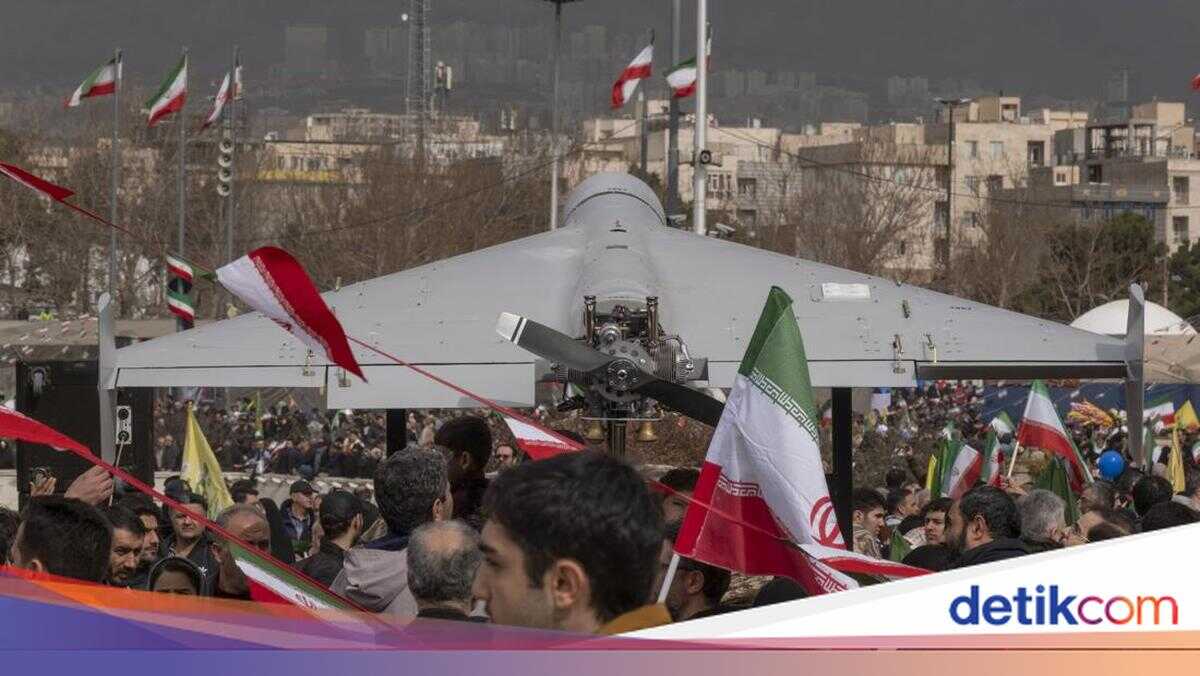
Tensions in the Middle East have risen again after reports of drone strikes believed to involve Iran. A number of international media outlets described waves of drones launched at a range of targets in the region, including military facilities and critical infrastructure connected to the United States and its allies. The strikes have again highlighted the use of cheap drones as weapons increasingly employed in modern conflicts.
The Guardian reported that Iran launched hundreds of drones directed at various targets in the Middle East. The mass attacks were said to target military facilities and strategic infrastructure in countries allied with the United States in the region. The mass drone launches were viewed as a tactic to saturate enemy air defences so that some drones might reach their targets.
Meanwhile, NBC News reported that Iranian-made kamikaze drones, such as the Shahed-136, have seen widespread use in conflicts, including the war between Russia and Ukraine. These drones are designed to fly toward a target and explode on impact, making them a common weapon against critical infrastructure such as power stations or military facilities.
DetikInet reported allegations of Iranian drone strikes targeting a United States military radar facility in Qatar. The radar is said to be highly valuable and part of an important defence system. However, some details about the level of damage are still evolving and not all can be independently verified.
These reports have put the Shahed-136 back in the international spotlight. The drone is known for its relatively low production cost compared with conventional weapons systems but can still impose substantial losses on those targeted. This has drawn attention to the drone’s price, especially when compared to the cost of air-defence systems used to intercept it.
What is the Shahed-136 Drone?
The Shahed-136 is a suicide drone, or loitering munition, a type of unmanned aircraft designed to patrol an area before ultimately striking a target and exploding. It is produced by Iran’s defence industry and forms a part of the country’s drone development programme.
According to Mehran Riazaty’s book Iranian Drones: A New Menace From the Ayatollah, the Shahed-136 is a small drone with a simple design made from materials such as wood and foam and powered by a small engine to carry an explosive payload. Although seemingly simple, the use of such drones can cause significant losses to opponents by forcing them to rely on far more expensive defences.
The drone is known to have been used in various conflicts, including by Russia in its war against Ukraine. In the same book it is stated that a single Shahed-136 unit is estimated to cost around $20,000. Despite its low price, the drone can carry warheads of around 25 to 30 kilograms, designed to explode on impact.
In addition to use by Iran’s military, the drone is also deployed by various groups allied with Iran in the region. For instance, Yemen’s Houthi movement operates similar drones under different names, along with other militias in Iraq and nearby areas.
According to The Washington Institute for Near East Policy, Iran’s drone programme had already evolved since the 1980s, beginning during the Iran-Iraq War when Iran sought an alternative due to sanctions and limited access to advanced military technology. From that early programme, Iran developed a range of drones that serve not only for reconnaissance but also as weapons.
Specifications and Advantages of the Shahed-136
Although built with a simple design, the Shahed-136 possesses several capabilities that make it effective in military operations. Available characteristic data indicate a wingspan of around 2.5 metres and a fuselage length of about 3.5 metres, with a weight of roughly 200 kilograms.
The drone has a cruising speed of around 185 kilometres per hour and a relatively long operational range of roughly 1,800 to 2,500 kilometres, allowing it to strike targets from a medium distance without approaching the front lines.
The Shahed-136 carries a payload of around 25 to 30 kilograms of explosive and uses a piston engine, the MD-550. Its navigation system relies on a combination of GNSS and INS (Inertial Navigation System), enabling it to continue toward its target even in the face of signal interference.
According to Mehran Riazaty’s book, Iranian drones are often used in pairs or in large numbers to increase the likelihood of hitting a target. As they approach a target, the drones dive toward it and explode on impact.
Furthermore, its small size and low-altitude flight make the drone relatively difficult to detect by radar. This capability pressures air-defence systems to work harder to detect and destroy it.
Mass deployment is also one of the key strategies. In modern conflict, cheap drones launched in large numbers can keep opposing air defences active and drain significant resources.
Why does the US Lose Because of the Shahed-136?
One reason the Shahed-136 is considered to disadvantage the United States and its allies is the cost disparity between the drone and the air-defence systems used to shoot it down.
A single Shahed-136, priced at around $20,000—or roughly 338 million rials, depending on exchange rates—often has to be destroyed using air-defence systems such as the Patriot.